


 CENTER FOR ART AND ARCHAEOLOGY


Cave 2 was started just before Cave 1 in the mid-460s CE and Emperor Harisena of Vakataka dynasty was the patron of the cave. Work on it broke off when Asmakas started threatening the region in 468 CE. Although, Cave 2 was started as a simple monastic dormitory, without any thought of a shrine, by 466 CE making the excavation a residence for the Buddha along with the monks had become customary. This new requirement of adding a shrine to what was originally intended as a mere dormitory continued in Cave 2 for the next year or two, until work on the cave was suddenly cut off by the local conflict in around 472 CE.
Although Cave 2 was roughed out early, all of the more elaborate work on it was done after 475 CE and is representative of Ajanta’s lavish late mode. There is an emphasis of the iconographic program upon virtuous or powerful women that might suggest a queenly patronage. The facades of the chapels at each end of the veranda are carved with figures of the Naga kings and their attendants, the portly Ganas. Twelve elaborately carved pillars support the roof. There are ten cells off four corridors at the front and rear. While the seated Buddha in dharmacakrapravartana mudra (wheel turning gesture) is enshrined in the sanctum, the side sub-shrines contain two Yaksha figures (popularly known as Sankhanidhi and Padmanidhi) to the left and Hariti and her consort Pancika to the right. The sidewalls are painted with countless Buddha’s in various attitudes.
References:


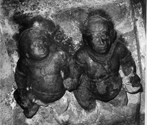

Cave 16 is the largest vihara (monastery) of Ajanta and commenced in the 460s and was completed by Asmakas, the feudatories of the Vakatakas. The monastery with its colossal hall, ornate doors and windows, painted galleries, sculptures, ornamented pillars and a cistern was the gift of Varahadeva a minister of Emperor Harisena. Although, this vihara introduced the pillared hall to the site, it was started so early that it was soon regarded as old-fashioned. Nevertheless, the image and its chamber in the interior shrine for Buddha were carved in an innovative form. The Buddha image is shown seated in pralamba-padasana or English chair posture and the sanctum is devoid of an antechamber or a doorway.
Originally, the entire cave was painted but now very little of the painting now remain. Several interesting scenes Hasti, Maha-ummagga, Maha-sutasoma jataka tales are depicted. Other murals show the conversion of Nanda, miracle of Sravasti, Sujata's offering, Asita's visit, the dream of Maya, the Trapusha and Bhallika story, and the ploughing festival.


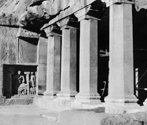

Cave 17 was started immediately after Cave 16 in the 460s. It is first of the cluster of excavations (Caves 17, 18, 19, 20, 29) sponsored by Upendragupta, the feudatory ruler of the Ajanta region. While he was a prime force in the site’s renaissance in the middle of fifth century, he may have spent too much wealth on religious pursuits, and not enough on the implements of war. In the 470s CE he suffered a defeat at the hands of the rival Asmakas and all work on his caves including Cave 17, came to a sudden halt.
The verandah of this cave has massive pillars in the front. The main hall has three entrances, and the central door is adorned with carvings. The twenty columns dividing the corridors on the four sides of the hall are lavishly carved and painted. Beside the two cells in the verandah, this cave contains sixteen cells and a cistern of water. The shrine contains a massive figure of Buddha in dharmachakra mudra or Teaching attitude that is flanked by the Boddhistava Padmapani on the right and Vajrapani on the left.
This cave has thirty major murals that are well preserved and include a huge and gigantic wheel representing the ‘Wheel of Life’, flying group of Celestials (Gandharvas and apsaras), a damsel wearing beautiful headgear, story of subjugation of Nalagiri (a wild elephant) by Buddha and Buddha preaching to a congregation all depicted in veranda. The Jatakas depicted inside the cave are Chhaddanta, Mahakapi, Hasti, Hamsa, Vessantara, Maha-Sutasoma, Sarabha-miga, Machchha, Matruposaka, Sama, Mahisa, Valahass, Sibi, Ruru, Nigrodhamiga and Simhalavadana. Buddha offering his begging bowl to his son Rahula is depicted to the right of the sanctum. Some scenes also incorporate themes from everyday society and culture such as a shipwreck, a princess applying makeup, lovers in scenes of dalliance, and a wine drinking scene of a couple with the woman and man amorously seated.


