CENTER FOR ART AND ARCHAEOLOGY
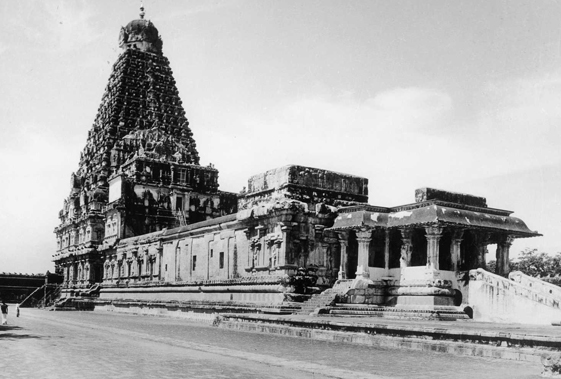
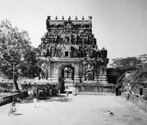
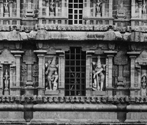

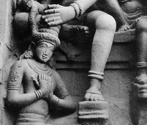
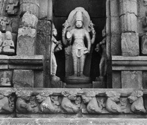
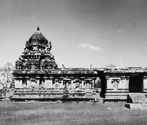
The Brahadisvara temple at Gangaikondacholapuram was built for Shiva by Rajendra I (1012-1044 CE). Rajendra I chose this location to build a new a great capital city for the Chola Empire most probably during the first quarter of 11th century in order to commemorate his conquest over northern territories. He not only built a city, now in ruins and excavated partially, but also a great temple for Siva. However, there is no inscription of Rajendra himself. The earliest inscription is that of his son, Vira Rajendra (1063-1069 CE) that records the donations of his father. The Brahadisvara temple at Tanjavur had influenced this temple in many ways for example in the vast conception of the layout and massive proportion of the elevation. Moreover, the sanctum with its axial units, the Chandikesvara shrine, the cloister mandapa (hall) with the subsidiary shrines and a gopura (gateway) are similar to Tanjavur. However, the temple has its own unique features and some of the shortcomings in the design of the Brahadisvara at Tanjavur have been overcome. For example, there is a provision for erecting wooden scaffolding in the masonry of the sanctum, and the elevation is more ornate as compared to the Tanjavur temple. The temple has sculptures of exceptional quality. The sub-shrines of Chandesa and Amman were originally built according to the plan of Rajendra I, as well as the Simhakeni (the lion-well). Over time the sub-shrines of Thenkailasha, Ganesha and Durga were added. The authenticity of these additions is supported by the Agamic texts concerning renewal and reconstructions of temples in use.
References:
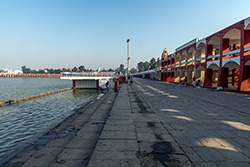
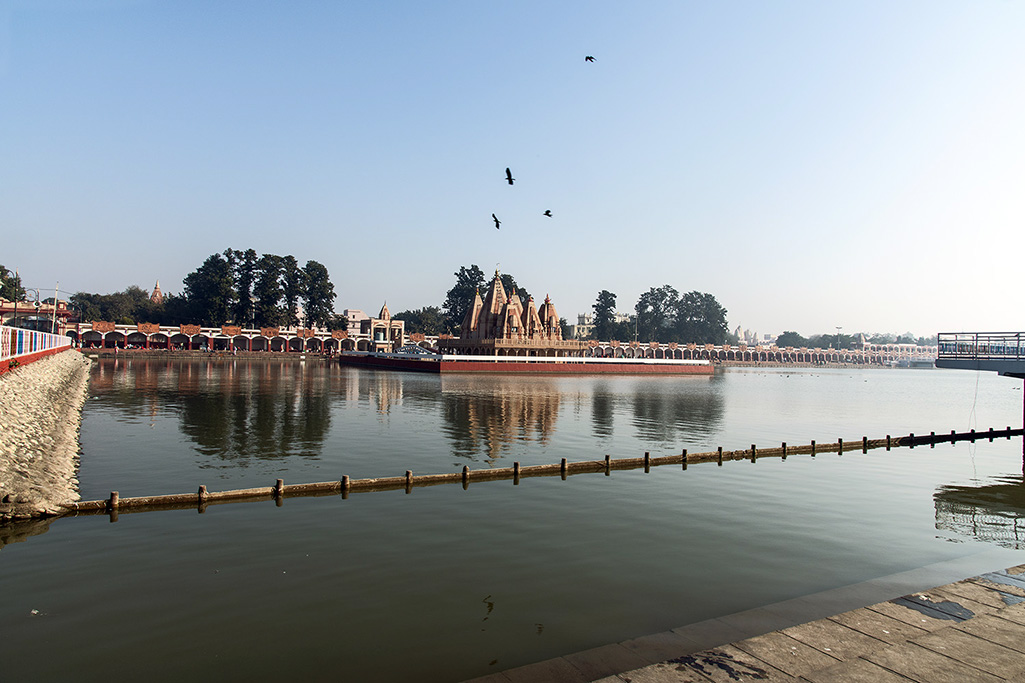
The Brahma Sarovar is a water tank located
about 220 metres south of the Kurukshetra–Pipli Road in Kurukshetra district of
Haryana. According to local tradition, it was originally excavated by King
Kuru, the legendary ancestor of the Kauravas and Pandavas, and is associated
with the belief that Lord Brahma created the universe at this site. The present
structure, built of brick and cement mortar, includes modern ghats and
surrounding constructions that appear to date largely to the 21st century.
Though unprotected, the sarovar remains in good condition and continues to
serve as an important pilgrimage centre.