Galleries

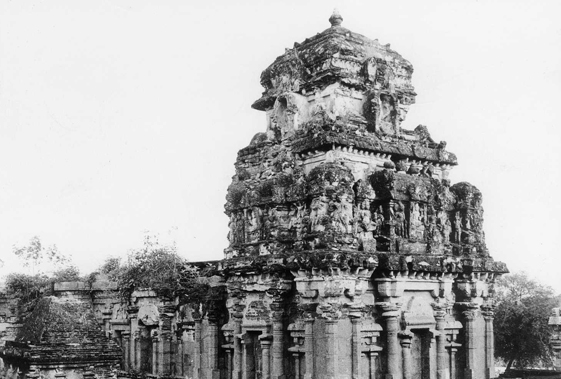
Saptarisisvarar temple, Lalgudy, Ta...

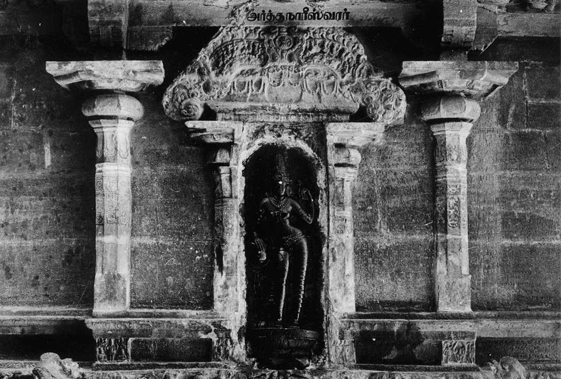
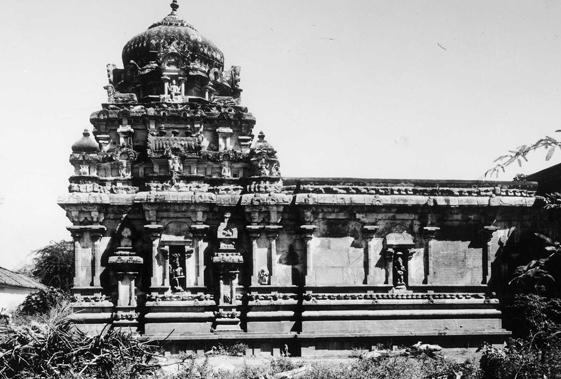
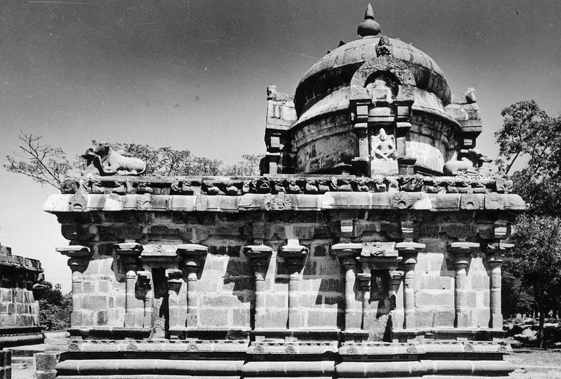
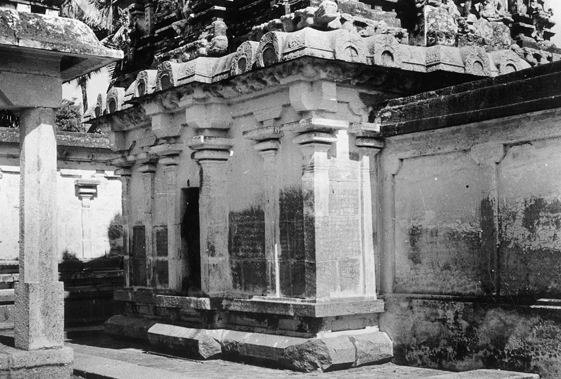
The name ‘Lalgudy’ means the ‘Red Village.’ This is the name given by the Muslims on account of the red colour of the tower of the Siva temple. Its ancient name was ‘Tiruttavatturai’ – the holy place of penance. The seven rishis – Atri, Bhrugu, Pulastya, Vasistha, Gautama, Angirasa and Marichi who were cursed by Skanda got their salvation by doing penance here and by worshipping the Lord of the place. Hence the name of the deity is Saptarishisvara. The Saptarisisvarar temple at Lalgudy has five re-engraved inscriptions, one of the fifth year of Pallava Nandivarma III (840 CE), another of his son Pallava Nrpatungavarma (857 CE), two from the Pandya king Varagunavarma II (867 CE and 875 CE) and lastly of Aditya I (885 CE). Only one inscription from 898 CE – twenty-seventh year of Aditya I is original so the temple must have been rebuilt in 898 CE. References: M.W. Meister and M.A. Dhaky, 1963, p. 163, S.R. Balasubrahmanyam, 1976, pp. 97 - 99, D. Barrett, 1973, p. 53.

Collection type:

Galleries

Siva temple, Dadapuram, Tamil Nadu

Dadapuram is a corruption of Rajarajapuram. The Siva temple (Ravikula-Manikka-Isvaram) and the Vishnu temple (Kundavvai Vinnagaram) in Dadapuram are buildings erected by sister of Rajaraja, Parantaken Kundavvi Pirattiyar during the reign of Rajaraja (985 - 1014 CE). According to an inscription, there was a third Jina temple which is not surviving. The two surviving Siva and Vishnu temples are almost identical. The superstructures (vimana) are covered with brick stucco. The two temples are important because they reveal for the first time in Tondaimandalam, an appreciation of the full potential of the Middle Colanadu architectural style. For example, base and elevation of the vimana are in likeness to monuments from metropolitan centres further south. References: M.W. Meister and M.A. Dhaky, 1963, pp. 231-232, D. Barrett, 1973, pp. 116-117.

Collection type:

Galleries

Siva temple, Kaliyapatti, Tamil Nad...

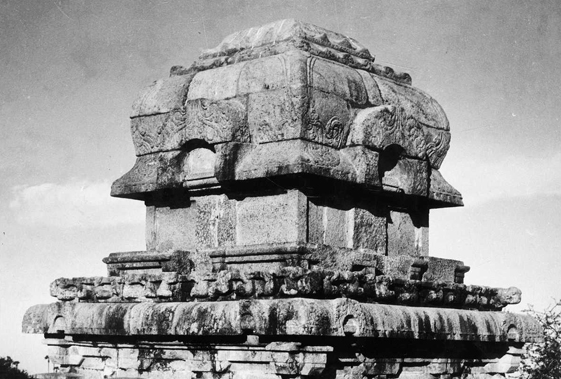
The status and date of the Shiva temple at Kaliyapatti is debated. The origin has been ascribed to early Chola period from Vijayalaya period and to the early survivals of Pandyan tradition. There is a fragmentary inscription of Kaliyapatti of eighteenth year of Parakesari who could be Vijayalaya (850 - 871 CE) or Parantaka I (907 - 954 CE). Moreover, the legacy of the Muttaraiyar style to that of the early Chola style is evident. The temple’s sanctum sanctorum (garbhagriha), the neck (griva) and the crowning cupola (sikhara) are intact. The finial (stupi) and the half-hall (ardhamandapa) have disappeared. The temple is considered to be one of the best from the period of early Chola temples. Its scrollwork is of exquisite workmanship. Reference: M.W. Meister and M.A. Dhaky, 1963, pp.130 – 132, D. Barrett, 1973, pp. 46-47, S.R. Balasubrahmanyam, 1966, pp. 52-54.

Collection type:

Galleries

Siva temple, Madagadipattu, Tamil N...

The Siva temple at Madagadipattu is also known as Kundankuli Mahadeva temple. A weatherworn inscription on the temple tells that that the temple was founded by Rajaraja I (985 – 1014 CE), constructed by one Puri Bhatta. Reference: M.W. Meister and M.A. Dhaky, 1963, p. 228.

Collection type:

Galleries

Sivalokanatha temple, Gramam,Tamil ...

Sivalokanatha temple, Gramam,Tamil NaduThe Shivalokanatha temple was originally called Tirumundisvaram in the period of the Tamil saint Appar and Mouli-gramama in the days of Prantaka I (907 - 954 CE) but now is simply called Gramam. The old Siva temple was rebuilt by Vellangumaran, a Keralite general of Rajaditya – in Parantaka I’s thirty-sixth regnal year – 943 CE. Gramam was the headquarters of Rajaditya who maintained an army there against a threat from the Rashtrakutas. Earlier inscriptions, ranging from the twenty-third to the twenty-ninth year of Parantaka seems to have been re-engraved. Architecturally this temple does not show any advance on the temples if the reign of Aditya or those of the earlier part of Parantaka I's reign. References: D. Barrett, 1973, pp. 76-77, S.R. Balasubrahmanyam 1971, pp. 60-63, M.W. Meister and M.A. Dhaky, 1963, p. 172

Collection type:

Galleries

Somesvaram Udaiyar temple, Somur, T...

The Somesvaram Udaiyar temple at Somur is a temple from Parantaka I's time (907 - 954 CE) in the old Kongu country (western Tamil country). The temple is perhaps datable to the sixth year of Parantaka I and positively existed before his fortieth year that is 947 CE. The inscriptions on this temple reflect the conquest of the Kongu country by Aditya I and Parantaka I. This temple does not have great architectural significance. References: M.W. Meister and M.A. Dhaky 1963, p.173 and S.R. Balasubrahmanyam, 1971, pp. 44-45.

Collection type: