Galleries

Sri Somanadasvami complex, Palaiyar...

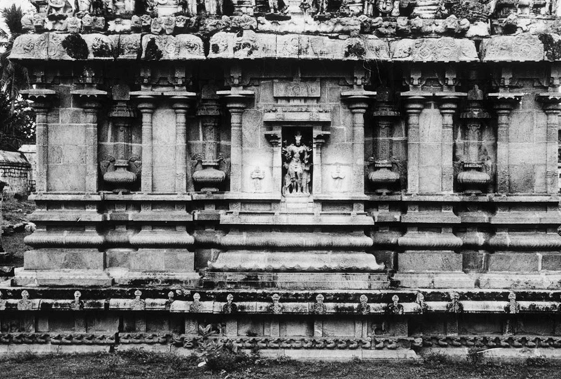
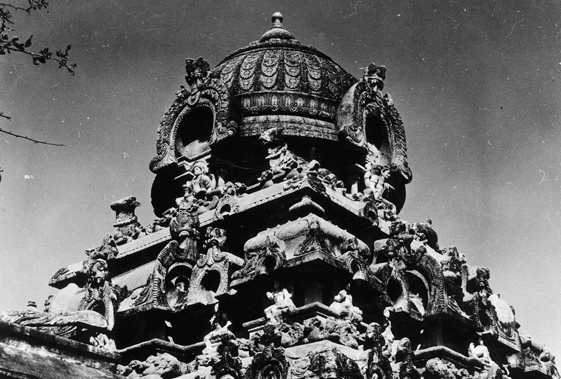
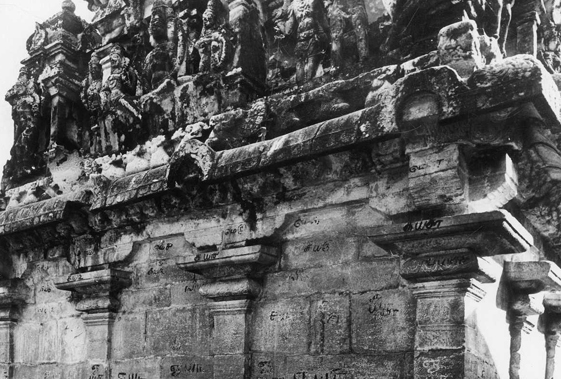
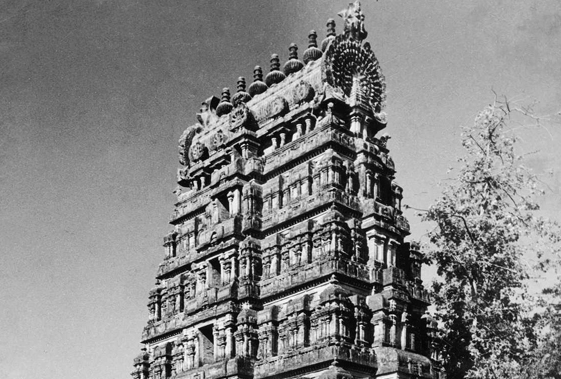
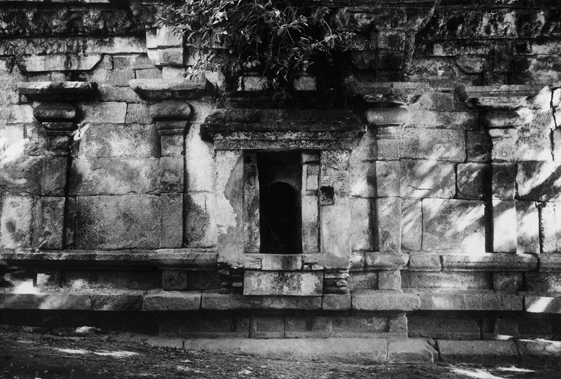
Palayari was once the celebrated secondary capital of the Pallavas. Under the Cholas, it resumed its importance during the Middle Chola period. The Pandyas sacked Palayarai after the defeat of Kulottunga III (1178–1218 CE) in the closing years of the reign and much of the damage here and the absence of niche figures would be ascribable to this sack. Appar and Sambandar knew these sites as "Tiru Arai" (holy city on the river); it was the place where Amarniti Nayanar, one of the sixty-three Saiva saints flourished. The inscriptions of the Pallavas and the Cholas refer to this place by the names Palayarai, Ayirattali or other alternative names after their own titles. The place abounded in temples – Ayirattali literally means “the place of thousand temples”. The Sri Somanadasvami temple, now in a neglected state of architectural merit. It has been equated to a lesser version of the Airavatesvara temple - resembling in plan and other architectural features though isn't as richly ornamented. With no inscriptional material on its walls, it is speculated that the temple belongs to the time of Vikrama Chola, which presumably got embellished or completed by Rajaraja II. In any case, it would definitely be a monument built during 1130 – 1160 CE, some additions and accretions taking place in the subsequent periods. According to Periyapuranam (a Tamil poetic account depicting the lives of the sixty-three Nayanars), the central shrine of the then Shiva temple was obscured by a new superstructure (vimana) put up by the Jainas. Appar caused a new vimana to be built. The extant complex stands on a raised mound, perhaps on the site of an earlier temples constructed in the time of Rajaraja II as the Airavatesvara was also a substitute in stone for an earlier example. References: S.R. Balasubrahmanyam, 1979, pp. 199-203 and M.W. Meister and M.A. Dhaky 1963, pp. 309 - 311.

Collection type:

Galleries

Sundarasvara temple complex, Nangav...

Sundarasvara temple complex, Nangavaram, Tamil NaduNangavaram has an ancient Shiva and a Pidari temple. It is said that the daughter of a Chola king of Uraiyur was born with the face of a jackal and by her devotion to the Lord of this place she came to have normal human features. Hence this place is called Mangai-varam or Nangai-varam whose corrupt form in Nangavaram. The date and authorship of the Sundarasvara temple need further examination. It has been proposed that a Paluvettaraiyar chief of Paluvur, Kumaran Maravan built the temple sometime in the late ninth or early tenth century. Another scholar has suggested a date about 910 to 920 CE. According to another explanation, the Irrukuvels are the founders of the temple. The temple could either be a foundation of Irrukuvel Maravan himself or his son or of a family member meant to commemorate Maravan’s name or merit so it predates Aditya Chola (871 – 907 CE) or at most have been built very early in the Chola monarch’s reign. The deity of this temple is now called Sundaresvarar was known in the past as Tiru Maravanisvarattup-Perumal. There are two inscriptions - one of the tenth regnal year and other of the fourth year of Parantaka I (917 and 911 CE). There are two early Chola lion pillars standing outside the temple. Four of the original stone sub-shrines survive: two have around the neck (griva) and crowning cupola (sikhara), one containing the original Saptamatrikas is in the form of a sala while the fourth containing the original Ganesa, has an interesting apsidal roof (panjara). The sub shrine of Kartikkeya is late and contains a late image. References: M.W. Meister and M.A. Dhaky, 1963, pp.139-140, S.R. Balasubrahmanyam, 1971, pp. 40-43, D. Barrett, 1974, p. 72.

Collection type:

Galleries

Sundaresvara temple, Sendalai, Tami...

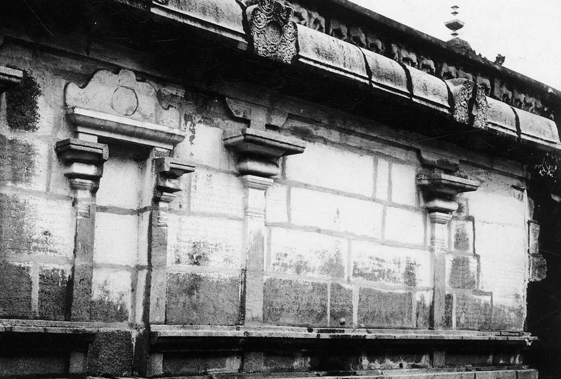
Sundaresvara temple, Sendalai, Tamil NaduThe Sundaresvara temple at Sendalai is one of the older structural temples of the Muttaraiyars, possibly of the time of Cuvaran Maran or of his immediate descendant. There are about forty inscriptions on the wall of this temple covering the period of nearly 500 years from the latter part of the eighth century to the thirteenth century. The name of the deity of this temple is Tirupperundurai Mahadeva. Tirupperundurai was the place that was associated with Saiva saint Manikkavasagar but whether this place was associated with the life of the saint cannot be said with certainty. The temple was most likely a brick structure that was later rebuilt in stone in the days of Aditya I. Two inscriptions of Aditya I's time exist on the temple. There are four granite pillars used in the construction of a hall (mandapa) in front of the main shrine. That belonged to a temple at Nemam built by the Pallava king Nandivarman Pallava Malla II (731 – 796 CE). Some early sculptures of Brahma, Vishnu, Siva and Parvati and a few Saptmatrikas were found lying loose in the northern enclosure (prakara) and some of them were later moved to the Tanjavur Art Gallery. Reference: M.W. Meister and M.A. Dhaky, 1963, pp.135-137, S.R. Balasubrahmanyam, 1966, pp. 137-140.

Collection type:

Galleries

Talinatha temple, Tirupattur, Tamil...

The Talinatha temple at Tirupattur is among the more perfect and larger temples of Varaguna’s time. Two inscriptions (868 CE and 878 CE) refer to the regnal years of Maranjadaiyan who is Varaguna II. According to one of the scholars, this temple is sufficiently evolved in plan and form so that the Maranjadiyan inscription on the temple could be of Parantaka Viranaryayana’s time; if so, the temple may be coeval with the earliest Cola temples of Chola Aditya I’s time. However, certain details and the wooden feeling of the low relief work on the niches (panjara-kosthas) and on the gateways (toranas), could warrant a date slightly earlier than that of the oldest Chola buildings. The temple anticipates some of the elements of Chola buildings, but is otherwise fully rendered in Pandyan idiom. Reference: M.W. Meister and M.A. Dhaky, 1963, pp.115 – 117.

Collection type:

Galleries

Tirukkotisvara complex, Tirukkodiko...

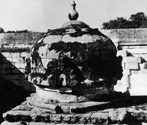
Sembiyan Mahadevi rebuilt the Tirukkotisvara temple at Tirukkodikaval in stone during her son Uttama Chola's reign (971 – 988 CE). An earlier temple in brick existed at least from the days of Ko-Ilango Muttaraiyar. Sembiyan Mahadevi got all twenty-six old inscriptions to be re-inscribed and the earliest one belongs to the days of Nandipottaraiyar (III) of the Pallava dynasty. The temple is a single-storeyed structure with a bulbous crowning cupola (sikhara). There are nine divinity niche (devakoshtha) figures in typical Sembiyan Mahadevi fashion. References: M.W. Meister and M.A. Dhaky, 1963, pp.184-185, S.R. Balasubrahmanyam, 1971, pp. 174-176.

Collection type:

Galleries

Tirutantonisvara Temple, Tiruchirap...

The Tirutantonisvara temple at Tiruci can tentatively be assigned to Aditya I's reign (871 - 907 CE) though it could as well be assigned to Vijayalaya's time (850-871 CE). The displaced inscriptions on the temple suggest rebuilding of the temple. While the inscriptions do not date before the late tenth century, the temple architecture and associated sculpture belong to earlier time period. For example, the door guardians (dvarapalas) inside seem archaic and their hand gestures do not commonly occur in early Chola examples. However, the figures in the divinity niches (devakosthas) are somewhat of a later period. References: M.W. Meister and M.A. Dhaky, 1963, p. 153.

Collection type: