Galleries

M.A. Dhaky's Image Archives

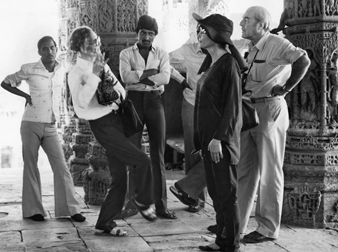
Padmabhushan Professor Madhusudan Amilal Dhaky, internationally renowned historian of temple art and architecture, was Director Emeritus, Center for Art and Archaeology, the American Institute of Indian Studies, Gurugram. Dhaky was born on 31st July 1927 in Porbandar, Gujarat. He graduated in science but his interest lied in Indology. He changed his profession frequently after graduation, from banking to agriculture, but finally settled in the field of archaeology after joining the Gujarat Directorate of Archaeology and Museums as Director. Throughout, while in various professions, exploring and documenting temple architecture was his favourite pursuit. His image archives were formed between 1950-1966, before and during his tenure with the archaeology department. He joined American Academy of Benares (AAB) in 1966 which was later renamed as the Center for Art and Archaeology and merged with the American Institute of Indian Studies. Some of his negatives are marked with the year 1972, which indicates he continued photography for a while even during his service with the AIIS when a documentation team was at his disposal. While working with the AIIS he guided documentation and research, formulated and initiated the monumental project, Encyclopaedia of Indian Temple Architecture, fourteen volumes of which are published by the AIIS. The largest section of the AIIS, CA&A Photo-archives documenting monuments and museum objects was created under the direction of M.A. Dhaky. The world of Indian art history lost one of its greatest scholars with the passing away of Dhaky on 29th July 2016. He had gifted all his images to the CA&A during his lifetime and Snehal Shah, architect who is the caretaker of Dhaky’s belongings, shared his negatives with the Center after his demise.

Collection type:

Galleries

Agastisvara temple, Kilaiyur, Tiruc...

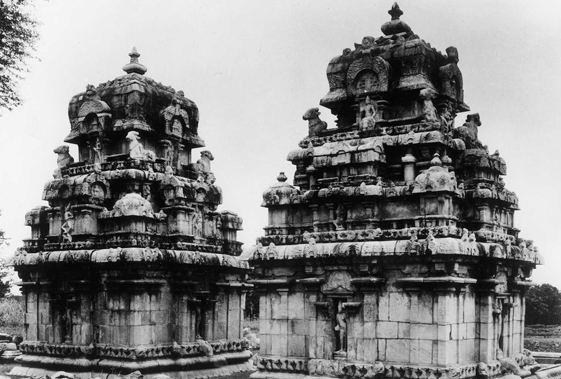
The Agastisvara temple is the larger of the two twin shrines of the Avani-Kandrapa-Isvaram temple at Kilaiyur belonging to the reign of Aditya I (871-907 CE). The other one is called the Colisvara temple. The earliest incontrovertible inscriptions on this temple are dated in Parantaka I's years (907 - 954 CE) though it has also been suggested that there are at least three inscriptions that belong to Aditya I's time. The stone of the main building is granite and that of the hall is a corrosive yellow stone. The names of the donors are inscribed on the pillars. The shrine is a prototype of early Chola art. The scrollwork over the jambs and lintels of the doorway is most ornamental. Another interesting feature is that the superstructure (vimana) is square and with a square finial (stupi) unlike its twin shrine that has a circular vimana and stupi. References: S.R. Balasubrahmanyam, 1963, pp.13-20; M.W. Meister and M.A. Dhaky, EITA, Lower Dravidadesa, Text, 1983, 215-18.

Collection type:

Galleries

Agastyesvara temple, Perungudi, Tir...

The Agastyesvara temple at Perungudi in the past was known as Tiruppermudi Paramesvaram. There are contrary opinions on the patronage of the temple. Although, the earliest inscription on the temple registers a gift in the reign of Aditya II (960-965 CE), which was part of his father, Sundara Chola’s reign (957-973 CE), it has also been suggested in scholarly debates that despite the hard style of the sculptures and their atavistic tendencies, the temple is not earlier than the time of Rajendra Chola (1014-1044 CE) especially since the reign of Sundara Chola and Aditya II was artistically bleak. References: S.R. Balasubrahmanyam, 1971, p.156; M.W. Meister and M.A. Dhaky, 1963, p. 178 and 229.

Collection type:

Galleries

Agnisvarar temple, Tirukattupalli, ...

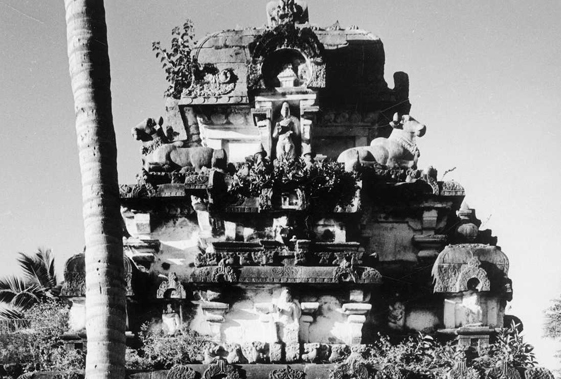
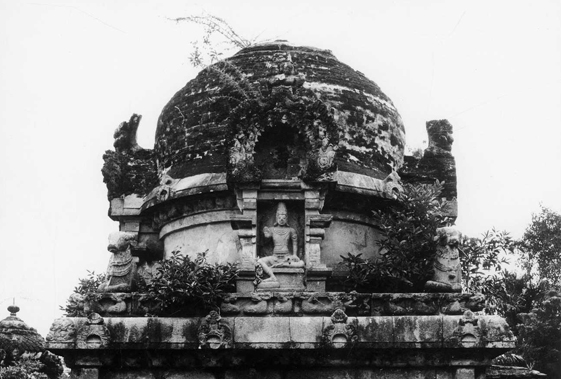
The Agnisvarar temple at Tirukattupalli is one of the smaller and also one of the earlier temples of Aditya I's time (871 - 907 CE). The suffix palli suggests that the place should have been an abode of Jains, and indeed a stone image of Mahavira, the twenty-fourth Jaina Tirthankara was discovered in the area. The local Jainsim was probably swept away by the Saiva Nayanars. The temple of Agnisvarar should have been in existence at least some time before the seventh century CE, as the Tamil saints Appar and Sambandar have sung hymns in the honour of the deity consecrated here. The image in the sanctum is so placed that the rays of the rising sun fall on the linga during the equinoxes. The feature accords with the belief that the Lord of this place is worshipped by the Sun. Appar also mentions that the deity was held dear by hunters and the learned. The earlier structure must have been made of brick or other perishable material and was probably replaced by a stone structure in the ninth century during Aditya I’s reign. The period is discernible from the temple’s style rather than inscriptions. The original temple of Aditya’s time consisted only of the sanctum sanctorum (garbhagriha) with a superstructure (vimana) over it and the half-hall (ardhamandapa). These two parts form a unit by themselves. The other halls or mandapas and the shrine of the Goddess are later additions. The neck (griva) of the vimana and the crowning cupola (sikhara) are heavily stuccoed. While the divinity niche figures are later icons replacing the original icons, the figure of the Dakshinamurti in the niche of the griva on the south is original and seems almost Muttaraiyar (600-900 CE), that is, a bit more ancient than the sculpture style from Aditya's time hence the temple should be ascribed to early phase of Aditya's time. References: S.R. Balasubrahmanyam, 1966, pp.13-20 M.W. Meister and M.A. Dhaky, 1963, p. 161.

Collection type:

Galleries

Airavatesvara temple complex, Daras...

The Airavatesvara temple at Darasuram (Tamil Nadu) has highly ornate execution. The temple consists of a sanctum without a circumambulatory path and halls or mandapas. The Airavatesvara temple, in the inscriptions known as Rajarajesvara temple, was built by Rajaraja II, of Kulottunga’s line, who ruled from 1146 to 1172 CE. The front mandapa known in the inscriptions as Rajagambhiran tirumandapam is unique as it is conceived as a chariot with wheels. This temple is reminiscent of the Melakkadambur temple built by Kulottunga I (1111 CE) and anticipates the giant wheel Konark temple at Orissa (1235-53 CE). It is one of the greatest monuments and the last Chola enterprise of this scale. The temple faces the east. There is an open court, a double-storeyed cloister with just a single entrance in the east. There was an outer enclosure but it has totally vanished. There is a Nandimandapa, and a Balipitha or platform for offerings. The main temple consists of a vimana, ardhamandapa, a transept, a closed large hall or mahamandapa and a mukhamandapa. Wheels of stone at regular intervals are suggestive of the divine chariot of Shiva. The pillars of this mandapa are highly ornate. The elevation of all the units is elegant with sculptures dominating the architecture. A number of sculptures from this temple are the masterpieces of Chola art. The labelled miniature friezes extolling the events that happened to the sixty-three (63) Tamil saints - Nayanamars are noteworthy and reflect the deep roots of Saivism in this region. The Airavatesvara temple complex itself has been entirely built at the same time with no later additional structures and remains in its original form. The Daivanayaki Amman shrine, built a little later, also stands in its original form within its own enclosure. The construction of a separate temple for Devi indicates the emergence of the Amman shrine as an essential component of the South Indian temple complex. The shrine is interesting from architectural, sculptural and cultic points of view. The temple shares with Airavatesvara the blend of Saiva and Sakta doctrines that were in vogue during these times. References: M.W. Meister and M.A. Dhaky, 1963, pp.299-309, UNESCO: https://whc.unesco.org/en/list/250.

Collection type:

Galleries

Aivar Kovil, Kodambalur, Tiruchirap...

The Aivar Kovil is a Panchayatana temple or a temple of five shrines. Once on a common plinth there must have been a central shrine surrounded by a narrow circumambulatory wall (prakara), with four subsidiary shrines on the sides. Each sub-shrine had a short balustraded flight of steps leading to them and one would approach the shrine either from the west or east. All the five sancta enshrine lingas of the Pandyan convention. This temple is an example of the Panchayatana temple style of Central and Eastern India, but, unfortunately, today only the basement and wreckage of a single temple survive. The few surviving sculptures such as Mahisamardini image, seated siddhas and apsaras follow Tondainadu style. The foundation of the temple possibly dates from the time of Irrukuvel chief, Marvan Pudi’s father Cattan Maravan (early ninth century CE). References: M.W. Meister and M.A. Dhaky 1963, pp. 200 – 202, S.R. Balasubrahmanyam, 1971, p.28 and S.K.V. Rajan, 1980, p. 45.

Collection type: