Site Name: Fatehpur Sikri
Date: 1500-1599 CE
Subject: domical vault


 CENTER FOR ART AND ARCHAEOLOGY
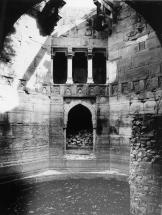
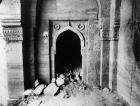
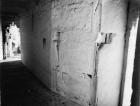
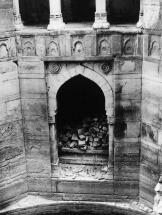
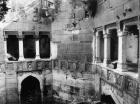
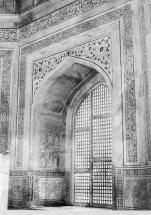
Taj Mausoleum, Octagonal mortuary hall, interior, wall detail. The hall has the form of a perfect octagon to a side, with two tiers of two radiating niches. The niches are framed, and the room encircled, by inlaid inscriptions from the Quran. The dados display carved flower vases framed by pietra dura inlay, and corner colonnettes are carved with plant motifs springing from pots with overhanging leaves - evoking paradisical bloom.
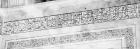
Taj Mausoleum, Octagonal mortuary hall, interior, wall detail. The hall has the form of a perfect octagon to a side, with two tiers of two radiating niches. The niches are framed, and the room encircled, by inlaid inscriptions from the Quran. The dados display carved flower vases framed by pietra dura inlay, and corner colonnettes are carved with plant motifs springing from pots with overhanging leaves - evoking paradisical bloom.
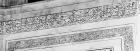
Taj Mausoleum, Octagonal mortuary hall, interior, wall detail: The hall has the form of a perfect octagon to a side, with two tiers of two radiating niches. The niches are framed, and the room encircled, by inlaid inscriptions from the Quran. The dados display carved flower vases framed by pietra dura inlay, and corner colonnettes are carved with plant motifs springing from pots with overhanging leaves - evoking paradisical bloom.
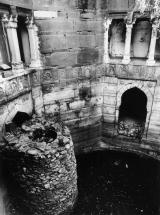
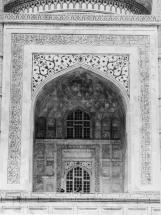
Taj Mausoleum, Iwan on south: The pishtaq is accentuated by a large inscription in sulus script in a band on its rectangular frame. The texts are selected passages from the Quran which relate to the eschatological programme of the building. The spandrels are filled with flowery arabesques in red, green and dark yellow in inlay.
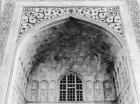
Taj Mausoleum, Iwan on north, detail: The pishtaq is accentuated by a large inscription in sulus script in a band on its rectangular frame. The texts are selected passages from the Quran which relate to the eschatological programme of the building with references to the Last Judgment, divine forgiveness, and the reward of the faithful in Paradise. The spandrels are filled with flowery arabesques in red, green and dark yellow in inlay. The inner walls of the iwan are patterned with blind arches alternating with cartouches.
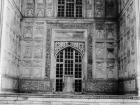
Taj Mausoleum, Iwan on north, back wall, detail: The pishtaq is accentuated by a large inscription in sulus script in a band on its rectangular frame. The texts are selected passages from the Quran which relate to the eschatological programme of the building. The spandrels are filled with flowery arabesques in red, green and dark yellow in inlay. Flowers cover the dados of the three walls of the iwan and have symmetrical composition and minute botanical details. Shah Jahan’s artists composed flowers of their own convention.
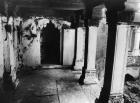
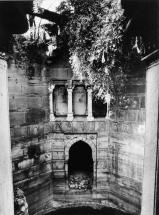
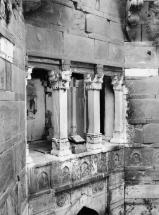
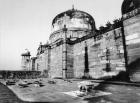
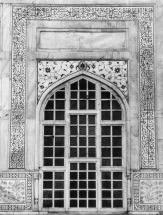
Taj Mausoleum, Iwan on east, back wall, detail: The pishtaq is accentuated by a large inscription in sulus script in a band on its rectangular frame. The texts are selected passages from the Quran which relate to the eschatological programme of the building with references to the Last Judgment, divine forgiveness, and the reward of the faithful in Paradise.
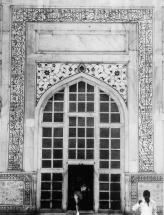
Taj Mausoleum, Iwan on south, back wall, detail: The pishtaq is accentuated by a large inscription in sulus script in a band on its rectangular frame. The texts are selected passages from the Quran which relate to the eschatological programme of the building. The spandrels are filled with flowery arabesques in red, green and dark yellow in inlay. Flowers cover the dados of the three walls of the iwan and have symmetrical composition and minute botanical details. Shah Jahan’s artists composed flowers of their own convention.