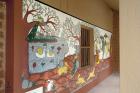
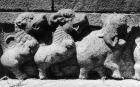
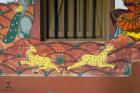
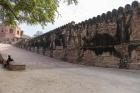
Subject: Vedika, southeast quadrant, inner face, pillar, detail, elephant under a tree
Site Name: Bhubaneswar
Date:
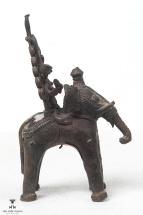
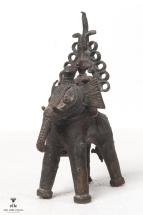
Subject: Elephant with God. Dhokra is a craft made by the lost-wax casting technique in which a molten metal is poured into a mold that has been created by means of a wax model. This craft has a tribal lineage and flourishes in the tribal belts of Odisha. This is a figure of an elephant with a god. Side view of the object. This object was procured from State Institute for Development of Arts & Crafts (SIDAC) Show House.
Site Name: Bhubaneswar
Date: 1990-1999
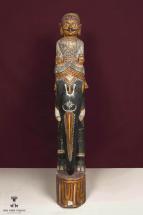
Subject: Two men on an elephant. This object shows two men on an elephant painted and carved in wood. An essential part of growing up in Odisha is toys, dolls, puppets and masks from wood. These toys are richly colored and developed in a stylized form. Often, gambhari or beech wood, the local wood is used for the carvings as it has a fine texture and is light-cream color though other woods may also be used. This object has been procured by State Institute for Development of Arts & Crafts (SIDAC) Show House.
Site Name:
Date:
Subject: Nabagunjara. Nabgunjara depicts a composite animal in which Lord Vishnu disguised himself in the Odia version of Mahabharata. It has the head of a cock, neck of a peacock, hump of the bull, a snake for tail, and the waist of a lion. Three of its legs are from a tiger, a horse and an elephant while the fourth is a human holding a flower or a mirror.
Site Name: Amaravati
Date: ca 199-100 BCE; later additions: ca 1-399 CE
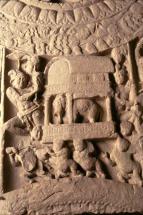
Subject: Relief between medallions: Elephant in Carriage, Stupa Pillar Relief or Drum Fragment, Conception of the Buddha (Elephant Descends From Heaven)
Site Name: Bargarh
Date: 1901-2000
Subject: Elephant. This is a decorative elephant wood carving. The wood carving of Odisha exhibits a perfect blend of classical and folk elements. The wood items of the place are meant both for decorative and functional use.
Site Name:
Date: 1447 CE
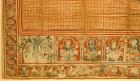
Subject: Lower left portion, register: Landscape and Goddesses; border: Nine Planetary Deities (Navagraha) and Elephant , Victory Banner ( Jayatra Yantra)
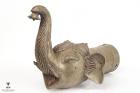
Subject: Elephant Palanki Head. This elephant head was most probably the finial for an elaborately decorated palanquin.
Site Name: Bhubaneswar
Date: 1900-1999
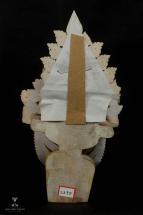
Subject: Gaja udharana Besha of Lord Sri Jagannatha. Solapith craft uses the pith or soft inner core of the Indian cork tree for making decorative items. The pith is cut in different sizes and shapes for the design and assembled by glue. The pith is incised or removed to create ornamental designs and patterns. The Gaja udharana besha depicts an epic story of Lord Vishnu saving a helpless elephant from the clutches of a crocodile. This object has been procured by State Institute for Development of Arts & Crafts (SIDAC).
Site Name: Mathura
Date: 1100-1199 CE
Subject: Saptamatrkas flanked by, Vinadhara and Ganesa. The mothers from left to right as identified from their vehicles, attributes and features are 1. Brahmani on goose (hamsa) holding a ladle; 2.Mahesvari on bull with trident (trisula) in her hand; 3. Kaumari on peacock with a spear (Sakti); 4. Vaishnavi on Garuda with a mace; 5. Varahi with a boar head on his vehicle probably buffalo; 6. Indrani on elephant (Airavata) with her weapon Vajra (now missing) and lastly; 7. Chamunda with sunken belly, garland of human skulls (mundamala) and riding over human corpse (Pretavahana). Each of the female deities holds a child on her left side
Site Name: Angkor Thom, Royal Terraces
Date: ca 1100-1299 CE
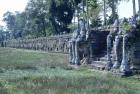
Subject: East Wall, Southern End, Elephant Terrace and Protruding Stairway, toward southeast; Part of the walled city of Angkor Thom, the Elephant Terrace is all that remains of the foundation platform
Site Name: Bhubaneswar
Date: 1900-1999
Subject: Lakshmi on Elephant. A figure of the Hindu goddess Lakshmi on an elephant who represents wealth and good fortune and is consort of Lord Vishnu, made in cow dung. Cow dung, over centuries, has been used for making toys and figurines as an inexpensive alternative to wooden and metal figures. A lump of mixture of clay and cow dung is shaped and smoothened with a coat of chalk and then painted. These lightweight figures are generally coarse in design and lack detailing and ornamentation. This object has been loaned by State Institute for Development of Arts & Crafts (SIDAC).
Site Name:
Date: 1900-1999
Subject: Mangala on Elephant 7 Deepa. A lamp holder in the form of Goddess Mangala on an elephant. Goddess Mangala is holding a kalasha. The lamp holder is on two wheels in the front. The holder is intended to support seven oil lamps. Front view of the object.
Site Name:
Date:
Subject: Nabagunjara. Nabgunjara depicts a composite animal in which Lord Vishnu disguised himself in the Odia version of Mahabharata. It has the head of a cock, neck of a peacock, hump of the bull, a snake for tail, and the waist of a lion. Three of its legs are from a tiger, a horse and an elephant while the fourth is a human holding a flower or a mirror.
Site Name:
Date: 1800-1899
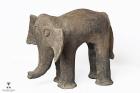
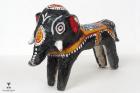
Subject: Elephant. Odisha is known for its lineage of skilled artisans of terracotta pottery. Terracotta crafts being water and weather proof are popular as indoor objects as well as outdoor decoration. Products range from those belonging to ritualistic ceremonies to artifacts of utilitarian and artistic significance. Animal figurines such as this elephant are also popular. Side view of elephant.
Site Name:
Date: ca 1580 CE
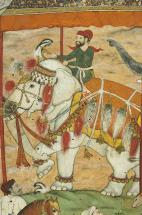
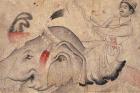
Subject: White Elephant; Elephant and rider
Site Name: Bhubaneswar
Date:
Subject: Elephant with God. Dhokra is a craft made by the lost-wax casting technique in which a molten metal is poured into a mold that has been created by means of a wax model. This craft has a tribal lineage and flourishes in the tribal belts of Odisha. This is a figure of an elephant with a god. Front-side view of the object. This object was procured from State Institute for Development of Arts & Crafts (SIDAC) Show House.
Site Name:
Date: ca 1610 CE
Subject: Head of elephant [Burhan al Mulk's Running Elephant]
Site Name: Bhubaneswar
Date: 1990-1999
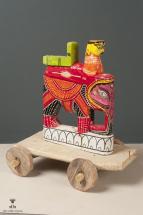
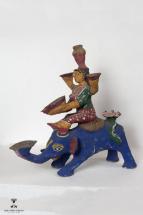
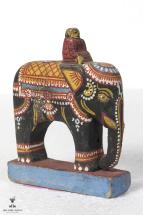
Subject: Rider on an Elephant. This is a painted wooden elephant with a rider. An essential part of growing up in Odisha is toys, dolls, puppets and masks from wood. Animal figures are a popular theme. These toys are richly colored and developed in a stylized form. Often, gambhari or beech wood, the local wood is used for the carvings as it has a fine texture and is light-cream color though other woods may also be used. This object has been procured by State Institute for Development of Arts & Crafts (SIDAC) Show House.
Site Name: Dhaka
Date: 1980-1989 CE
Subject: Tiger elephant combat
Site Name: Kota / Kotah
Date: ca 1700-1730 CE
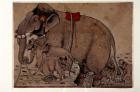
Subject: Chained Bull Elephant Surrounded by Calves
Site Name: Fatehpur Sikri
Date: 1572 CE
Subject: Northeast wall of the sarai enclosure attached to the ramp connecting the Elephant Gate & Hiran Minar
Site Name:
Date: 1900-1999
Subject: Elephant. A figure of an elephant generally used to express peace and prosperity. Cow dung, over centuries, has been used for making toys as an inexpensive alternative to wooden and metal toys. A lump of mixture of clay and cow dung is shaped and smoothened with a coat of chalk and then painted. These lightweight toys are generally coarse in design and lack detailing and ornamentation. This object has been procured by Utkalika, Odisha State Co-operative Handicraft Corporation Ltd.