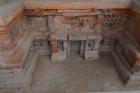
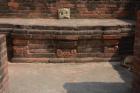
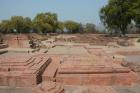
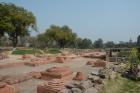
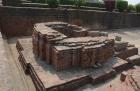
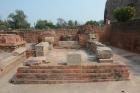
Subject: View of the temple. This is the brick plinth of a very small temple comprising a central structure with four corner shrines (hence panchayatana, or “five-fold shrine”).
Site Name: Sarnath
Date:
Subject: Brick plinth of the temple comprising a central structure with four corner shrines (hence panchayatana, or “five-fold shrine”).
Site Name: Sarnath
Date:
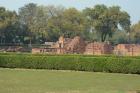
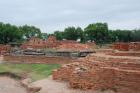
Subject: View of the excavated site
Site Name: Sarnath
Date:
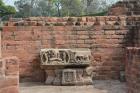
Subject: Architectural fragment, Main Shrine
Site Name: Sarnath
Date:
Subject: Courtyard outside the Main Shrine
Site Name: Sarnath
Date:
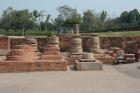
Subject: Foundations of small stupas at the excavated site
Site Name: Sarnath
Date:
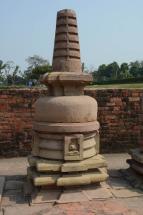
Subject: Miniature stupas at far eastern end of approach to Main Shrine
Site Name: Sarnath
Date:
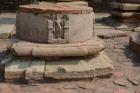
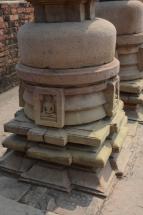
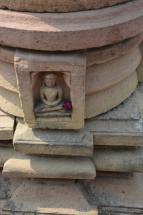
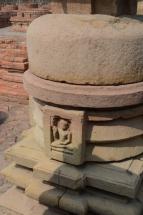
Subject: Detail of a miniature stupas at far eastern end of approach to Main Shrine
Site Name: Sarnath
Date: 900-999 CE
Subject: Miniature Stupa. The miniature stupa bears four niches, each with an image of Buddha performing a different gesture or mudra.
Site Name: Sarnath
Date: 900-999 CE
Subject: Miniature Stupa. The miniature stupa bears four niches, each with an image of Buddha performing a different gesture or mudra.
Site Name: Sarnath
Date: 900-999 CE
Subject: Miniature Stupa. The miniature stupa bears four niches, each with an image of Buddha performing a different gesture or mudra.
Site Name: Sarnath
Date: 900-999 CE
Subject: Miniature Stupa. The miniature stupa bears four niches, each with an image of Buddha performing a different gesture or mudra.
Site Name: Sarnath
Date:
Subject: Archaeological remains at the site
Site Name: Sarnath
Date:
Subject: Excavated Site at Sarnath
Site Name: Sarnath
Date:
Subject: Architectural fragment on site
Site Name: Sarnath
Date:
Subject: Excavated Site at Sarnath
Site Name: Sarnath
Date:
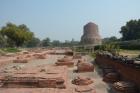
Subject: View of Dhamek stupa and the excavated site
Site Name: Sarnath
Date: ca 800 in its final form
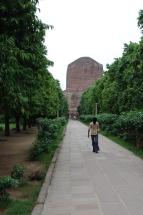
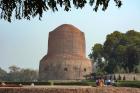
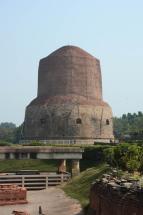
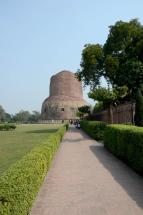
Subject: View of the stupa. The stupa is located at the easternmost portion of the excavated area. Modern signage suggests that the Dhamek Stupa marks the spot where the Buddha preached his first sermon. The lower part of the stupa is constructed of stone and the upper part is built of brick that once must have been faced with stone.
Site Name: Sarnath
Date: ca 800 in its final form
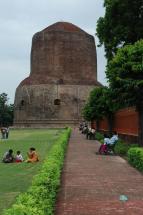
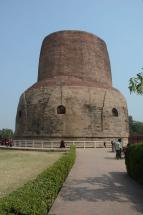
Subject: View of the stupa. The stupa is located at the easternmost portion of the excavated area. The lower part of the stupa is constructed of stone and the upper part is built of brick that once must have been faced with stone. Adorning the bottom portion are eight arched projections with niches. In each niche there is a pedestal with a depression that must have been intended to hold the tenon projecting from the base of a sculpture; the sculptures likely were eight Buddha images.
Site Name: Sarnath
Date: ca 800 in its final form
Subject: View of the stupa
Site Name: Sarnath
Date: ca 800 in its final form
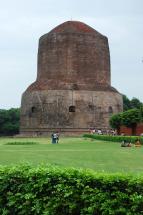
Subject: View of the stupa. The stupa is located at the easternmost portion of the excavated area. The lower part of the stupa is constructed of stone and the upper part is built of brick that once must have been faced with stone. Adorning the bottom portion are eight arched projections with niches. In each niche there is a pedestal with a depression that must have been intended to hold the tenon projecting from the base of a sculpture; the sculptures likely were eight Buddha images.