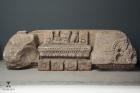
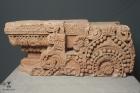
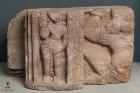
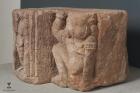
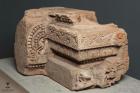
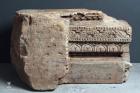
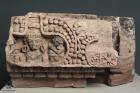
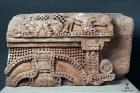
Subject: Architectural Fragment. A fragment of an adhisthana (plinth) of a temple showing Ganesha within a niche. This object has been loaned by the Odisha State Museum.
Site Name: Bhubaneswar
Date: 700-899
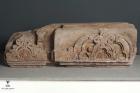
Subject: Architectural Fragment. A fragment from possibly the pabhaga component of the bada (base molding in the vertical part of the structure below the tower proper) of a temple. It shows floral and vegetal patterns. This object has been loaned by the Odisha State Museum.
Site Name: Bhubaneswar
Date: 900-999
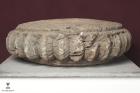
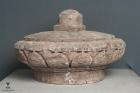
Subject: Amalaka Fragment. Amalaka is the crowning ornament of a Hindu temple's main tower that ls in the form of a stone disk with ridges on the rim. It may represent either the lotus or the sun thus signifying the seat of the deity or a gateway to heaven. This object has been loaned by the Odisha State Museum.
Site Name: Bhubaneswar
Date: 1000-1999
Subject: Amalaka Fragment. Amalaka is the crowning ornament of a Hindu temple's main tower that ls in the form of a stone disk with ridges on the rim. It may represent either the lotus or the sun thus signifying the seat of the deity or a gateway to heaven. This object has been loaned by the Odisha State Museum.
Site Name: Bhubaneswar
Date: 600-699
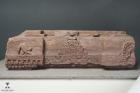
Subject: Architectural Fragment. A fragment from possibly the kapotapali (cyma-eave/cornice) component of the adhishtana (plinth) of a temple. It shows a swan on the left and decorative carving. This object has been loaned by the Odisha State Museum.
Site Name: Bhubaneswar
Date: 800-899
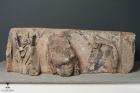
Subject: Architectural Fragment. A fragment of a temple. It has remnants of a human face and foliage design. This object has been loaned by the Odisha State Museum.
Site Name: Bhubaneswar
Date: 600-699
Subject: Architectural Fragment. A fragment of a temple. It has remnants of a beaded medallion. This object has been loaned by the Odisha State Museum.
Site Name: Bhubaneswar
Date: 700-799
Subject: Architectural Fragment. A fragment of a temple. It has remnants of a chaitya arch and a beaded design. This object has been loaned by the Odisha State Museum.
Site Name: Bhubaneswar
Date: 800-899
Subject: Architectural Fragment. A fragment from possibly the adhishtana (plinth) of a temple. It shows a human figure. This object has been loaned by the Odisha State Museum.
Site Name: Bhubaneswar
Date: 800-899
Subject: Architectural Fragment. A fragment from possibly the adhishtana (plinth) of a temple. It shows a human figure. This object has been loaned by the Odisha State Museum.
Site Name: Bhubaneswar
Date:
Subject: Architectural Fragment. A fragment possibly from the gandi (trunk of the tower) of the rekha deul (sanctuary) of a temple. This object has been loaned by the Odisha State Museum.
Site Name: Bhubaneswar
Date:
Subject: Architectural Fragment. A fragment possibly from the gandi (trunk of the tower) of the rekha deul (sanctuary) of a temple. This object has been loaned by the Odisha State Museum.
Site Name: Bhubaneswar
Date: 800-899
Subject: Architectural Fragment. A fragment of the basal molding of a temple. It depicts an image of Shiva flanked by devotees within a niche in the center. This object has been loaned by the Odisha State Museum.
Site Name: Bhubaneswar
Date:
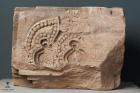
Subject: Architectural Fragment. A fragment of a temple. It has remnants of a chaitya arch. This object has been loaned by the Odisha State Museum.
Site Name: Bhubaneswar
Date: 600-699
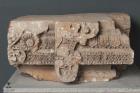
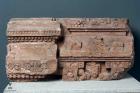
Subject: Architectural Fragment. A fragment of a temple probably of tulapitha (frieze of joist-ends). It shows remnants a floral and beaded motif with a chaitya arch and a face. The design is divided into three rows. This object has been loaned by the Odisha State Museum.
Site Name: Bhubaneswar
Date: 700-799
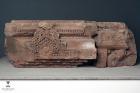
Subject: Architectural Fragment. A fragment of the adhishtana (plinth) or basal molding of a temple. It shows a part of a chaitya window and a beaded design. This object has been loaned by the Odisha State Museum.
Site Name: Bhubaneswar
Date: 700-799
Subject: Architectural Fragment. A fragment of a temple probably from the central portion of gandi (superstructure) of the temple. It shows remnants of a chaitya arch. This object has been loaned by the Odisha State Museum.
Site Name: Bhubaneswar
Date: 1900-1999
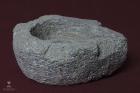
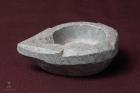
Subject: One Face Deepa (Lamp). A stone lamp that is often used for lighting during special occasions. Lamps also symbolically represent enlightenment or wisdom. Odisha’s most recognized craft is stone carving. Odisha’s maharanas (stone carvers) sculpt in stones with simple tools by first outlining the figure on a stone block. The outline is incised to mark the shape of the motif and then the figure is carved. Iconic stone carved sculptures and idols of Hindu deities are made for Odisha’s temples. This is an in-house artefact of the State Institute for Development of Arts & Crafts (SIDAC) Show House.
Site Name: Bhubaneswar
Date: 1900-1999
Subject: One Face Deepa (Lamp). A stone lamp that is often used for lighting during special occasions. Lamps also symbolically represent enlightenment or wisdom. Odisha’s most recognized craft is stone carving. Odisha’s maharanas (stone carvers) sculpt in stones with simple tools by first outlining the figure on a stone block. The outline is incised to mark the shape of the motif and then the figure is carved. Iconic stone carved sculptures and idols of Hindu deities are made for Odisha’s temples. This is an in-house artefact of the State Institute for Development of Arts & Crafts (SIDAC) Show House.
Site Name: Bhubaneswar
Date: 1900-1999
Subject: One Face Deepa (Lamp). A stone lamp that is often used for lighting during special occasions. Lamps also symbolically represent enlightenment or wisdom. Odisha’s most recognized craft is stone carving. Odisha’s maharanas (stone carvers) sculpt in stones with simple tools by first outlining the figure on a stone block. The outline is incised to mark the shape of the motif and then the figure is carved. Iconic stone carved sculptures and idols of Hindu deities are made for Odisha’s temples. This is an in-house artefact of the State Institute for Development of Arts & Crafts (SIDAC) Show House.
Site Name: Bhubaneswar
Date: 1900-1999
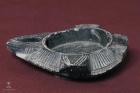
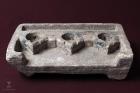
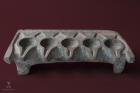
Subject: Three Face Deepa (Lamp). A stone lamp that is often used for lighting during special occasions. Lamps also symbolically represent enlightenment or wisdom. Odisha’s most recognized craft is stone carving. Odisha’s maharanas (stone carvers) sculpt in stones with simple tools by first outlining the figure on a stone block. The outline is incised to mark the shape of the motif and then the figure is carved. Iconic stone carved sculptures and idols of Hindu deities are made for Odisha’s temples. This is an in-house artefact of the State Institute for Development of Arts & Crafts (SIDAC) Show House.
Site Name: Bhubaneswar
Date: 1900-1999
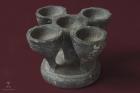
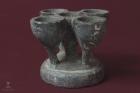
Subject: Five Face Deepa (Lamp). A stone lamp that is often used for lighting during special occasions. Lamps also symbolically represent enlightenment or wisdom. Odisha’s most recognized craft is stone carving. Odisha’s maharanas (stone carvers) sculpt in stones with simple tools by first outlining the figure on a stone block. The outline is incised to mark the shape of the motif and then the figure is carved. Iconic stone carved sculptures and idols of Hindu deities are made for Odisha’s temples. This is an in-house artefact of the State Institute for Development of Arts & Crafts (SIDAC) Show House.
Site Name: Bhubaneswar
Date: 1900-1999
Subject: Five Face Deepa (Lamp). A stone lamp that is often used for lighting during special occasions. Lamps also symbolically represent enlightenment or wisdom. Odisha’s most recognized craft is stone carving. Odisha’s maharanas (stone carvers) sculpt in stones with simple tools by first outlining the figure on a stone block. The outline is incised to mark the shape of the motif and then the figure is carved. Iconic stone carved sculptures and idols of Hindu deities are made for Odisha’s temples. This is an in-house artefact of the State Institute for Development of Arts & Crafts (SIDAC) Show House.
Site Name: Bhubaneswar
Date: 1900-1999
Subject: Five Face Deepa (Lamp). A stone lamp that is often used for lighting during special occasions. Lamps also symbolically represent enlightenment or wisdom. Odisha’s most recognized craft is stone carving. Odisha’s maharanas (stone carvers) sculpt in stones with simple tools by first outlining the figure on a stone block. The outline is incised to mark the shape of the motif and then the figure is carved. Iconic stone carved sculptures and idols of Hindu deities are made for Odisha’s temples. This is an in-house artefact of the State Institute for Development of Arts & Crafts (SIDAC) Show House.