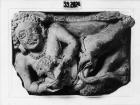
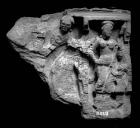
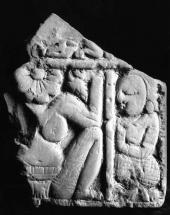
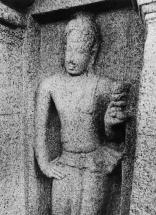
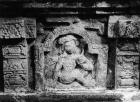
Subject: Rail-post fragment, Kamadeva holding a cluster of bud shaped arrows
Site Name: Mathura
Date: 99-1 BCE
Subject: Rail-post fragment, Kamadeva holding a cluster of bud shaped arrows
Site Name: Hinglajgarh
Date: 900-999 CE
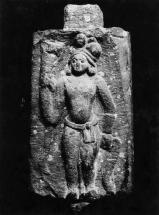
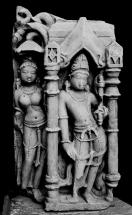
Subject: Male holding an axe and a surasundari, standing
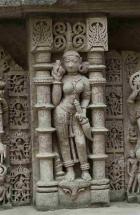
Site Name: Hinglajgarh
Date: 900-999 CE
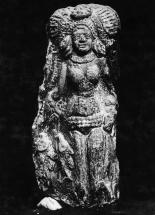
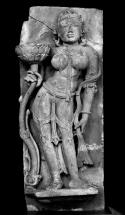
Subject: Yaksi holding lotus, standing
Site Name: Karitalai / Karitali
Date: 900-999 CE
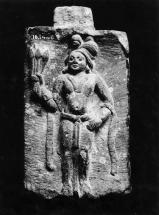
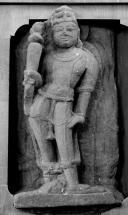
Subject: Male attendant holding mace
Site Name:
Date: 100-299 CE
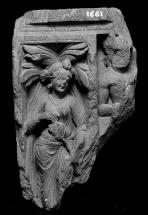
Subject: Lady standing holding lotus and devotee
Site Name:
Date: 100-299 CE
Subject: Lady holding a sakti standing with a child and monk
Site Name: Patan
Date: ca 1075 CE
Subject: Apsara holding a conch shell and a fly whisk, third terrace, south wall, between third and well end pavilion
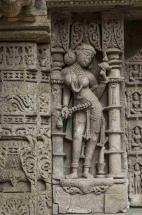
Site Name: Patan
Date: ca 1075 CE
Subject: Apsara holding garland, fourth terrace, third pavilion, east face
Site Name: Ter
Date: 1-300 CE
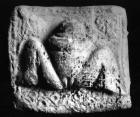
Subject: Lajja Gauri holding fruits: This image of Lajja Gauri is completely anthropomorphic with a human female head and all parts, with legs in uttanapad (birth giving) pose and arms held up to the side.
Site Name: Ter
Date: 1-300 CE
Subject: Lajja Gauri holding fruits: This image of Lajja Gauri is completely anthropomorphic with a human female head and all parts, with legs in uttanapad (birth giving) pose and arms held up to the side.
Site Name: Naganathakolla
Date: Late 601-700 CE
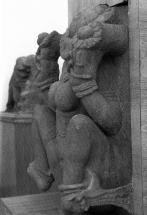
Subject: Side view of Lajja Gauri holding a lotus bud symbolic of a phallus.
Site Name:
Date: 101-200 CE
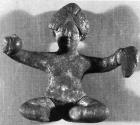
Subject: Baubo: The Roman Baubo is typically represented either in a pose with legs spread as if seated in a saddle, with her hands holding up food, or seated with legs spread and her hands spreading her genitals. Some scholars believe that the Roman Baubo is similar to the fertility figures of Lajja Gauri.