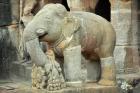
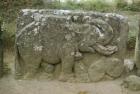
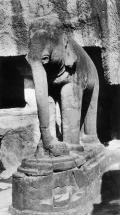
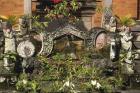
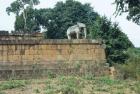
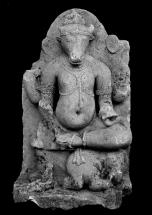
Subject: Free standing elephant holding garland in his trunk
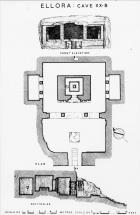
Site Name: Ellora
Date: 551-599 CE
Subject: Front elevation, plan and section
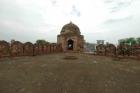
Site Name: Doraha (GT Road)
Date: 1606-1611 CE
Subject: Northeast wing, terrace, northeast bastion's chhatri along with battlemented parapet and elevated circular/rectangular apertures over chambers' ceilings
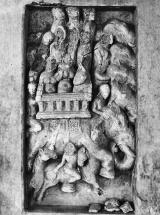
Site Name: Aphsad
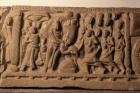
Date: ca 650-675 CE
Subject: Wall, Elephant procession probably of Bharata (reaching Chitrakuta with retinue)
Site Name: Mount Lawu
Date: ca 1430 CE
Subject: Third Terrace, Compound, Relief, Elephant
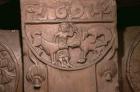
Site Name: Sanchi
Date: 199-100 BCE
Subject: Vedika, northwest quadrant, outer face, pillar, detail, central medallion, elephant rider emerging out of a tiled building
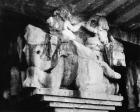
Site Name: Bedsa
Date: ca 75 BCE
Subject: Porch, left end pillar, surmounted by a male and female couple on a pair of elephants
Site Name: Bharhut
Date: ca 100 BCE
Subject: Upper portion, Half-medallion with animal fight and elephant-makara frieze; Stupa Vedika (Railing), Upright
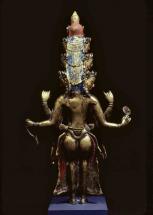
Site Name: Ladakh
Date: ca 1300-1399 CE
Subject: Back, Eleven-Headed Avalokitesvara
Site Name: Jaipur (Amber)
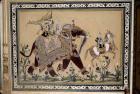
Date: ca 1592-1800 CE
Subject: Construction began under Raja Man Singh I, Akbar's army commander, and was completed by Mirza Raja Jai Singh and Sawai Jai Singh over a period of about two centuries; Unlocated panel: Elephant
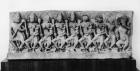
Site Name: Mathura
Date: 1000-1099 CE
Subject: Saptamatrkas flanked by, Vinadhara and Ganesa. The mothers from left to right as identified from their vehicles, attributes and features are 1. Brahmani on goose (hamsa) holding a ladle; 2.Mahesvari on bull with trident (trisula) in her hand; 3. Kaumari on peacock with a spear (Sakti); 4. Vaishnavi on Garuda with a mace; 5. Varahi with a boar head on his vehicle probably buffalo; 6. Indrani on elephant (Airavata) with her weapon Vajra (now missing) and lastly; 7. Chamunda with sunken belly, garland of human skulls (mundamala) and riding over human corpse (Pretavahana). Each of the female deities holds a child on her left side
Site Name: Ellora
Date: ca 810-880 CE
Subject: Court entrance, Elephant to right
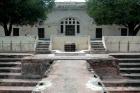
Site Name: Sirhind
Date: 1634-35 CE
Subject: Within second enclosure, south wing proper, frontal elevated courtyard with stairways leading to multifoiled central doorway
Site Name: Angkor Thom, Royal Terraces
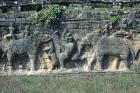
Date: ca 1100-1299 CE
Subject: East Wall, Southern End, Elephant Terrace, Mounted elephants fighting animals; Part of the walled city of Angkor Thom, the Elephant Terrace is all that remains of the foundation platform
Site Name: Tampaksiring
Date:
Subject: Calendar Stone. The circle, triangle, elephant, and dragon represent particular numbers. The circle, symbolic of the sun, represents the number one.
Site Name: Goli
Date: ca 100-299 CE
Subject: Left portion, Visvantara gives away the Royal Elephant to a neighboring community; Lintel Fragment, Visvantara (Vessantara) Jataka
Site Name: Belavadi / Belvadi
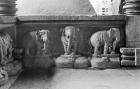
Date: 1206 CE
Subject: Sabhamandapa, interior row of elephants in parapet
Site Name: Eastern Mebon
Date: 952 CE
Subject: Platform, Northeast Corner with Elephant, from East; Built during the reign of Rajendravarman.
Site Name: Ajanta
Date: ca 462-480 CE
Subject: Porch, Rear wall, right, Buddha and Mad Elephant: Elephant
Site Name: Sanchi
Date: 199-100 BCE
Subject: Vedika, northwest quadrant, inner face, pillar, elephant with rider
Site Name: Udaipur
Date: 1648 CE
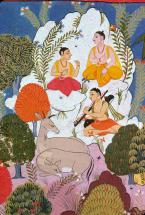
Subject: Folio 5, Ritumat (Rtumat) Garden in Trikuta mountain: Silver mountain; Gajendra Moksham. The episode of Vishnu saving the king of elephants (Gajendra) from the jaws of the crocodile. [Gajendra Moksham (Liberation of Gajendra, the King of the Elephants)]
Site Name:
Date: 1541 CE
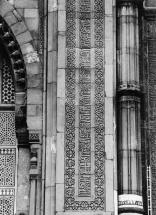
Subject: Front elevation, Central arch, right side, right side fluted pilaster and inscriptions in sandstone bordered with series of floral motif
Site Name: Hinglajgarh
Date: 900-999 CE
Subject: Gomukha yaksa, seated on elephant
Site Name:
Date:
Subject: Leather puppets of Karnataka are called Togalu Gombe Atta. "Togalu" means leather, "Gombe" means doll and "Atta" means dance. Such a composite elephant was produced by the gopis to keep Krishna from leaving. The lead rider could be Krishna but he is bending a bow like that of Kamadeva, the God of Love, who has also been portrayed on just such an elephant. The second rider seems to have wings and may be Garuda rather than Balarama. ['Togalu Gombe Atta' Style Shadow Figure of Nav Nari Kunjar, a Composite Elephant Made Up of Nine Women]