Taj Mausoleum, Iwan on west, south wall, detail: The mausoleum sits on a plinth, decorated with delicate relief carvings (munabbat kari) of plant elements. Flowers cover the dados of the three walls of the iwan and have symmetrical composition and minute botanical details. Shah Jahan’s artists composed flowers of their own convention, even grafting blossoms and leaves of different species together onto one plant. The style of the representation of the carved dado flowers is inspired by European herbals of the 16th and 17th centuries which Jahangir’s painters had consulted for floral miniatures.
Taj Mausoleum, Iwan on west, carved and inlaid dado on side wall: The mausoleum sits on a plinth, decorated with delicate relief carvings (munabbat kari) of plant elements. Flowers cover the dados of the three walls of the iwan and have symmetrical composition and minute botanical details. Shah Jahan’s artists composed flowers of their own convention, even grafting blossoms and leaves of different species together onto one plant. The style of the representation of the carved dado flowers is inspired by European herbals of the 16th and 17th centuries which Jahangir’s painters had consulted for floral miniatures.
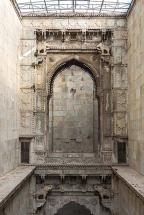
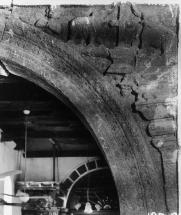
Taj Mausoleum, Iwan on west, back wall, detail: The pishtaq is accentuated by a large inscription in sulus script in a band on its rectangular frame. The texts are selected passages from the Quran which relate to the eschatological programme of the building and make references to the Last Judgment, divine forgiveness, and the reward of the faithful in Paradise. The spandrels are filled with flowery arabesques in red, green and dark yellow in inlay. The inner walls of the iwan are patterned with blind arches alternating with cartouches.
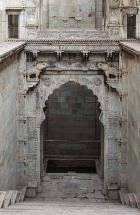
Taj Mausoleum, Iwan on west: The pishtaq is accentuated by a large inscription in sulus script in a band on its rectangular frame. The texts are selected passages from the Quran which relate to the eschatological programme of the building and make references to the Last Judgment, divine forgiveness, and the reward of the faithful in Paradise. The spandrels are filled with flowery arabesques in red, green and dark yellow in inlay. The inner walls of the iwan are patterned with blind arches alternating with cartouches.
Taj Mausoleum, Iwan on south, back wall, lower part: The pishtaq is accentuated by a large inscription in sulus script in a band on its rectangular frame. The texts are selected passages from the Quran which relate to the eschatological programme of the building. The spandrels are filled with flowery arabesques in red, green and dark yellow in inlay. Flowers cover the dados of the three walls of the pishtaq halls and have symmetrical composition and minute botanical details. Shah Jahan’s artists composed flowers of their own convention.
Taj Mausoleum, Iwan on south, back wall, upper part: The pishtaq is accentuated by a large inscription in sulus script in a band on its rectangular frame. The texts are selected passages from the Quran which relate to the eschatological programme of the building. The spandrels are filled with flowery arabesques in red, green and dark yellow in inlay. Flowers cover the dados of the three walls of the iwan and have symmetrical composition and minute botanical details. Shah Jahan’s artists composed flowers of their own convention.