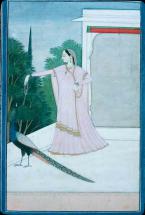
Subject: Peacock probably symbolizes Krishna [Lady with Peacock]
Site Name: Halebid / Halebeed
Date: ca 1200-1299 CE
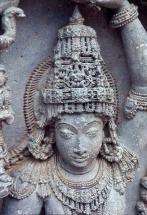
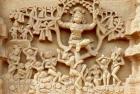
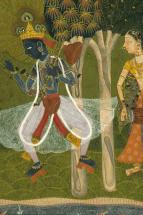
Subject: Upper portion, bust of Krishna [Krishna Lifting Mt. Govardhana]
Site Name: Vrindavan (Vrundavan, Brindaban, Braj)
Date: ca 1900-1999 CE
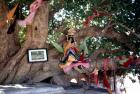
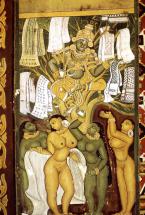
Subject: Krishna Steals Gopis clothes, Vrindavan is the village where Krishna spent his youth and purported to be the actual location of the event.
Site Name: Tirukkurunkudi
Date: ca 1500-1699 CE
Subject: Gopuram base: Krishna stealing Gopi clothes; Sculpture in situ
Site Name: Mysore
Date: ca 1675-1699 CE
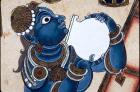
Subject: Upper portion, Krishna Stealing Curds
Site Name:
Date: ca 1570 CE
Subject: Left portion, Krishna [Birth of Krishna]
Site Name:
Date: ca 1565 CE
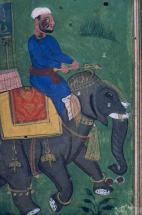
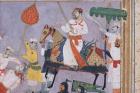
Subject: Upper right portion, elephant leading the procession; In 1564, four sultans allied at Talikota against the Vijayanagara empire. In the Battle of Talikota in 1565 the Vijayangara army led by Rama Raya was defeated. He was the son-in-law of the emperor Krishna Deva Raya. Vijayanagara (now known as Hampi) was completely destroyed in the third battle. The victorious Muslim army was commanded by Hussain Nizam Shah of Ahmadnagar, Ali Adil Shah and Ibrahim Qutb Shah. [Battle of Rakshasi-Tangadi (Battle of Talikota)]
Site Name:
Date: ca 1565 CE
Subject: In 1564, four sultans allied at Talikota against the Vijayanagara empire. In the Battle of Talikota in 1565 the Vijayangara army led by Rama Raya was defeated. He was the son-in-law of the emperor Krishna Deva Raya. Vijayanagara (now known as Hampi) was completely destroyed in the third battle. The victorious Muslim army was commanded by Hussain Nizam Shah of Ahmadnagar, Ali Adil Shah and Ibrahim Qutb Shah. [Battle of Rakshasi-Tangadi (Battle of Talikota)]
Site Name:
Date: ca 1565 CE
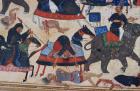
Subject: Lower right portion, combatants; In 1564, four sultans allied at Talikota against the Vijayanagara empire. In the Battle of Talikota in 1565 the Vijayangara army led by Rama Raya was defeated. He was the son-in-law of the emperor Krishna Deva Raya. Vijayanagara (now known as Hampi) was completely destroyed in the third battle. The victorious Muslim army was commanded by Hussain Nizam Shah of Ahmadnagar, Ali Adil Shah and Ibrahim Qutb Shah. [The defeat of the Hindu army at the Battle of Rakshasi-Tangadi (Battle of Talikota)]
Site Name:
Date: ca 1565 CE
Subject: In 1564, four sultans allied at Talikota against the Vijayanagara empire. In the Battle of Talikota in 1565 the Vijayangara army led by Rama Raya was defeated. He was the son-in-law of the emperor Krishna Deva Raya. Vijayanagara (now known as Hampi) was completely destroyed in the third battle. The victorious Muslim army was commanded by Hussain Nizam Shah of Ahmadnagar, Ali Adil Shah and Ibrahim Qutb Shah. [The defeat of the Hindu army at the Battle of Rakshasi-Tangadi (Battle of Talikota)]
Site Name:
Date: ca 1565 CE
Subject: Upper left portion, Hussain Shah watching the execution of Rama Raya; In 1564, four sultans allied at Talikota against the Vijayanagara empire. In the Battle of Talikota in 1565 the Vijayangara army led by Rama Raya was defeated. He was the son-in-law of the emperor Krishna Deva Raya. Vijayanagara (now known as Hampi) was completely destroyed in the third battle. The victorious Muslim army was commanded by Hussain Nizam Shah of Ahmadnagar, Ali Adil Shah and Ibrahim Qutb Shah. [Execution of Rama Raya in the Battle of Rakshasi-Tangadi (Battle of Talikota)]
Site Name:
Date: ca 1565 CE
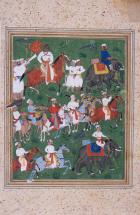
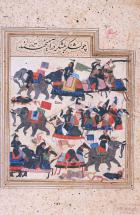
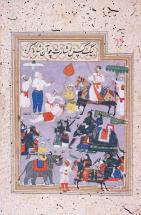
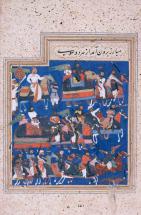
Subject: Battle of Rakshasi-Tangadi (Battle of Talikota). In 1564, four sultans allied at Talikota against the Vijayanagara empire. In the Battle of Talikota in 1565 the Vijayanagara army led by Rama Raya was defeated. He was the son-in-law of the emperor Krishna Deva Raya. Vijayanagara (now known as Hampi) was completely destroyed in the third battle. The victorious Muslim army was commanded by Hussain Nizam Shah of Ahmadnagar, Ali Adil Shah and Ibrahim Qutb Shah.
Site Name:
Date: ca 1565 CE
Subject: Battle of Rakshasi-Tangadi (Battle of Talikota). In 1564, four sultans allied at Talikota against the Vijayanagara empire. In the Battle of Talikota in 1565 the Vijayanagara army led by Rama Raya was defeated. He was the son-in-law of the emperor Krishna Deva Raya. Vijayanagara (now known as Hampi) was completely destroyed in the third battle. The victorious Muslim army was commanded by Hussain Nizam Shah of Ahmadnagar, Ali Adil Shah and Ibrahim Qutb Shah.
Site Name: Basohli
Date: ca 1675-1685 CE, ca 1680 CE
Subject: Upper portion, baby Krsna; Baby Krishna and Sage in Cosmic Sea [Markandeya Viewing Krishna in the Cosmic Ocean]
Site Name: Basohli
Date: ca 1675-1685 CE, ca 1680 CE
Subject: Baby Krishna and Sage in Cosmic Sea [Markandeya Viewing Krishna in the Cosmic Ocean]
Site Name: Patiala
Date:
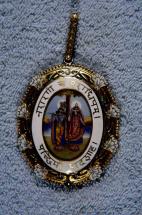
Subject: The enamel portrait of Krishna and Radha is inscribed "The Bestower of happiness on his people" and "King of the West". This award was instituted circa 1936 by Maharaja Bhupinder Singh, who also created the Order of the Holy Saint with enamel portrait of Guru Gobind Singh. This badge was worn with an even more elaborate gold collar, neck badge and star. [Sash badge inscribed "2" for the Order of Krishna (Yaduvansh Manya Mandal)]
Site Name: Aurangabad
Date: ca 1670 CE
Subject: Lower portion, Krishna with Attendants: serving girl; Krishna (literally: black), the Blue God or the Dark Lord, is the eighth avatar (or incarnation) of Vishnu.
Site Name: Aurangabad
Date: ca 1670 CE
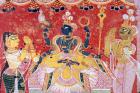
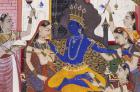
Subject: Center portion, Krishna with Attendants: Krishna (literally: black), the Blue God or the Dark Lord, is the eighth avatar (or incarnation) of Vishnu.
Site Name: Aurangabad
Date: ca 1670 CE
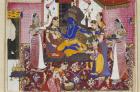
Subject: Krishna with Attendants, Krishna (literally: black), the Blue God or the Dark Lord, is the eighth avatar (or incarnation) of Vishnu.
Site Name: Sarwar
Date: ca 1690 CE
Subject: Center portion, Krishna and female drummer; Vasanta Raga
Site Name: Ettumanur
Date: Paintings: ca 1600-1699 CE
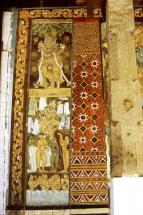
Subject: Western Gopuram, Painting to right of entrance door, lower panel: Krishna Stealing the Gopi's Clothes
Site Name: Ettumanur
Date: Paintings: ca 1600-1699 CE
Subject: Western Gopuram, Painting to right of entrance door: Krishna and Gopis