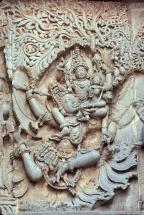
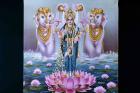
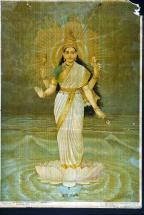
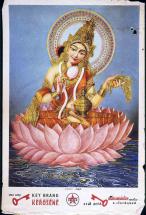
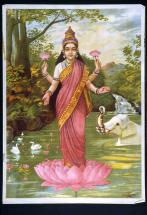
Subject: Panel: Garuda carrying Vishnu and Lakshmi
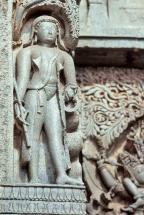
Site Name: Halebid / Halebeed
Date: 1120-1182 CE
Subject: Corner figure, to left of recessed wall with panel of Garuda carrying Vishnu and Lakshmi
Site Name: Nattanikottai
Date: ca. 1674-1855 CE
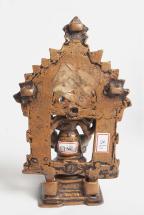
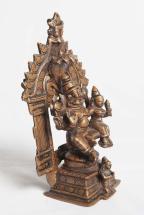
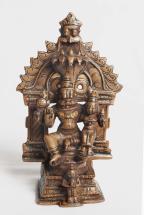
Subject: Narasimha Lakshmi, seated, profile view
Site Name: Nattanikottai
Date: ca. 1674-1855 CE
Subject: Narasimha Lakshmi, seated, front view
Site Name:
Date:
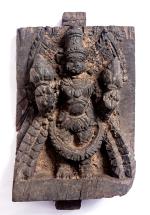
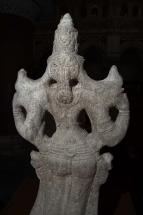
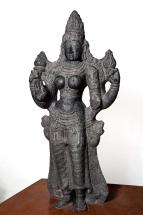
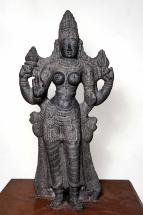
Subject: Sri Lakshmi, standing; possibly a part of a temple chariot
Site Name:
Date:
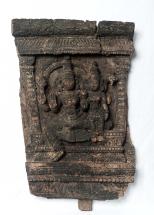
Subject: Vishnu and Lakshmi; possibly a part of a temple chariot
Site Name:
Date:
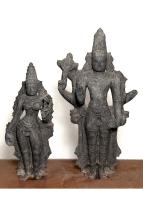
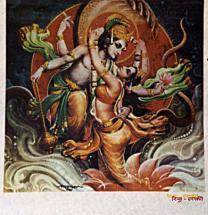
Subject: Vishnu and Lakshmi
Site Name: Dhaka
Date: 1990-1999 CE
Subject: Vishnu and Lakshmi
Site Name: Barpali
Date:
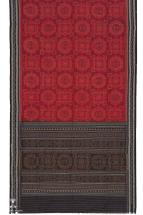
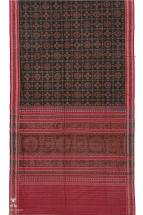
Subject: Border Jhoti Tie & Dye Saree. Jhoti Chitta is a traditional Odia white art mostly shown in rural areas of Odisha. It is made during festivals like marriage, Manabasa Gurubara and Raja Praba. The tradition of jhoti chitas has been utilized used to make saree prints. This saree has laxmipada (feet of Goddess Lakshmi) and Jhoti design all over the body and anchal. This saree was procured from weaver Bhagabana Meher.
Site Name: Barpali
Date:
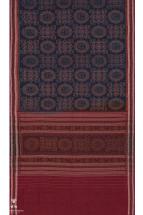
Subject: Jhoti Bandha Kuthi Saree. Jhoti Chitta is a traditional Odia white art mostly shown in rural areas of Odisha. It is made during festivals like marriage, Manabasa Gurubara and Raja Praba. The tradition of jhoti chitas has been utilized used to make saree prints. This saree has laxmipada (feet of Goddess Lakshmi) and Jhoti design all over the body and anchal. This saree was procured from weaver Bhagabana Meher.
Site Name: Barpali
Date:
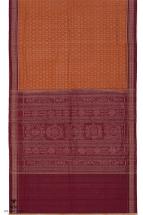
Subject: Surya Saree. This saree has a traditional anchal (end) with motifs of flowers and laxmipada (feet of Goddess Lakshmi). The body has an all-over design of the surya (sun) motif. The color scheme of the saree is red and orange. This saree was procured from weaver Bhagabana Meher.
Site Name: Barpali
Date:
Subject: Machha Check Jhuti Saree. Jhoti Chitta is a traditional Odia white art mostly shown in rural areas of Odisha. It is made during festivals like marriage, Manabasa Gurubara and Raja Praba. The tradition of jhoti chitas has been utilized used to make saree prints. The anchal has the jhoti and laxmipada (feet of Goddess Lakshmi) design. This saree was procured from weaver Bhagabana Meher.
Site Name:
Date: 1800-1899
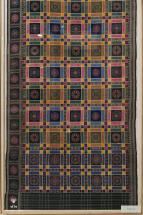
Subject: Utkala Laxmi Tie & Dye Cotton Saree. The body of the saree has different forms of lotus, placed in the center of the square formed by intersecting floral ikat lines both horizontally and longitudinally. The border and anchal (end) also have lotus motifs. This saree is popularly known as 'Utkal Laxmi' because lotus is associated with Goddess Lakshmi. This is the main traditional double ikat saree of Sambalpur area of Odisha. This saree was procured from Ghanashyam Meher.
Site Name: Ahmedabad
Date: ca 1600-1799 CE
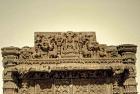
Subject: Pediment with Sri Lakshmi; Fa?ade of a Domestic Shrine
Site Name: Patan
Date: ca 1075 CE
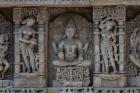
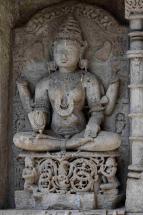
Subject: Lakshmi, fourth terrace, well end pavilion, north side
Site Name:
Date:
Subject: Lakshmi, standing, back view
Site Name:
Date:
Subject: Lakshmi, standing, front view
Site Name:
Date:
Subject: Lakshmi, standing, front view
Site Name: Patan
Date: ca 1075 CE
Subject: Lakshmi, fourth terrace, well end pavilion, north side
Site Name:
Date: ca 1970-1979 CE
Subject: Lakshmi, Consort of Vishnu, Visnu. Published by Ayeskay Art Studio.
Site Name:
Date: 1927 CE
Subject: Lakshmi, Consort of Vishnu, Visnu. Published by Ravi Varma Press (Ravi Varma F.A.L. Works), Malavli, Maharashtra.
Site Name:
Date: ca 1900-1980 CE; before 1980 CE
Subject: Lakshmi, Consort of Vishnu, Visnu. Variant iconography as harvest goddess.