Galleries

Amaresvara temple, Kuhur, Thanjavur...

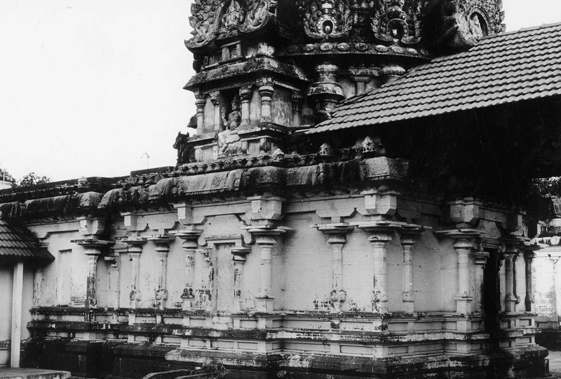
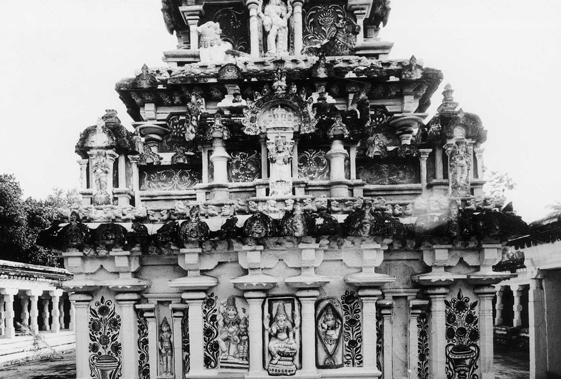
The Amaresvara temple at Kuhur was earlier known as Adityesvara and was rebuilt in stone in or before the second year of Uttama Chola (973 CE). While on the whole, this is an example of a rather ordinary temple; a special feature is that all the divinity niches or devakosthas were crowned by ornamental or arched gateways - toranas. References: M.W. Meister and M.A. Dhaky, 1963, p.181.

Collection type:

Galleries

Anantisvarasvami temple, Kattumanna...

The city of Kattumannargudi with the two temples of Shiva and Vishnu was a creation of Parantaka I (907 - 954) himself. The principal deity of this Shiva temple is called Anantisvarasvami. The original temple dates back to the reign of Parantaka I (940 CE) but the present fabric of the temple dates to Aditya II's time (960-965 CE). For example, the decorative carving on the wall pilasters indicates a date late in Parantaka's reign or post-Parantaka. The temple is preserved almost intact with only a few modifications. A feature particular to this temple that hasn't been seen before or never repeated afterwards is the introduction of a decorative motif of goose (hamsa) pairs above the basal block (homa) of the pilasters. References: S.R. Balasubrahmanyam, 1971, p.72-78 and Meister and Dhaky, 1963, pp.178-179.

Collection type:

Galleries

Apatsahayesvara temple, Aduthurai, ...

According to an inscription dated in the sixteenth year of Uttama Chola (987 CE), the Apatsahayesvara temple at Aduthurai was rebuilt in stone by Sembiyan Mahadevi who had the previous grants to the temple re-engraved. The reconstruction was probably done around 987 CE. The ornamentation of the superstructure (vimana), pilasters and the moulded base are typical of the Mahadevi phase. References: M.W. Meister and M.A. Dhaky 1963, pp.188-189.

Collection type:

Galleries

Apatsahayesvara temple, Tiruppalana...

The Apatsahayesvara temple at Tiruppalanam belongs to the reign of Aditya I (871-907 CE). This is a unique temple owing to the account of the plan of its superstructure (vimana) and half hall (ardhamandapa) and disposition of the associated imagery. The earliest inscription that can be definitely ascribed to Aditya is from 884 CE. The figures of the divinity niches (devakoshthas) are so much covered with stucco that the fine original figures cannot be recognised. Though an unusual temple, this temple does not have a following. References: S.R. Balasubrahmanyam, 1966, pp.153-156, M.W. Meister and M.A. Dhaky, 1963, p.158.

Collection type:

Galleries

Brahadisvara, Gangaikonda Cholapura...

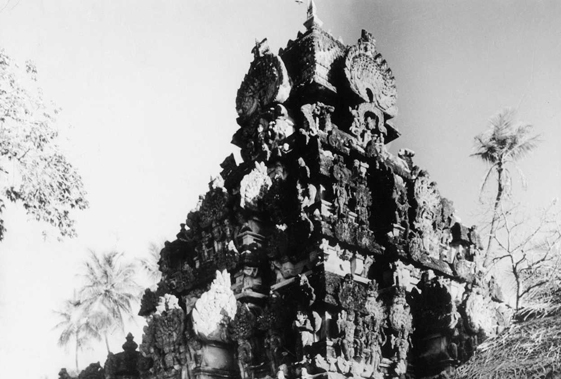
The Brahadisvara temple at Gangaikondacholapuram was built for Shiva by Rajendra I (1012-1044 CE). Rajendra I chose this location to build a new a great capital city for the Chola Empire most probably during the first quarter of 11th century in order to commemorate his conquest over northern territories. He not only built a city, now in ruins and excavated partially, but also a great temple for Siva. However, there is no inscription of Rajendra himself. The earliest inscription is that of his son, Vira Rajendra (1063-1069 CE) that records the donations of his father. The Brahadisvara temple at Tanjavur had influenced this temple in many ways for example in the vast conception of the layout and massive proportion of the elevation. Moreover, the sanctum with its axial units, the Chandikesvara shrine, the cloister mandapa (hall) with the subsidiary shrines and a gopura (gateway) are similar to Tanjavur. However, the temple has its own unique features and some of the shortcomings in the design of the Brahadisvara at Tanjavur have been overcome. For example, there is a provision for erecting wooden scaffolding in the masonry of the sanctum, and the elevation is more ornate as compared to the Tanjavur temple. The temple has sculptures of exceptional quality. The sub-shrines of Chandesa and Amman were originally built according to the plan of Rajendra I, as well as the Simhakeni (the lion-well). Over time the sub-shrines of Thenkailasha, Ganesha and Durga were added. The authenticity of these additions is supported by the Agamic texts concerning renewal and reconstructions of temples in use.


References:
  • M.W. Meister and M.A. Dhaky, 1963, pp.241-249
  • UNESCO: https://whc.unesco.org/en/list/250

Collection type:

Galleries

Brahmapurisvara temple, Pullamangai...

Brahmapurisvara temple, Pullamangai, Tamil NaduThe Brahmapurisvara temple at Pullamangai, of early years of Parantaka I (907-954 CE), is acknowledged as one of the most articulate example of early Chola architecture and sculpture. According to one of the inscriptions, this temple was known in the past as that of Tiru Alandurai Mahadevar. It is of special importance also because it carries many inscribed records of that king’s time under his title of Parakesari. The base mouldings and surface decoration are crisply chiselled and have mythological panels illustrating episodes from the Ramayana and the Mahabharata. The central niches have elaborate figural arrangements in that the divinities are not by themselves but have elegant companion figures. They are Dakshinamurti, Shiva’s Lingodbhava form with Brahma and Vishnu acknowledging Shiva’s supremacy, and a sculpture of Brahma. The original family (parivara) shrines of the attendant deities have disappeared. By virtue of the temple's large size, its ornateness and the quality of the workmanship, the temple may have been a royal building. References: S.R. Balasubrahmanyam, 1971, pp.46-49, J. Harle, 1958, M.W. Meister and M.A. Dhaky, 1963, pp.165-167.

Collection type: