Galleries

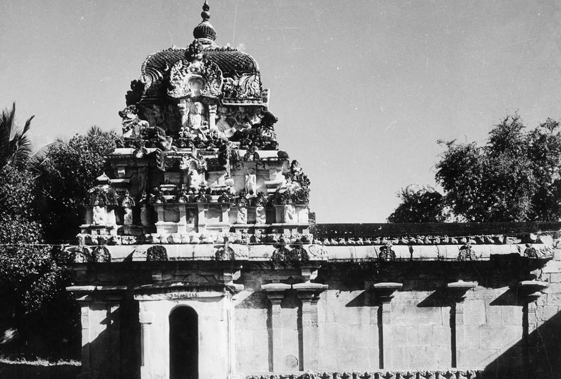
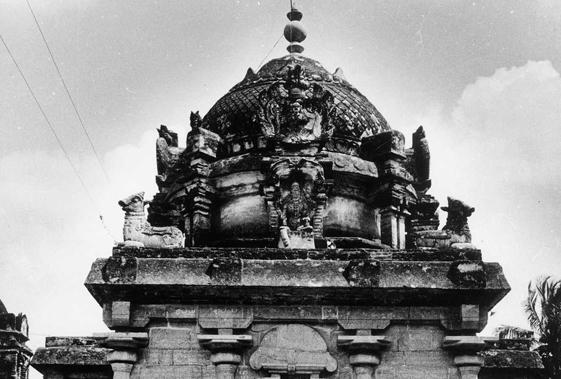
Cadaiyar Kovil, Tiruchchenampundi, ...

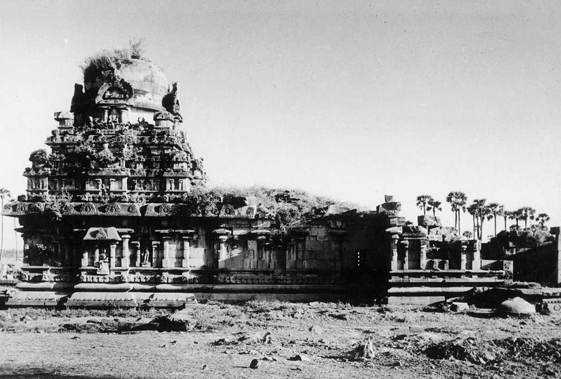
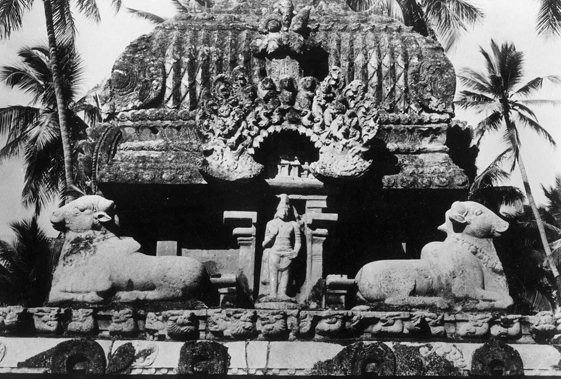
Cadaiyar Kovil at Tiruchchenampundi has an inscription from the time of Pallava Nandivarma III, Vijaya Nrptungavarma, Ko-Ilango Muttaraiyar and Rajakesarivarma who could be Aditya I (871-907 CE). The temple was probably rebuilt in stone during the time of Parantaka I around 920-921 CE. This temple is special because it provides an example of a shrine from Parantaka's time that still follows the older iconographic pattern. References: M.W. Meister and M.A. Dhaky, 1963, p.169.

Collection type:

Galleries

Candrasekhara temple, Tiruchchendur...

The Candrasekhara temple at Tiruchchendurai has inscriptions on its walls that cover almost the whole of the Chola period. According to an inscription Pudi Adichcha Pidariyar, queen of Parantaka I is credited with the construction of this temple with stone (karrali). The stone temple was already in existence in 909 CE when a stone structure replaced a brick structure. A certain formal nearness of this building to the Muvarkovil, together with the style of pilaster decorations and bhutas of the bhutamala, seem to warrant a date in or before 894 CE. References: M.W. Meister and M.A. Dhaky, 1963, pp. 210-212, D. Barrett, 1974, p. 52, S.R. Balasubrahmanyam, 1966, pp.93-95.

Collection type:

Galleries

Divyajnanesvara temple, Koviladi, T...

The Divyajnanesvara temple at Aduthurai was built in Gandaraditya's third regnal year i.e. 952 CE. It is relatively small with only traces of decoration on the vase shaped pillar part (lasuna) of its pilasters. It stands on a simple platform (upapitha) and the door guardians (dvarapalas) are smaller than usual but of good workmanship. All pillars and pilasters are of the full Early Chola order with plain angular corbels. References: M.W. Meister and M.A. Dhaky, 1963, p.176, D. Barrett, 1973, p. 85.

Collection type:

Galleries

Gangaikondacolisvaram, Kulambandal,...

Gangaikondacolisvaram, Siva temple at Kulampandal is of the time Rajendra Chola built some time before his twenty-second year - 1034 CE. The temple is said to have been built by Isana-Siva Pandita, a preceptor of Rajaraja I (985 - 1014 CE) as well as of Rajendra I (1014 – 1044 CE). Reference: M.W. Meister and M.A. Dhaky, 1963, pp. 232-234.

Collection type:

Galleries

Ghritasthanesvara temple, Tillaisth...

The Ghritasthanesvara temple at Tillaisthanam is perhaps the latest amongst Muttaraiyar buildings; it ushers in features that are seen in typically Chola temples. For example, the bulls over the prati-corners show a transition toward Chola types. There are some stray sculptures of Muttaraiyar workmanship including an earlier Nandi in the temple’s surroundings. Three important inscriptions are associated with this temple. The oldest, perhaps of the brother of Maranjadaiyan Varaguna II, is one of the monarch’s fourth year (866 CE), the second is in the tenth year of a Pandya king inscribed by one Pallava Nandivarma. The third, of the eighth year of Rajakesarivarma (879 CE) that records a donation by Aditya I’s son. These inscriptions give clear evidence of the transfer of power over this region from the Pallava to the Pandya and then to the Chola rulers. The temple seems either pre-Chola or rebuilt in 878-879 CE. And if the builders were indeed Chola, then they must have tried to follow the convention of an older Muttaraiyar building. Reference: M.W. Meister and M.A. Dhaky, 1963, pp. 143-144, S.R. Balasubrahmanyam, 1966, pp. 160-164.

Collection type:

Galleries

Jvaraharesvara temple, Kanchipuram,...

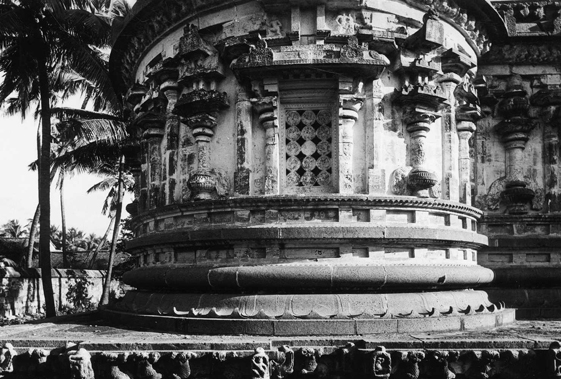
The Pallava king, Narasimha II in 8th century CE, built the Jvaraharesvara temple but the inscriptions illustrate that the Chola kings also used to donate to this temple. Although it is one of the smaller buildings of its time, it is quite ornate and is a significant example of a temple of the time of Kulottunga III (1178–1218 CE). It is also an interesting structure because of its ovular plan. The temple was renovated at the beginning of the 20th century and the brick superstructure is completely new; the complex is surrounded by a rubble compound wall, a small gateway or gopura in front on the east. Only the lower stone part of the gopura appears late Chola. References: M.W. Meister and M.A. Dhaky, 1963, pp.320-322.

Collection type: