Galleries

Kadambavanesvara temple, Erumbur, T...

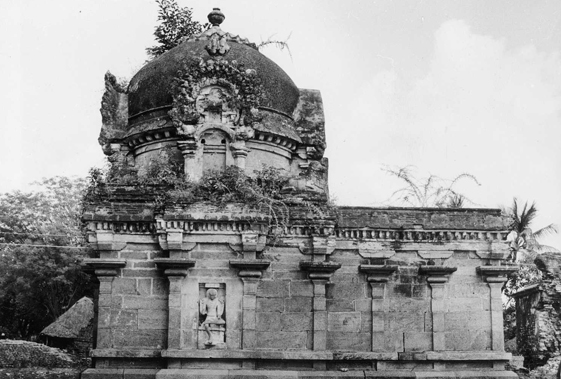
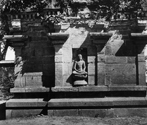
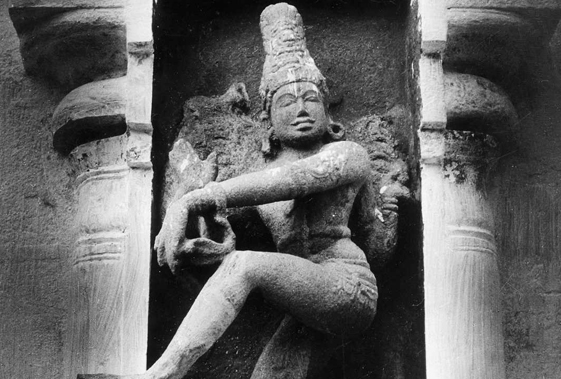
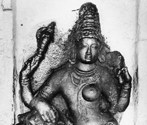
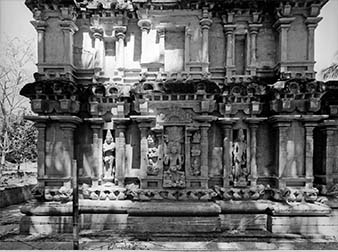
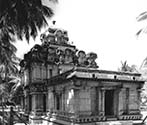
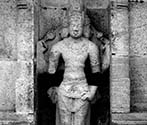
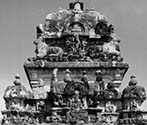
Kadambavanesvara temple, Erumbur, Tamil NaduThe Kadambavanesvara temple at Erumbur is a rather small structure that can be definitely dated. The presiding deity of the temple is called Perumanadigal of Urumur Siru Tirukkoyil (Erumbur in the early Chola period was known as Urumur) and in later times as Kadambavanesvaram. The temple is datable by inscriptions of Parantaka I (907 - 954 CE) and was converted to stone in Parantaka I’s twenty-eighth regnal year (935 CE) by Kunvan Aparajitan with permission from the king. The temple does not reflect the same achievements as the Brahmapurisvara and Nagesvarasvami. As in the case of most Early Chola Temples, the central shrine of the original stone-temple was made up of only two parts, the sanctum and the front half hall (ardhamandapa). The present dome-shaped cupola (sikhara) over the sanctum is a later structure of brick. There are eight subsidiary shrines around the main shrine for the eight parivara-devatas. The main interest of this simple temple lies in the three images of the superstructure (vimana) that are of fine quality and metropolitan style. References: M.W. Meister and M.A. Dhaky, 1963, p. 172, S.R. Balasubrahmanyam, 1971, pp. 67-70, D. Barrett, 1973, pp. 75-76.

Collection type:

Galleries

Kailasanathaswami, Sembiyan Mahadev...

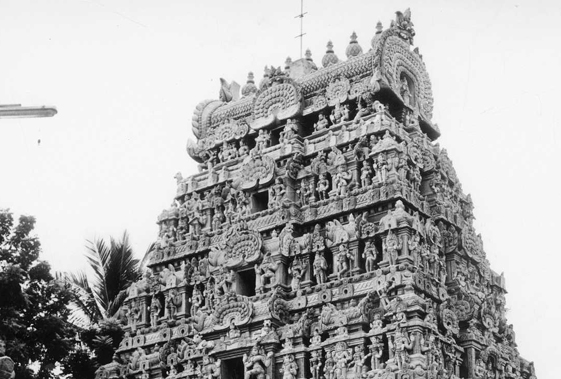
The queen Sembiyan Mahadevi built the Kailasanathaswami temple at Sembiyan Mahadevi Pattinam. She also established in the town a set of brahmins learned in the four vedas consequently called chaturvedi bhattas. A select body of elders were chosen to administer temple affairs and utilisation of funds and gifts for the temple. This temple was a new edifice and the inscriptions range from the time of Uttama Chola (971 – 988 CE) to that of Rajaraja III (1216–1246 CE). The temple village lies desolate today and the temple has suffered in appearance due to the liberal coats of whitewash applied to its walls and layers of painted stucco on the temple tower. There are nine divinity niches (devakoshtas), a feature characteristic of the time of Sembiyan Mahadevi. References: Venkataraman, 1976, pp. 27-30, M.W. Meister and M.A. Dhaky, 1963, p. 185.

Collection type:

Galleries

Kampaharesvara temple complex, Trib...

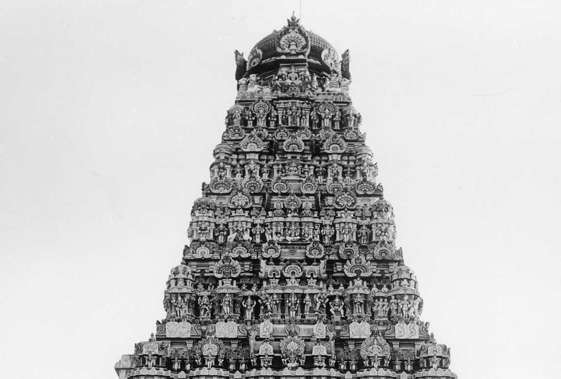
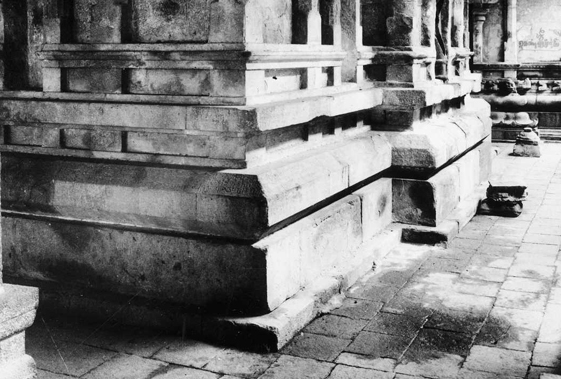
Kampaharesvara temple complex, Tribhuvanam, Tamil NaduThe Kampaharesvara temple is the last of the four great temples built by the Cholas. Kulottunga III (1178–1218 CE) made three wars against the Pandyas. After his victory in the third war, he held a grand celebration at Madurai and assumed the title of Tribhuvana Vira devar and built in commemoration of his great victory, this temple dedicated to Siva in the name of Tirubhuvana Viresvarar. According to a Sanskrit inscription, the temple was built at the instance of the king’s spiritual preceptor Somesvara also called Isvara Siva. Tanjavur, Gangaikondacholapuram and Darasuram temples were built under similar auspices. The temple is unique in that the shrines for the Devi and for Sarabhamurti, a newly evolved icon of the late Chola period are contemporaneous. On the west side of the hall that is approached by stairs (sopana-mandapa) is a shrine dedicated to Shiva. These became Somaskanda – separate shrines dedicated to Somaskanda are popularly called Tyagraja shrine after the celebrated shrine at Tiruvarur. These gained popularity in Tanjuvar area around this time. Although the superstructure (vimana) is relatively plain, the platform is very tall that is an interesting deviation from the norm. References: S.R. Balasubrahmanyam, 1975, p. 33, M.W. Meister and M.A. Dhaky, 1963, pp. 312 - 317.

Collection type:

Galleries

Karyavarohana temple, Nagapattinam,...

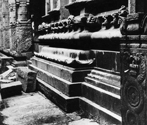
The main shrine of the Kayarohana temple-complex at Nagapattinam was possibly rebuilt in or slightly before 1010 CE in Rajaraja's time (985 – 1014 CE). The temple, however, shows a few earlier features particularly of Sembiyan Mahadevi's time. For example, Lasuna, ghata and pali are ornamented in the style of later temples of Sembiyan Mahadevi. There is an adjoining smaller temple of Tyagraja that was added later. References: M.W. Meister and M.A. Dhaky, 1963, pp. 249-250.

Collection type:

Galleries

Koranganatha temple, Srinivasanallu...

The Koranganatha temple at Tiruchirapalli (Tamil Nadu) stands in a built-in pit and is of modest proportions. This temple has a re-engraved inscription from the time of early Chola ruler Aditya I (871 - 907 CE), and four inscriptions of Chola Parantaka's time (907 - 954 CE). The fabric of the temple is not of Aditya's time but rather of rebuilding during Parantaka I's time (927 CE). The entire composition displays a return to earlier Pallava simplicity and marks the transitional period between the Pallava and Chola - the base is of stone and the upper levels are in brick. The now empty sanctum sanctorum (garbhagriha) originally contained a lingam. The pilasters embedded in the wall are adorned with beautiful sculptures and the arches have delicately carved frieze work. The crowning dome or sikhara is four-cornered and curvilinear with the same four niches, topped by chaitya arches. The shrine was desecrated at some later date by a monkey as is evident from its present name of Koranganatha - Lord of the Monkeys. References: M. Boothalingam, 1971, p.16 & pp. 29-37, K. Deva, 1995, p.224 and M.W. Meister and M.A. Dhaky 1963, p.170, V. Dehejia, 1990, p.22.

Collection type:

Galleries

Mahalingasvami temple, Tiruvidaimar...

The Mahalingasvami temple at Tiruvidaimarudur has been replaced by a modern structure. The vanished temple was itself a stone replacement for a brick structure built during Uttama Chola's time - 975 CE. References: M.W. Meister and M.A. Dhaky, 1963, p.183.

Collection type: