Galleries

Matsyapurisvara temple, Koyil Tevar...

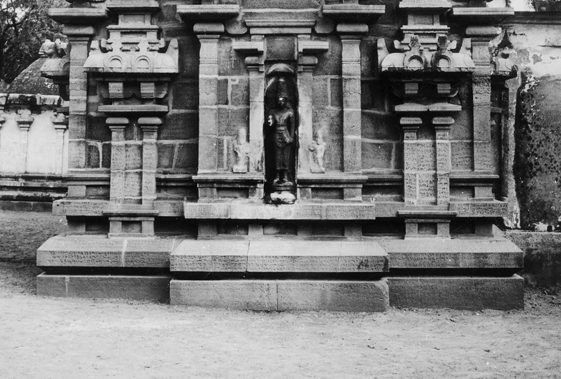
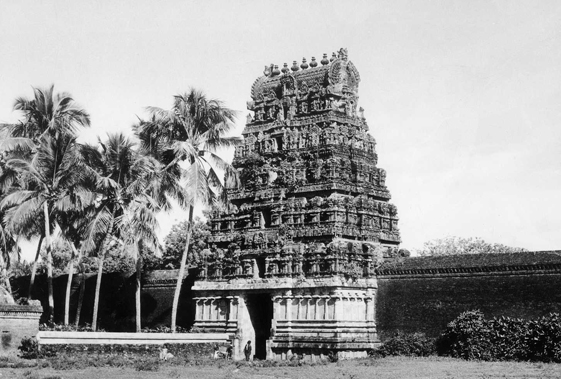
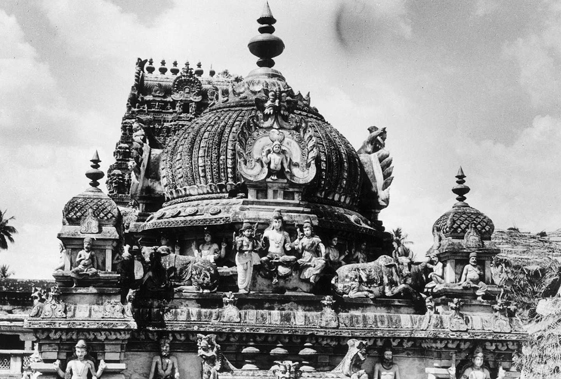
The Matsyapurisvara temple at Koyil Tevarayan Pettai received endowments continuously from the seventeenth year of Aditya I i.e. 888 CE to the thirty-eighth year of Parantaka I i.e. 945 CE. The present fabric may date to the ninth year of Uttama Chola i.e. 980 CE when Sembiyan Mahadevi made a large grant. Moreover, even the divinity niche sculptures (devakoshthas) seem later than the period of Parantaka. References: M.W. Meister and M.A. Dhaky 1963, pp.183 - 184.

Collection type:

Galleries

Muvar Kovil, Kodambalur, Tamil Nadu

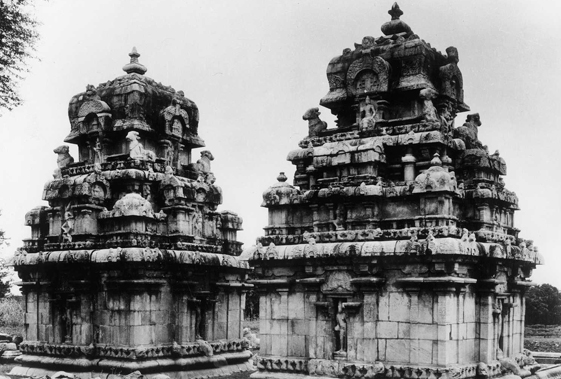
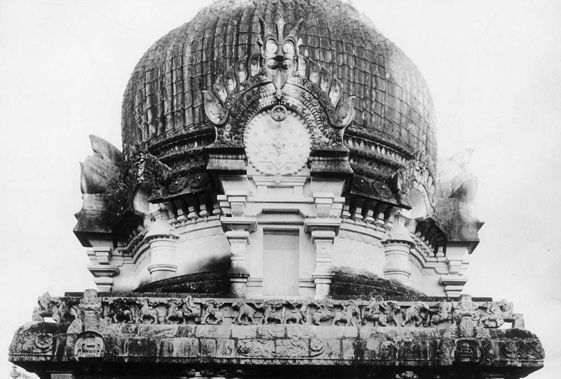
Koadambalur was the home of a family of local chiefs called Irukkuvels. It was once a city of temples like Kanchi and Kumbakonam. There were possibly at one time 108 temples but now only two important ones survive - the Muchukundesvaram and the Muvarkoyil. The date of this temple has been subject of prolonged discussion. Two opposing viewpoints are known. One advocates a mid-tenth century date for Irrukuvel chieftain Bhuti Vikramakesari and hence for the Muvarkovil that he founded. According to some other scholars, the paleography, the contents for the inscriptions and the style indicate that the structure belongs to the time of Sundara Chola (956 – 973 CE). The temple complex consists of three west-facing temples identical in plan and size, preceded by a common pillared hall (mahamandapa), a Nandi's pavilion, a gateway (gopura) entrance and a surround of sixteen sub shrines (parivara) shrines. The northern shrine has gone completely out of existence except the plinth and the central and southern shrines were in a state of collapse but they were carefully and scientifically renovated and restored. The superstructures (vimanas) and the crowning cupolas (sikharas) of the two surviving shrines make a strong visual impression. They are also noted for fine workmanship and exquisite sculptures that are fine specimens of early Chola art. References: M.W. Meister and M.A. Dhaky 1963, pp.202 - 208, S.R. Balasubrahmanyam, 1971, pp. 108-137, D. Barrett, 1973, p. 86.

Collection type:

Galleries

Nagesvara complex, Tirunagesvaram, ...

A fragmentary inscription in the Nagesvara temple, with no regnal year or king's title mentions the names of Uttama Chola, his two queens, his mother Sembiyan Mahadevi and his father Gandaraditya. It seems plausible that Uttama Chola or Sembiyan Mahadevi built this temple, possibly in the early years of Uttama Chola (971 - 988 CE). Reference: M.W. Meister and M.A. Dhaky, 1963, pp. 179-181.

Collection type:

Galleries

Naltulai Isvaragrham, Punjai, Tamil...

Naltulai Isvaragrham at Punjai is one of the finest of early Chola temples though less elaborate; the shrine has no central and corner projections; but despite that, the architectural appeal is not diminished. These figures rank among the greatest masterpieces of early Chola sculptures. The niches are topped by ornamental / arched gateways (toranas) of high quality workmanship. The temple has impressive door guardians (dvarapalas). On the temple itself there is no inscription earlier than twenty-second regnal year of Rajaraja I (985 – 1014 CE). The subsidiary shrine of Chandesha has an inscription from around Aditya II's reign (960- 965 CE). However on the basis of the ‘classicism’ shown by the dvarapalas, Nandi and Mahakala images, this temple would warrant a date not later than the mid-tenth century. References: M.W. Meister and M.A. Dhaky 1963, pp. 175-176, D. Barrett, 1974, pp. 81-82.

Collection type:

Galleries

Pancanadisvarar complex, Tiruvaiyar...

Tiruvaiyaru means place of five rivers – the Kaveri and her four branches. Appar, Sambandar and Sundarar have glorified this place by their devotional hymns so this temple was a living institution even before the seventh century CE. In recent years, Tiruvaiyaru has gained greater prestige by the association with this place of saint Thyagaraja, one of the greatest exponents of Carnatic music. The Pancanadisvarar temple here is one of the holiest temples in Kaveri valley. It is a large complex with several subsequent additions but the main shrine is a small structure. The temple was probably rebuilt in stone in or before 888 CE. Reference: M.W. Meister and M.A. Dhaky, 1963, p. 161, S.R. Balasubrahmanyam, 1966, pp.149-152.

Collection type:

Galleries

Pralayakalesvara temple, Pennakadam...

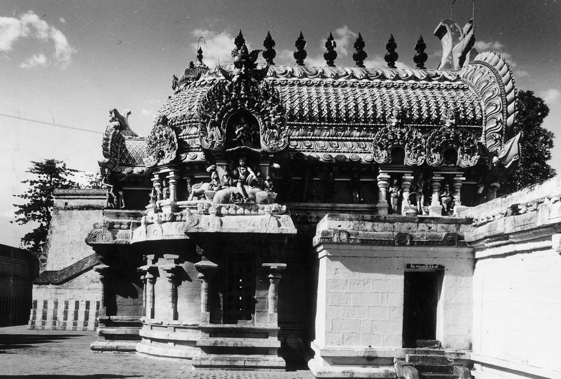
The Pralayakalesvara temple at Pennakadam is wholly apsidal - one of the few kinds in the Chola country. Another example of an apsidal temple is the main temple at Muyarchchinadesvarar; a large number of apsidal temples are however found in Tondai-nadu. This is a small-medium, single storeyed (alpavimana), east facing temple. An interesting feature of this temple is that the gable is profusely covered with modern stuccowork. Reference: S.R. Balasubrahmanyam, 1971, p. 190, M.W. Meister and M.A. Dhaky 1963, p. 257.

Collection type: