Galleries

Khingar Vav, Vanthali, Gujarat

Khingar Vav, Vanthali, Gujarat

Collection type:

Galleries

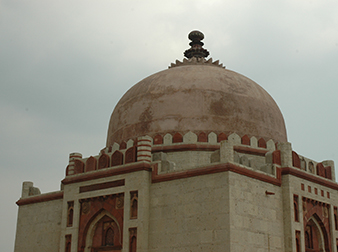
Khwaja Kafur's Mosque, Sikandra, UP

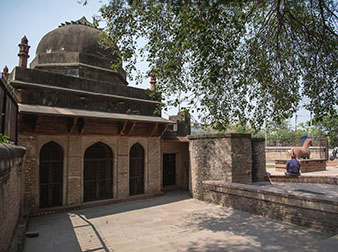
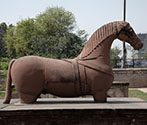
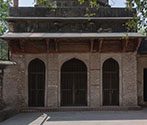
The Kafur’s Mosque and Stone Horse is an early Mughal-period religious complex located south of the Delhi–Mathura highway in the transport colony area of Sikandra, Agra district of Uttar Pradesh. Built between 1605-1613 CE by Itibari Khan, a noble under Emperor Jahangir, the mosque was constructed in honour of the Sufi saint Khwaja Kafur, as recorded in a Persian inscription on its eastern facade. Constructed of lakhori bricks, red sandstone, rubble masonry, and lime mortar, the three-arched, domed mosque is accompanied by the tomb of Khwaja Kafur and a stone horse representing his pet. The monument is protected and restored by the Archaeological Survey of India (Agra Circle).
Collection type:

Galleries

Khwaja Khizr Complex, Sonipat

Ibrahim Lodi built this tomb in the memory of Khwaja Khizar, a local saint and celebrity in 1522-24. Approached through a flight of steps the tomb along with an independent gateway stands on a high brick platform. Gateway is a small structure with two arched openings on either side of a central passage decorated with panels, recessed arches, mouldings and lotus medallions and inscriptions. A Chatri supported by red pillars, covered with domical roof is located on the top of the gateway. The main structure is square in plan with four openings on all sides except the western wall where a mehrab is located. Interior walls are decorated with recessed arches, squinches at the corners, floral designs in various colours on the ceilings. The structure is covered with a hemispherical dome resting on a low octagonal drum topped with a finial over an inverted lotus.

Collection type:

Galleries

Khwaja Sarai Bridge, Faridabad

Located in Atmadpur, the Bridge of Khwaja Sarai is one of the bridges built by Jahangir to facilitate the travelers. The bridge is an arcaded structure that spans across the width of river. Three pointed arches support the bridge along with buttresses at the central arch for extra support. A pair of minarets are located at the central arch with fluted shafts and topped with domes. Structure of the bridge is constructed on big blocks of stone without any plaster. it is also known as the Bridge on Budhia Wala Nala. The bridge is in functional state and used by pedestrians and light vehicles.

Collection type:

Galleries

Khwaja Sarai, Faridabad, Haryana

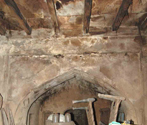
The present day Khwaja Sarai is in a deteriorated condition and is reused for residential purpose by the locals. Only a part of a wall survives and is visible from the main street. The wall is constructed of stone and mortar and left unplastered while the interiors are plastered. A band of crenellations is present at the parapet level. Some of the rooms of the sarai survive as part of modern houses constructed later by the residents. The interiors have flat ceiling supported on beams and arches spanning the width of the rooms.

Collection type:

Galleries

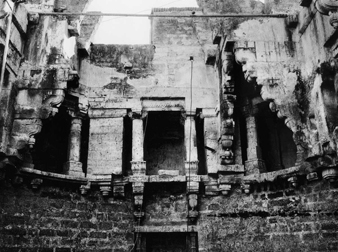
King Sitaram Maharaj Fort/Bacchu Si...

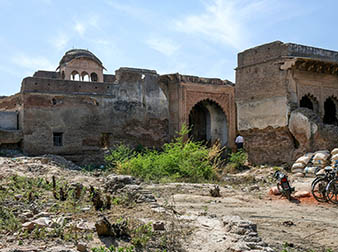
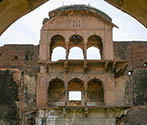
The King Sitaram Maharaj Fort, Kotwan is an 18th-century fortified complex located in the centre of Kotwan village, about 140 metres west of the Grand Trunk Road in Mathura district of Uttar Pradesh. Built by Sardar Sitaram Singh Deede of the Deede (Dinda) Jat clan, the fort once formed an important local stronghold between Kosi and Hodal. Constructed of brick, sandstone, stucco, and lime mortar, only parts of the inner fort survive today, including the main gateway and the kachehri (court hall). The monument is protected by the Department of Archaeology Uttar Pradesh.
Collection type: