CENTER FOR ART AND ARCHAEOLOGY
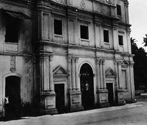

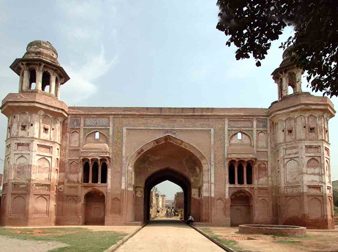
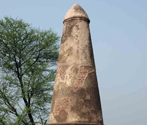
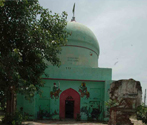
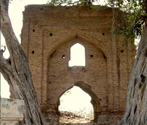
Sarai Amanat Khan is a monumental Mughal period Caravan Sarai located to the southeast of Amritsar, in a village by the same name, on the Tarn Taren - Atari Road. It is the last Sarai located in India along the Agra-Lahore route. This Sarai was built by Abd al Haqq alias Amanat Khan who was a calligrapher in Shahjahan’s court. Shahjahan bestowed the title Amanat Khan on him after his appointment as the calligrapher of the magnificent Taj Mahal. The eastern gateway of the Sarai bears an inscription that testifies to the date of its construction. This square-shaped Sarai built around a large courtyard is known for its glazed tile decorations. The use of glazed tiles was a characteristic feature of Persian architecture and shows the Persian influence on medieval Indo-Islamic monuments. The Sarai also features splendid gateways on the eastern and western sides with floral arabesque designs rendered on the spandrels. The Sarai had octagonal bastions at every corner covered with chhatris only two of which on the western side survive. The western gatehouse which was in ruins is currently restored by the ASI. Sarai Amanat Khan also houses a three-low domed mosque with blue-coloured tiles on its gateway. Though this monument has a protected status, at present the Sarai is occupied by rural occupants who migrated here during the Indo-Pak partition in 1947. Step wells or baolis provided a huge relief for the travellers and the mobile soldiers from the extreme summers of the northern Indian region. Constructing baolis was also seen as an act of charity or religious devotion. The multi-storeyed step well near the Western gateway of Sarai Amanat Khan has neither received the attention of scholars nor the care of archaeological restorers. Medieval chroniclers have not mentioned this baoli but the architectural splendour of this monument indicates the possibility of its patron being a prominent Mughal noble. The façade of the two-storied entrance gateway of this step-well is still erect high though falling from many places. Right now the step well is surrounded by debris and the overgrowth of vegetation. The kos minar near Sarai Amanat Khan, on the road-side between Atari and Amanat Khan, is found without much damage. It gives the appearance of a tapering circular pillar rounded at the top. The octagonal base is separated from the circular portion by moulding.