Galleries

ACSAA Digital Images (Museums)

The American Council for Southern Asian Art (ASCAA) Digital Images were first distributed under the aegis of the ACSAA Color Slide Project, a non-profit initiative administered through the former Asian Art Archives of The University of Michigan that from 1974 through 2006 provided high quality original and duplicate 35 mm color slides of the art and architecture of India and greater South Asia, Southeast Asia and Indonesia, and the Himalayan regions to individuals and institutions for teaching and research purposes around the world.

Collection type:

Galleries

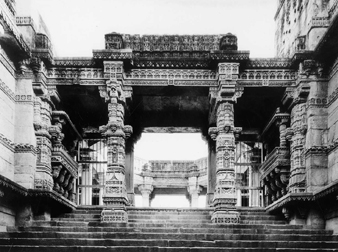
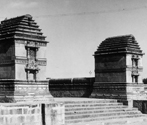
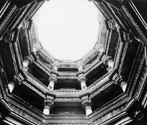
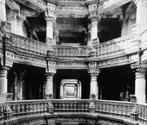
Adalaj Vapi, Ahmedabad, Gujarat

The Adalaj Stepwell was built in 1499 CE during the reign of Sultan Mahmud Begada (1458-1511 CE). The stepwell was commissioned by Queen Ruadabai, wife of Raja Virasimha. Raja Virasimha who, according to scholars, started the stepwell, was killed in battle with Mahmud Begarah, which has led to much speculation about who was the patron of the stepwell and the reasons why the stepwell was constructed.


The Adalaj stepwell is of the Late Maru-Gurjara style. It has a stepped corridor that descends into the well. These steps allow the visitor to go and retrieve water, take part in Tirthayatra, or pilgrimage, or to look at the decorative ornamentations that illuminate the stepwell’s walls.


The corridor is made of an arcade of pillars and pilasters. The pillars are in the bhadraka style, that is squares with recesses and are highly decorated with their serpentine buttresses and bell pendants. The decorative motifs in the opened niches represent composites of animals, kalpavraksha tree of life, vines, swirling trees, or a full lotus. The inscriptions praise the stepwell and compare it to the Ganges and Mount Kailash because of its beautiful ornamentation that creates this idea of another realm or place that is important.


References:


Purnima Mehta Bhatt, Her Space, Her Story: Exploring the Stepwells of Gujarat, 2014


Jutta Jain-Neubauer, The Stepwells of Gujarat: In Art-historical Perspective, 2003.


Morna Livingston, Steps to Water: The Ancient Stepwells of India, 2002.


Darielle Mason Frame, Form, and Variation in the Maha-Gurjara Temple, 1995.

Collection type:

29 Galleries

Additional Museums

The section includes museum collections documented in the Photo-archive of the CA&A.

Collection type:

Galleries

Adhipurisvara temple complex, Tiruv...

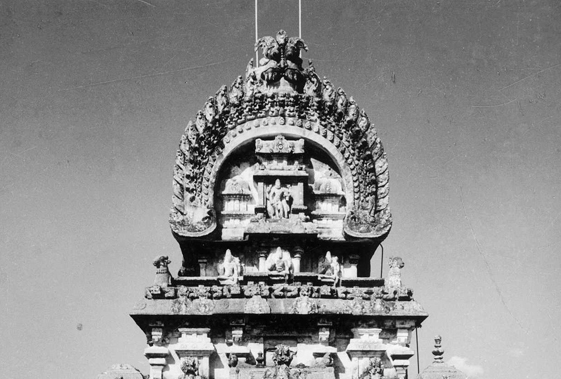
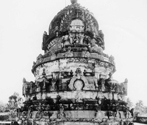
This Adhipurisvara temple at Tiruvorriyur has been in existence since the late Pallava period, which is attested by two inscriptions on stones of the pavement of this temple. The Pallava temple was perhaps a brick structure. The region round about Tiruvorriyur in Tondainadu should have been annexed to the Chola empire only in the days of Parantaka I (907-954 CE), and his inscriptions found here range from his twentieth to his thirty-fifth regnal year. These inscriptions record the Chola annexation of the territory and various donations of gifts to the temple. There are also inscriptions from the period of Uttama Chola (971-988 CE) that record his donations to the temple. During the reign of Rajendra Chola I (1014 - 1044 CE), the original temple was reconstructed and a three-storeyed super-structure (vimana) was erected in black stone. References: Balasubrahmanyam, S.R. Early Chola Temples: Parantaka I to Rajaraja I (A.D. 907-985). Bombay: Orient Longman, 1971, 97-99.

Collection type:

2 Galleries

Adibadri, Uttarakhand

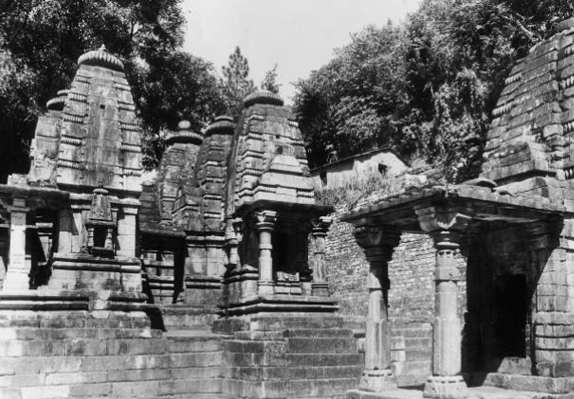
Adibadri, Uttarakhand

Collection type:

Galleries

Adinatha Temple, Ahar

Adinatha Temple, Ahar

Collection type: