CENTER FOR ART AND ARCHAEOLOGY


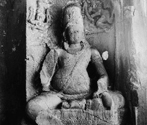
Cave 21 is a vihara or monastery that was probably inaugurated around 465-466 CE with the cutting back of its court area. It consists of a pillared verandah whose pillars are now cemented replacements, a pillared hall with 12 cells, antechamber, a sanctum flanked by two cells. There is an image of a Buddha in preaching attitude in the sanctum. Cave 21 was relatively simple at its inception but it incorporated new ideas and forms as it went along and by 477 CE when it was nearing completion, it represented the Vakataka vihara in a much elaborated form. It took advantage of the many stylistic and technological changes that occurred in the meantime particularly in the royal caves like Cave1, 17, 19 and 20.
It’s fine carved decoration, dating from the period of Asmaka domination starting in 475 CE, was still underway when Harisena died, and was never finished. It was possibly later undertaken by Monk Buddhabhadra, a friend of Bhavviraja, a minister of the king of Asmaka. There are also traces of painting of a panel depicting Buddha preaching a congregation. Cave 21 also has spacious cistern that was never finished.
References:
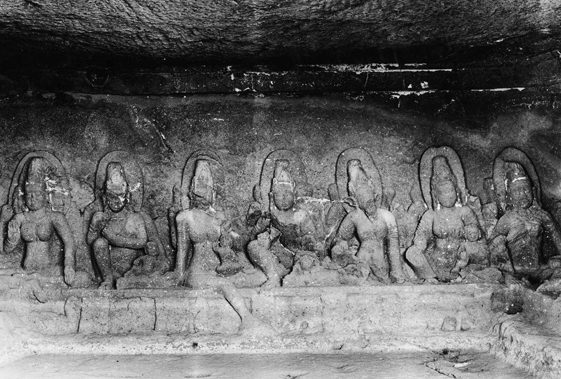


The tiny Cave 22 was started at a later date – probably not until 477 CE – directly above Caves 21 and 23 and high enough not to break into the porch cells of the larger caves below. Cave 22 took advantage of such still available space at a time when feasible new locations were a rarity. It consists of an astylar hall with four unfinished cells, sanctum sanctorum and a narrow verandah. There is an image of Buddha seated in pralamba-padasana (European chair pose) with feet resting on a lotus carved on the back wall of the shrine. This cave was still very incomplete when Emperor Harisena died, after which it was probably abandoned since it was quite incomplete and of relatively inconsequential size. Its cells were barely penetrated and the shrine had not even begun when it was given up.
During the Period of Disruption in 479 - 480 CE when the Asmakas who were planning to overthrow the Vakatakas withdrew resources from building activity at the site. The abandoned cave was taken over by a dozen different new devotees, who filled the unfinished shrine antechamber and the rear wall with carved and painted intrusions, many of which have brief dedicatory inscriptions, mostly referring to monastic donors. The main central image of Buddha was not painted until the intrusions along its right frame were carved probably in 480 CE. Other intrusions are of varied assortment, for instance, there is a painted composition that shows the Eight Buddhas theme and the accompanying inscriptions give the names of the seven past Buddhas and of the future Maitreya. Another cave – Cave 22A was also started in the still available rock just below Cave 22, however it was recently filled up with cement.
References:
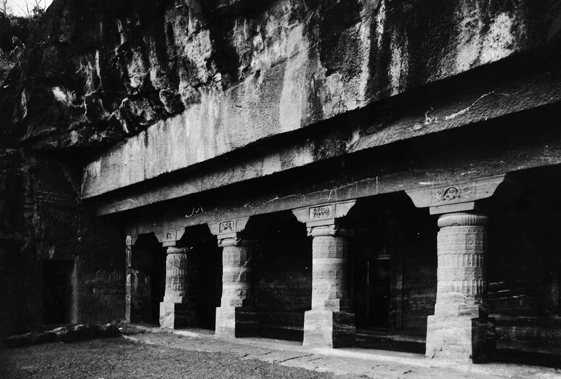


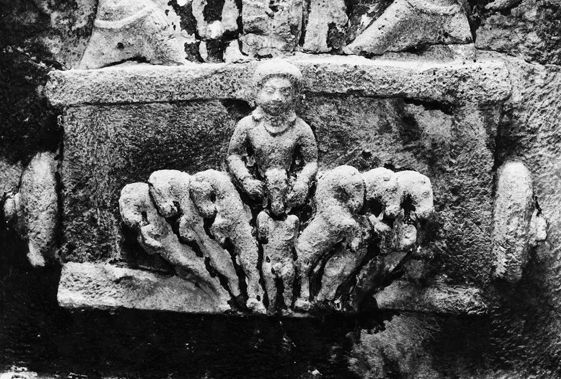
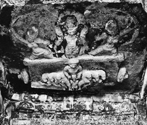
Cave 23 is almost similar on plan and in dimensions to Cave 21 but was started after it in 479-80 CE. It was initially undertaken by a Vakataka patron followed by Monk Buddhabhadra. It shows developed features in its porch, particularly its fine “T-shaped” doorway, decorated windows and naga and yaksa friezes over the decorated complexes at the porch ends. However, after Harisena’s death in 477 CE, there was no time to complete its main image and the cave was never dedicated. For this reason, despite its many available and well-prepared surfaces, it has no intrusions. The shrine, antechamber and side-cells with pillared porches of this vihara remain incomplete.
References:


Cave 24 is an incomplete monastery and second largest excavation at Ajanta that started in 466 CE. It was taken up by A Vakataka patron followed by Monk Buddhabhadra. Cave 24 provides an example of an excavation in progress, following the precedents of Caves 21 and 23. Its porch was nearly completed, but its vast and orderly interior, upon which many workers labored for some three years between 475 and 477 CE, is still largely uncut. The cave remained incomplete at the time of Harisena’s death in 477 CE and was ultimately abandoned. On plan the cave consists of open courtyard and verandah flanked by double cell pillared hall with unfinished cell and sanctum sanctorum. The perished pillars of the verandah have been reconstructed. The sanctum houses a seated Buddha in pralamba-padasana (European chair pose) with attendants and flying figures.
References: