CENTER FOR ART AND ARCHAEOLOGY


Cave 25 is an unfinished vihara (monastery) that was excavated at a higher level and can be considered to be a part of the Cave 26 complex. It was sponsored by Monk Buddhabhadra, a friend of Bhavviraja, a minister of the Asmaka king in 460s.It consists of an enclosed court, an astylar hall and a pillared verandah. There are two cells on the left end of the verandah and the hall has no cells or shrine. Cave 25’s right cells were usurped by Cave 24 by Buddhabhadra who wanted to prioritize the larger and more impressive Cave 24.
References:
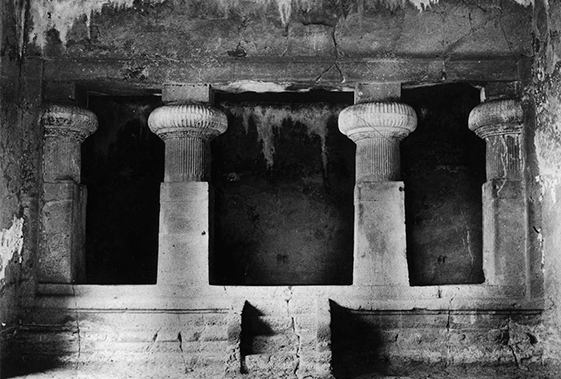
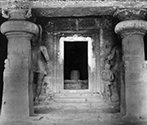
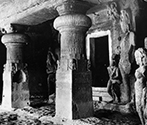
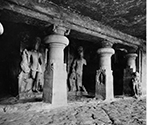


The Cave 26 complex comprises of its devotional hall at its center and two early upper wings (viharas 25 and 27), started in about 462 CE when the main facade of Cave 26 was being exposed. It also incorporates two later lower wings: Caves 26RW (Right Wing) and 26LW (Left Wing). The excavation of the chaitya hall (sanctuary) was begun in the early 460s at a time when the relations between the Asmakas and the Vakatakas must have been peaceful. An inscription on the wall of the front verandah records the gift of this chaitya by a monk Buddhabhadra, a friend of Bhavviraja, a minister of the king of Asmaka.
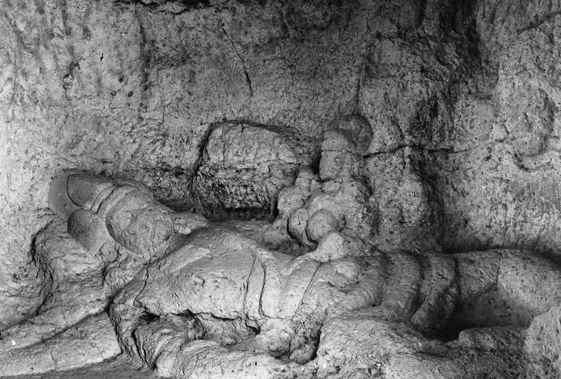
At the end of 468 CE when the political problems with the Asmakas were increasing, Upendragupta, the local king of the Vakatakas probably expelled the Asmakas from the site. In 475 CE with the Asmaka victory, work started up again at Ajanta. Cave 26 is the only excavation at the site where work continued during 478 CE, the year after Harisena died; for the Asmakas alone could view this disaster with satisfaction. However, the carving of the Buddha in parinirvana (Dying Buddha) closes their own involvement with the site, for that they too were caught up. The disjunct developments in this complex explain why the core of Cave 26 is so primitive whereas its decorative overlay of the main hall and its particularly developed left wing that took place around 475 CE is so lavish. The carved Buddha images on the facade were intrusive additions dating to 479–480 CE. The intrusive images often abandoned mid-course marked the end of Ajanta.This chaityagriha of Cave 26 is similar to Cave 19 in general arrangement and decoration but of a larger dimension and more elaborately and exquisitely provided with sculpted figures and other designs.
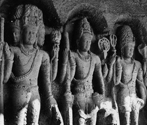
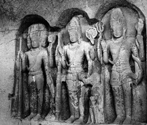
Buddhabhadra, a friend of Bhavviraja, a minister of the Asmaka king, sponsored all the decoration of the now-broken porch and the carved decoration of the whole facade – except for the intrusive Buddha imagery. He also oversaw the Buddha imagery in the interior friezes over the pillars and all of the painting within the cave. The chaityagriha consists of a hall, side aisles and a rock-cut stupa along with an image of Buddha on front. This monolithic stupa with its modern image of Buddha of bhadrasana (foot down) type is the main focus of the cave. Along with the image in Cave 16, this is the first appearance of Buddha in this posture. The facade, the inner pillars, the triforium (between pillars and roof arch), aisles sidewalls are carved with images of Buddha. The image of Mahaparinirvana of Buddha on the right aisle wall and the assault of Mara during Buddha’s penance adorn the same wall. The stupa proper has been relegated to the background and has become almost an ornamental member, the emphasis being more on the elongated and decorated plinth, the front of which is carved with a figure of Buddha seated in pralamba-pada (European chair pose) under a pavilion. The crowning members above the harmika (railing) have crumbled down.
References:
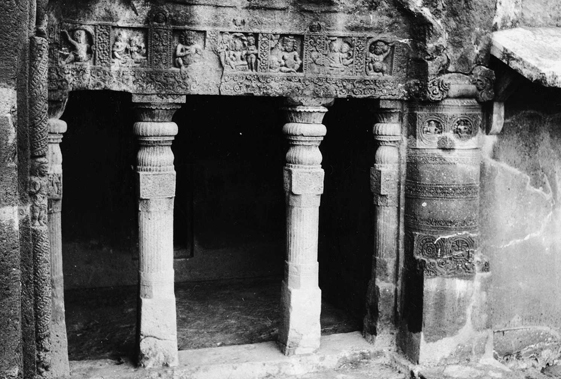


Cave 27 should be considered a part of Cave 26 as it connected to its monastic establishment. It was sponsored by Monk Buddhabhadra, a friend of Bhavviraja, a minister of the king of Asmaka. In 478CE. The landing and the verandah on the left side of the court of Cave 26 lead to a small hall, which has a shrine and an antechamber facing the entrance door. It consists of two stories; the upper one is partially collapsed. The front wall is divided into three compartments comprising of a nagaraja, a couple and a female standing on a makara with a bird perched on her right hand and her left handing resting on the head of a dwarf. The shrine has an image of Buddha in teaching attitude on its back wall. Of the cells around the hall, only four on the right half have survived. A major part of the left half of the hall has collapsed.
References: