


 CENTER FOR ART AND ARCHAEOLOGY
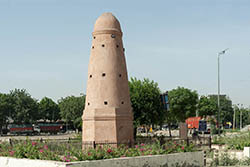
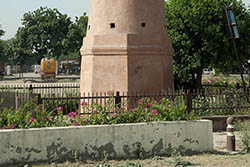
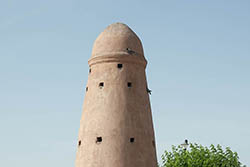
A Mughal-period distance marker located west of the Grand Trunk Road/National Highway 44 at Khatella, Palwal district of Haryana. Probably constructed between 1600 and 1699 CE, the octagonal tower is built of lakhori bricks bonded with lime mortar and stands on a brick platform, with small square openings on its surface. The monument is protected by the Archaeological Survey of India (Chandigarh Circle), has been restored, and is enclosed by fencing.
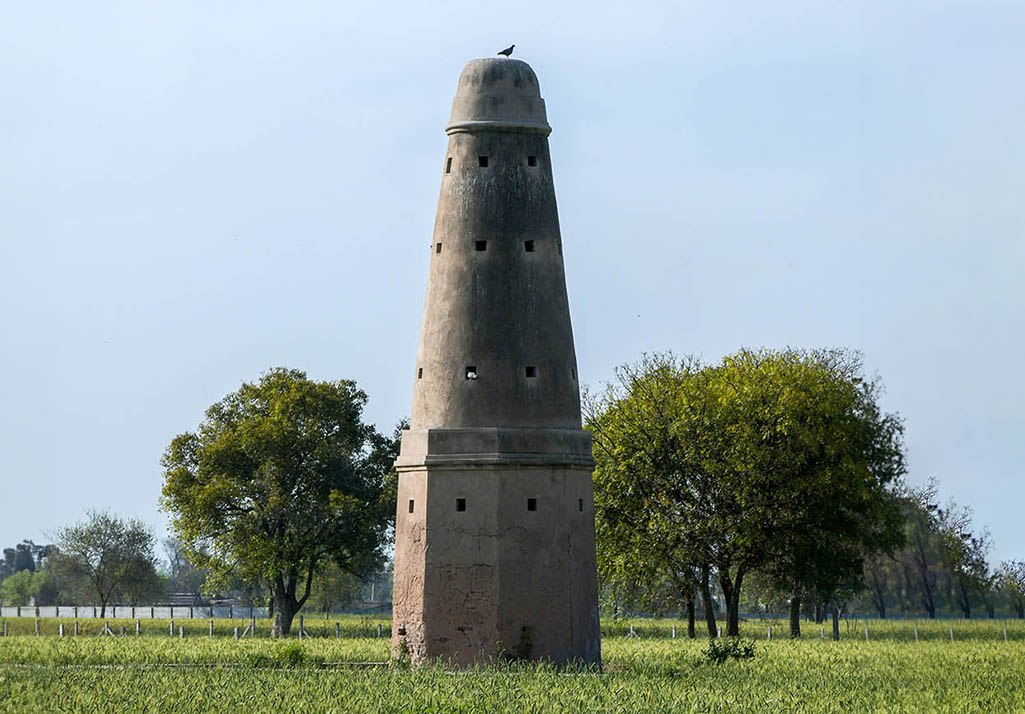
A Mughal-period distance marker located in
agricultural fields about 250 metres west of the Grand Trunk Road/National
Highway 44 at Mundkati, Palwal, Haryana. Probably constructed between 1600 and
1699 CE, the octagonal tower is built of lakhori bricks bonded with lime mortar
and has an octagonal base with small square openings. The monument is protected
by the Archaeological Survey of India (Chandigarh Circle), though no signboard
was present at the time of photography. It is well maintained despite minor surface
blackening and loss of plaster.
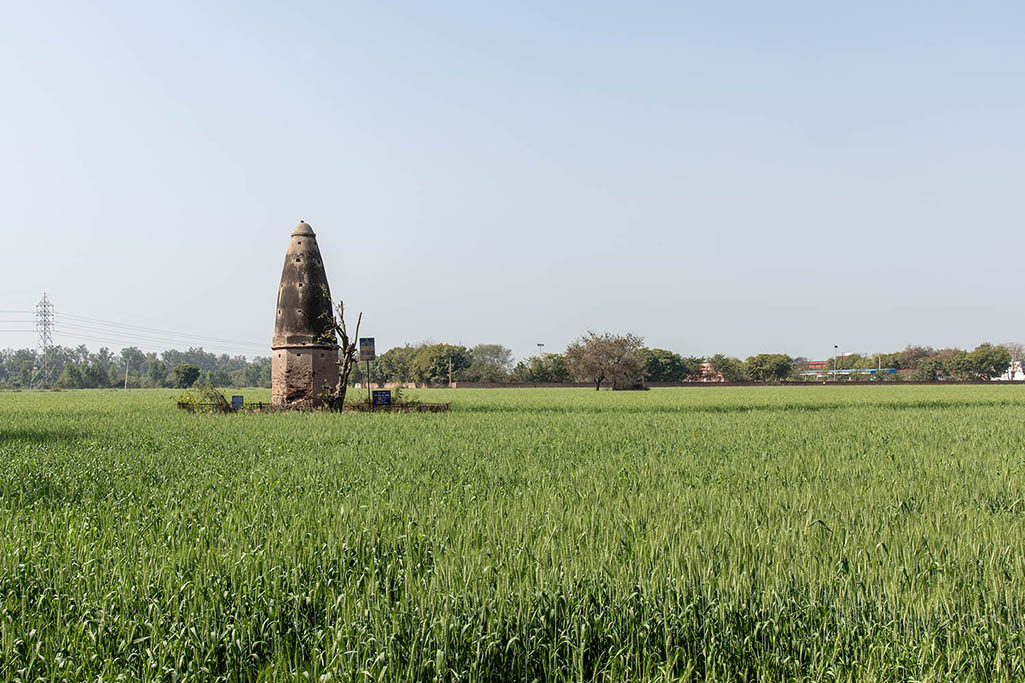
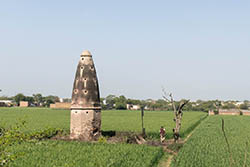
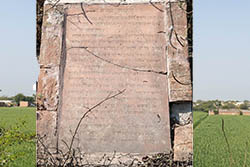
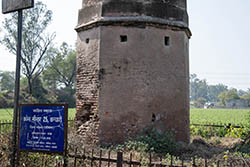
The Kos Minar 25 at Banchari, Palwal district,
Haryana, is a Mughal-period distance marker constructed between 1600 and 1699
CE with lakhori bricks bonded with lime mortar. The monument is protected by
the Archaeological Survey of India (Chandigarh Circle).
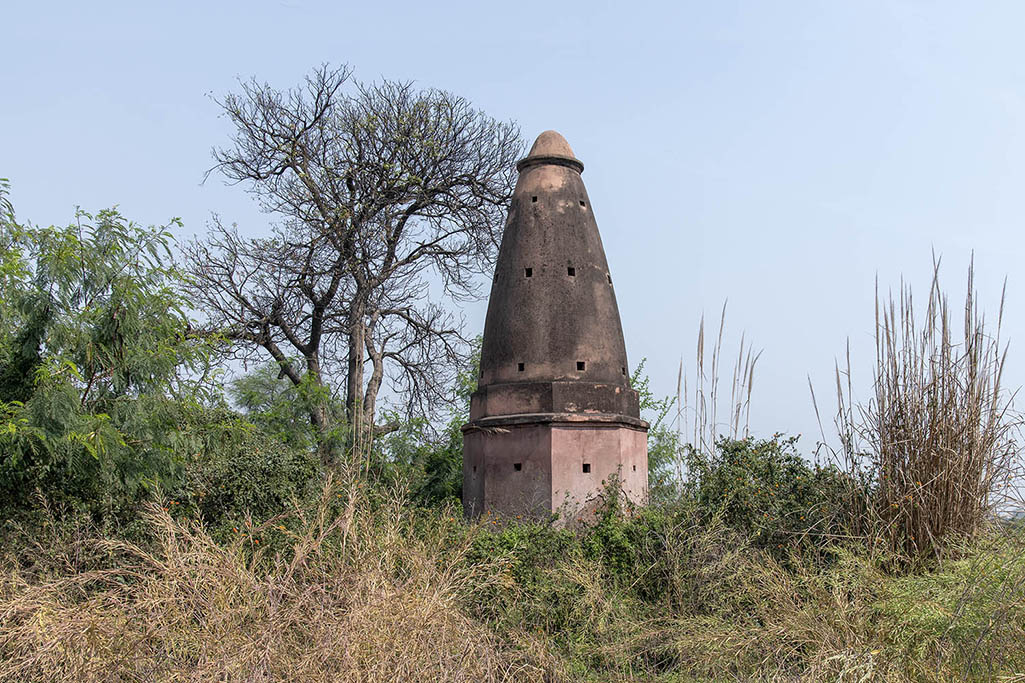
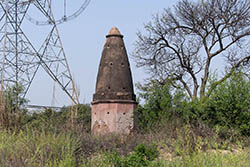
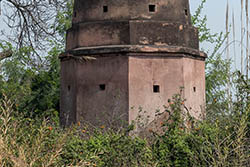
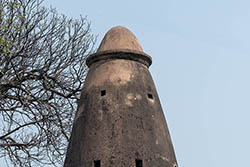
A Mughal-period distance marker located west
of the old Grand Trunk Road/National Highway 44 at Kheda, Palwal, Haryana. Probably
constructed between 1600 and 1699 CE, the octagonal tower is built of lakhori
bricks bonded with lime mortar and stands on a brick platform, with its base
now lower than the present road level. The monument is protected by the Archaeological
Survey of India (Chandigarh Circle) and is enclosed by fencing on three sides.
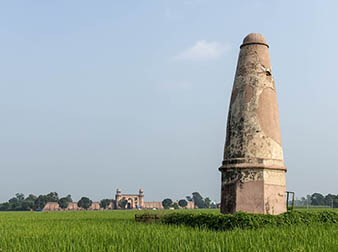
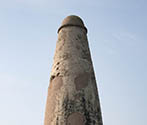
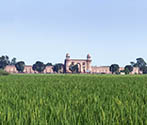
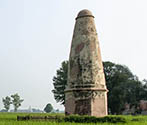
This Kos Minar is a Mughal-period octagonal
distance marker located amid agricultural fields to the north-west of Sarai
Dakhni in a village field near Mahlian Kalan in Jalandhar district of Punjab. Probably
constructed between 1630 and 1658 CE, it is built of lakhori bricks set in lime
mortar. The monument is protected by the Archaeological Survey of India
(Chandigarh Circle) and survives in good condition, restored and well-maintained,
with fencing provided around the structure.
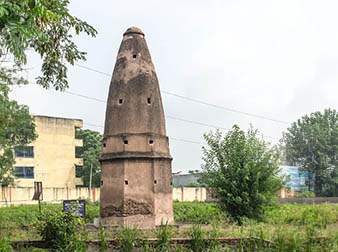
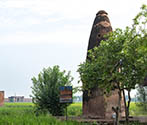
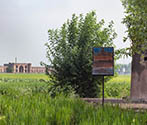
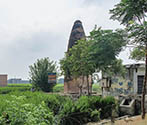
This Kos Minar is a Mughal-period octagonal
distance marker located near Sarai Lashkar Khan at Kot Panaich (Link Road) in
Ludhiana district of Punjab. It was probably constructed in 1669–70
contemporaneous to the rest house Sarai Lashkar Khan. It is built of lakhori
bricks set in lime mortar. The monument is protected by the Archaeological
Survey of India (Chandigarh Circle).