


 CENTER FOR ART AND ARCHAEOLOGY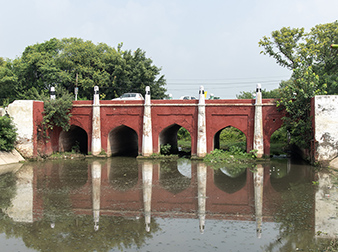
The bridge at Sirhind is a Mughal-period
masonry bridge located approximately 4 km north-west of Sirhind town, on the
road leading to Fatehgarh Sahib district of Punjab, near the historic Aam Khas
Bagh. Built of brick and lime mortar, the bridge comprises three sections
articulated by a series of pointed arches resting on broad piers with
cutwaters. Although traditionally attributed to either Jahangir or Shah Jahan,
architectural and contextual evidence suggests a date not later than 1634 CE when
Shah Jahan made substantial additions to the Aam Khas Bagh. The bridge is unprotected
and continues to span the seasonal Sirhind choa (rivulet), which drains the
surrounding landscape during the monsoon.
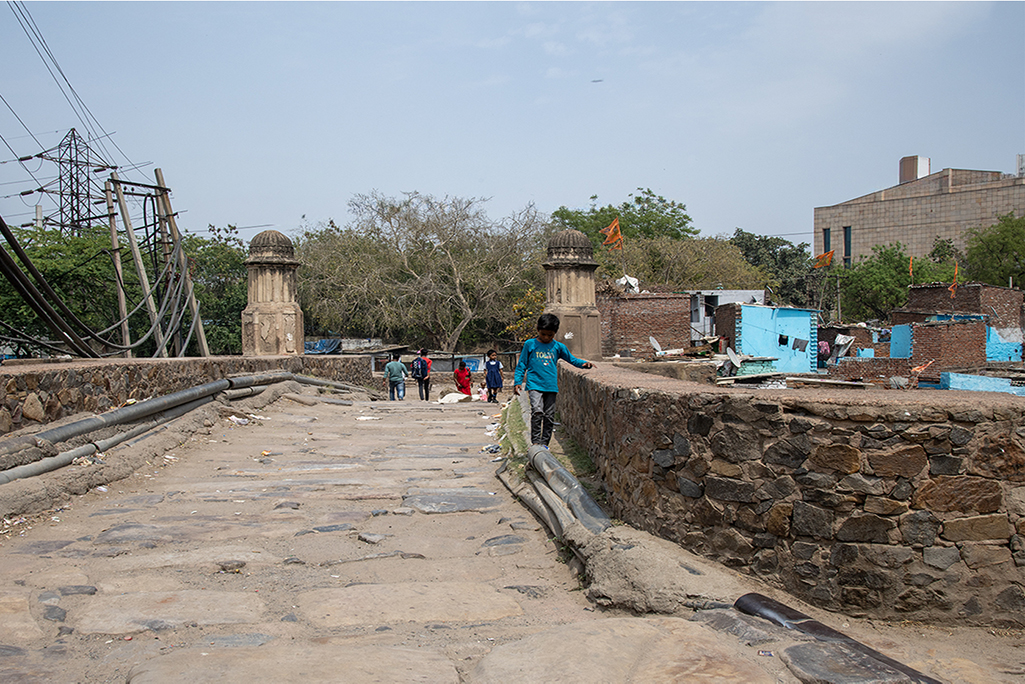
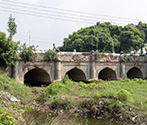
The Mughal Bridge, Khwaja Sarai is a
Mughal-period bridge located over the Bhuriya (Budhaiwala) Nala along the old
Grand Trunk Road, east of NH44 (Mathura Road) in Faridabad, Haryana.
Constructed in 1676 CE under the patronage of Bakhtawar Khan, as recorded in
the Mirat al-Alam, the bridge is built of rubble masonry with lime
mortar and plaster and consists of three four-centred arches supported on
piers, with a tower-like structure crowned by a fluted dome above the central
arch. The monument is protected by the Archaeological Survey of India (Chandigarh
Circle) and remains functional for pedestrian use, despite surface blackening
and minor vandalism.



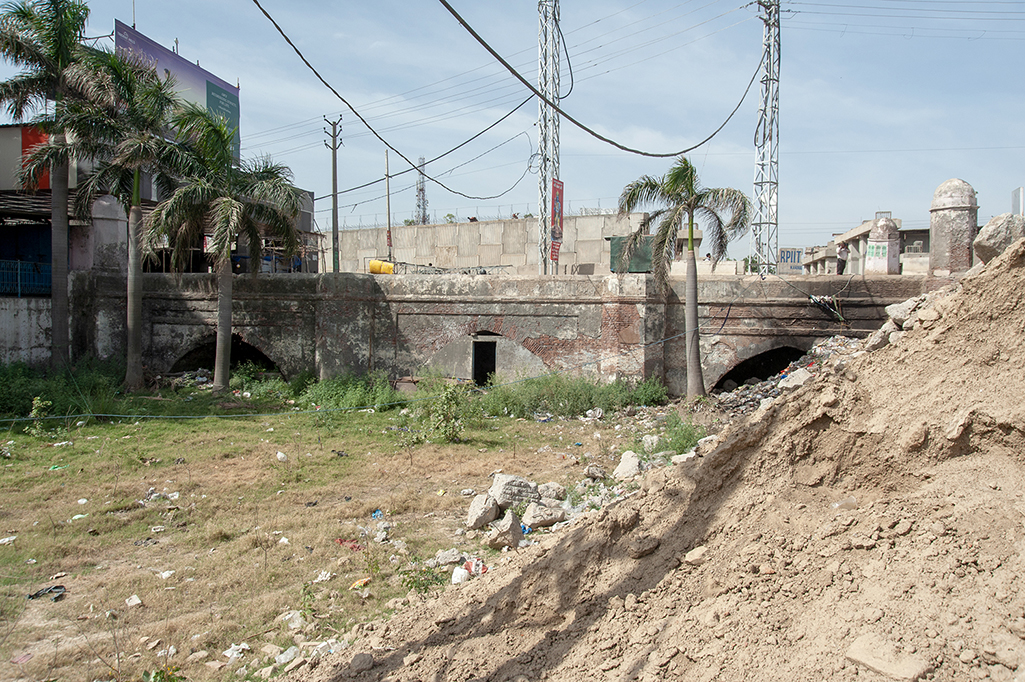
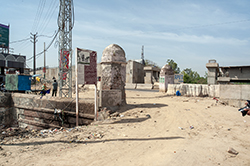
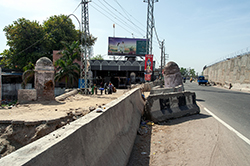
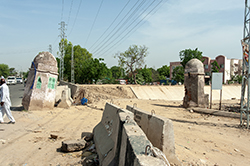
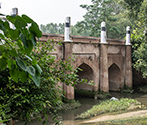
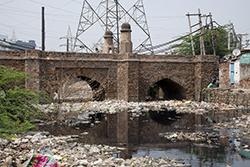
A Mughal-period bridge located adjacent to
National Highway 44 (Old Grand Trunk Road), east of Madhuban, Karnal district
of Haryana. The bridge was most likely constructed around 1570–71 CE (978 AH),
along with the excavation of the Shaikhnai (Shaikhu’s) Canal during the reign
of Emperor Akbar, and is mentioned by Father Monserrate in 1581 CE. Built of
lakhori bricks, rubble masonry, and lime mortar, the structure spans three
arches supported by piers and features a broad passage with octagonal domed
towers at both ends. The monument is protected by the Department of
Archaeology, Haryana; however, it was in poor condition at the time of
photography, with vegetation growth, structural cracks, submerged arches,
accumulated garbage around the piers, and the construction of a nearby
overbridge posing potential threats to its preservation.
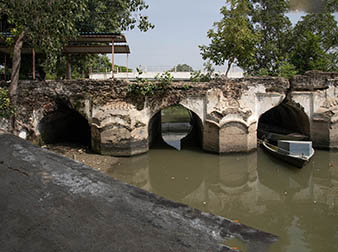
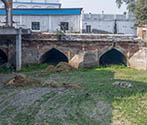
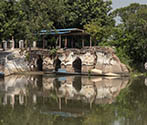
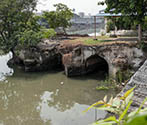
This Mughal-period bridge is located along the
Kali-Vali River at Sultanpur Lodhi (Bein river) in Kapurthala district of
Punjab and is attributed to the Aurangzeb period (r. 1658-1707). Constructed of
lakhori bricks set in lime mortar, the bridge originally spanned the river with
a series of pointed arches supported by buttressed piers. The structure is
unprotected and survives in a highly fragmentary condition, with only portions
of the arches remaining on both riverbanks amid extensive damage and later encroachments.
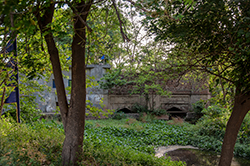
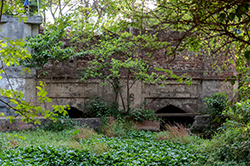
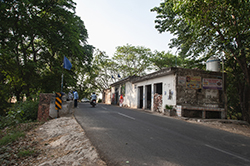
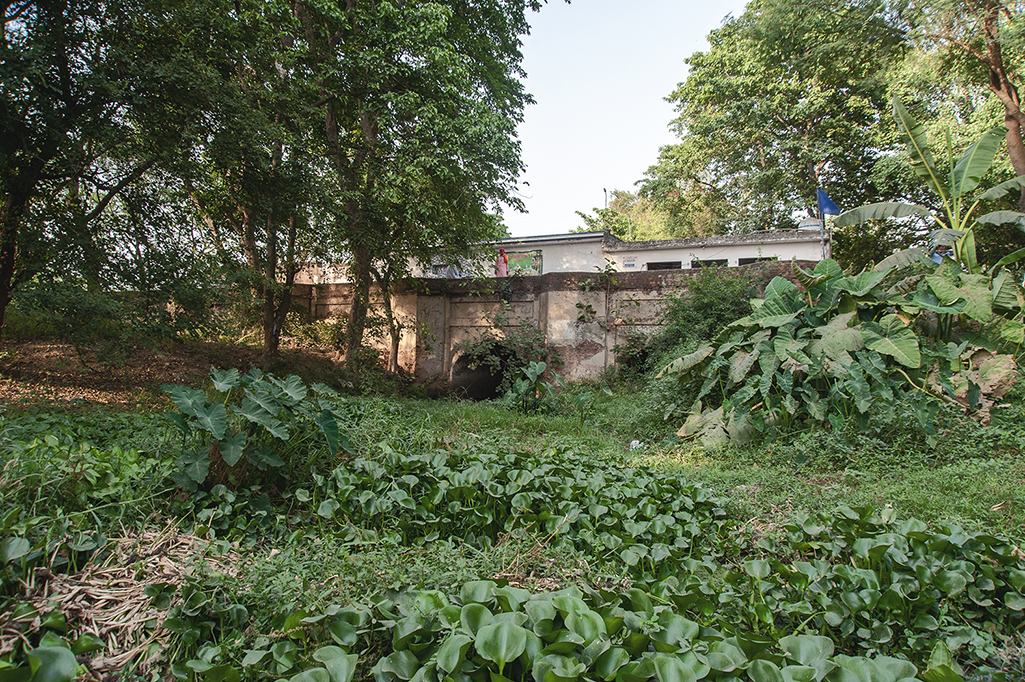
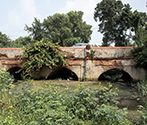
A Mughal-period bridge located about 3
kilometres west of the Delhi–Multan Road (Old Grand Trunk Road) on the Taraori
(Anjanthali Road), situated between the Sarai and the northern Kos Minar at
Taraori, Karnal district of Haryana. Probably constructed between 1600 and 1699
CE, the bridge is built of lakhori bricks, rubble masonry, and lime mortar, and
consists of five arches supported by robust piers; a temple on its eastern side
represents a later addition. The structure is unprotected and shows surface blackening,
vegetation growth, encroachments, and partial submergence in debris, though it
remains in active use with a modern roadway constructed above it.