


 CENTER FOR ART AND ARCHAEOLOGY


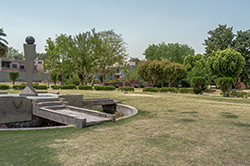
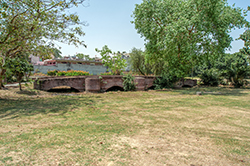
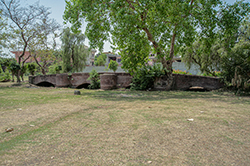
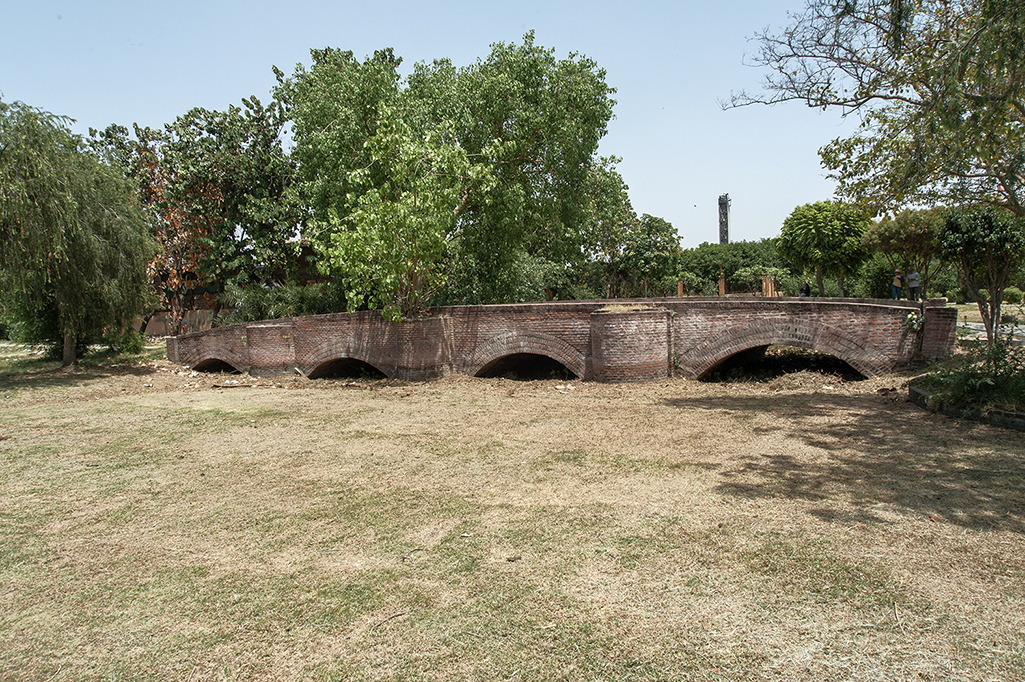
A Mughal-period bridge located within OP
Jindal Park, northeast of the Sheikh Chilli Tomb at Thanesar, Kurukshetra,
Haryana. Constructed of lakhori bricks, rubble masonry, and lime mortar, the
bridge carries a roadway over four arches supported by piers with circular
cutwaters, spanning a narrow rivulet historically associated with the Saraswati
River. It is protected by the Archaeological Survey of India (Chandigarh
Circle), and has been restored and incorporated into the landscaped setting of
OP Jindal Park, with portions of its lower fabric now buried under accumulated
soil.


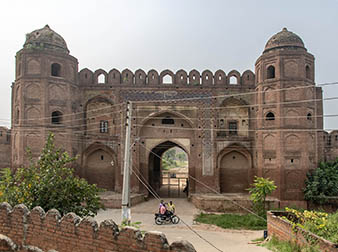
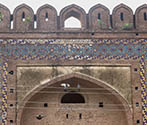
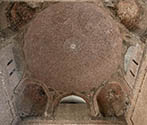
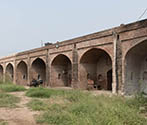
Sarai Doraha is a seventeenth-century Mughal caravansarai
or rest house located on the Ludhiana–Khanna Road in Ludhiana district of
Punjab, situated on a mound south of the Sirhind Canal. Known historically as
the Sarai of Itimad-ud-Daula, its construction is generally dated to the early
years of Jahangir’s reign (c. 1606–1611 CE). Built of lakhori bricks with red
sandstone and lime mortar, the sarai follows a square plan with corner bastions,
north–south aligned gateways, a hammam in the northeast corner, and a mosque
within the western part of the enclosure. The monument is protected by the Department
of Cultural Affairs, Archaeology and Museums, Punjab and survives in a
partially ruined state, with sections under repair and traces of its original
painted and glazed decoration still visible.
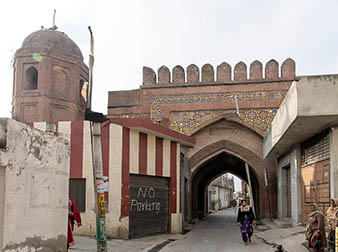
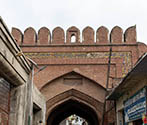
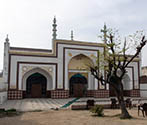
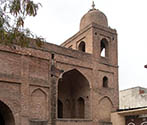
The Sarai at Fatehabad is a Mughal-period rest
house in Tarn Taran district of Punjab. According to contemporary travel
accounts, it was constructed in 1606 CE under the patronage of Jahangir. Built
of lakhori bricks with red sandstone, glazed tiles, and lime mortar, the sarai
originally comprised an east–west aligned enclosure with two monumental
double-storied gateways articulated with multi-foiled arches, bastions,
balconies, and upper chambers. The monument is protected by the Archaeological
Survey of India (Chandigarh Circle) and survives in a highly altered state,
with only the gateways and limited wall remains extant amid dense later
construction and adaptive reuse.


