

 CENTER FOR ART AND ARCHAEOLOGY
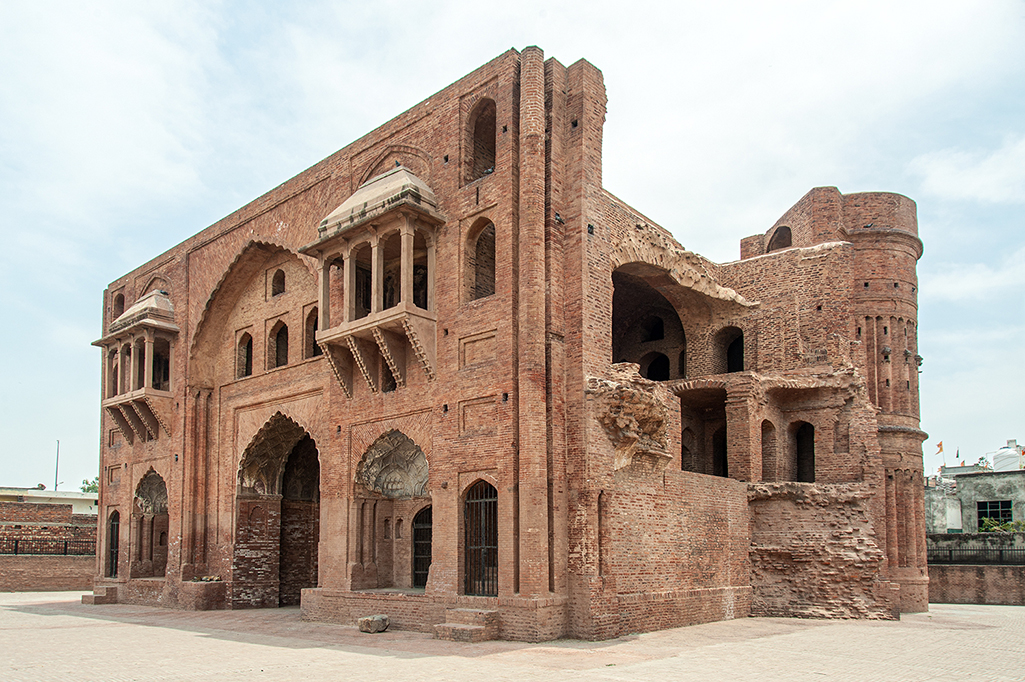
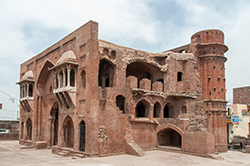
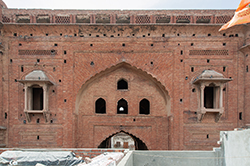
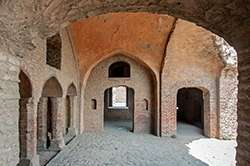
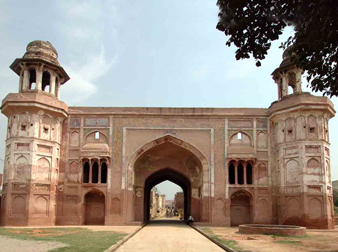
This Mughal-period caravansarai or rest house
located east of National Highway 44 in the centre of Gharaunda, Karnal, Haryana
was built during the reign of Emperor Shah Jahan around 1048 AH/1638 CE, the
Sarai is attributed to Feroz Khan, as recorded by the traveller Peter Munday.
Constructed of lakhori bricks, rubble masonry, and lime mortar, the complex
originally comprised a large enclosure, of which only the monumental northern
and southern gateways now survive. The southern gateway has a large arched recess,
projecting balcony supported on corbel brackets, and double-storeyed corner
bastions that were once crowned with domes. The Sarai had already fallen into
ruin by the early nineteenth century and was further dismantled after the
Revolt of 1857 and its bricks reused for railway construction between 1880 and
1890 CE. The monument was notified as a protected structure on December 1,
1914, and is presently protected by the Archaeological Survey of India
(Chandigarh Circle). The surviving gateways are well maintained.
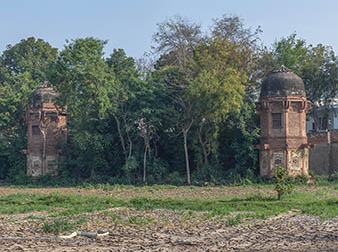
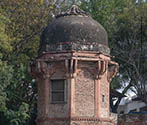
The Guru ka Taal is a Mughal-period water tank
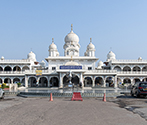
located north of the Grand Trunk Road in Sikandra, Agra district of Uttar
Pradesh, near the Gurudwara Guru-ka-Taal. It was probably constructed in 1610
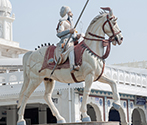
CE by Itibar Khan. The tank was later associated with Sikh tradition and given
its present name. Built of lakhori bricks, red sandstone, and lime mortar, it
was once a large, well-planned reservoir with ghats and chhatris on all sides.
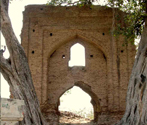
The site is currently unprotected, and only fragments survive today, with most
of the tank filled in or reused for agriculture and modern development.