

 CENTER FOR ART AND ARCHAEOLOGY
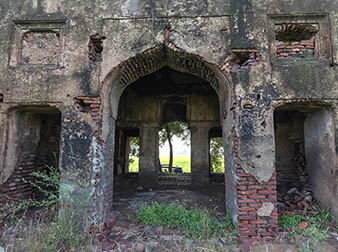
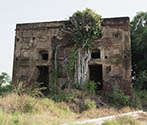
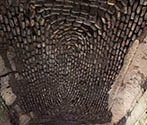
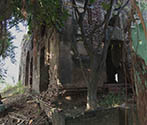
The tank and associated baradari are located
to the north of Sarai Banjara (Link Road) in Patiala district of Punjab, with
the baradari positioned on the western bank of the tank. Although no
inscription records their patronage, architectural features suggest a
seventeenth-century date. Both structures are unprotected and survive in a
ruinous state: the tank has been repurposed for cultivation with only faint
traces of its southern steps visible, while the baradari consists of five
arched chambers with stairways in the east and west walls leading to an
inaccessible roof.
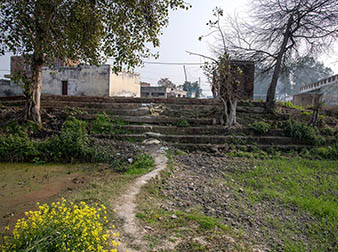
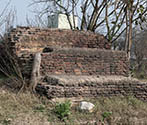
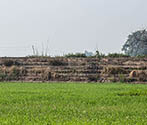
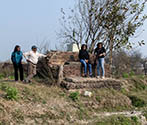
The Tank of Todarmal is a Mughal-period water
structure situated in Raja Tal (Attari Road) in Amritsar district of Punjab,
close to the India–Pakistan border. Constructed in 1582 CE under the patronage
of Raja Todarmal, a diwan in Emperor Akbar’s court, the tank originally
featured stepped ghats on all four sides, with bathing platforms at the corners
and midpoints. Built of lakhori bricks set in lime mortar and plaster, the tank
formed the nucleus around which the settlement developed. The structure is unprotected
and survives in a severely deteriorated state, with only fragments of the steps
and walls remaining; the tank has dried up and is now used for farming.
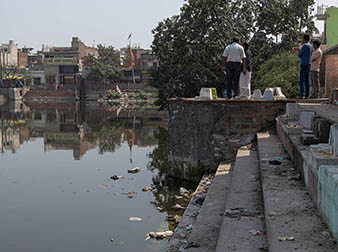
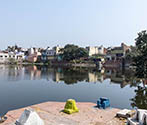
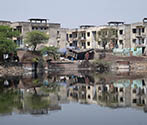
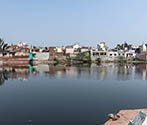
The Tank at Kosikalan (Pathwari Mandir) is a historic water tank located about 140 metres west of the old Grand Trunk Road, in the centre of Kosikalan town, Mathura district of Uttar Pradesh, with Sarai Kosi (rest house) lying to its southeast. Of uncertain date and patronage, the rectangular tank is built of lakhori bricks, red sandstone, and lime mortar and is lined with ghats on all four sides, including octagonal extensions, a chhatri on the northern ghat, and small shrines on the southern ghat. The tank is unprotected and, while still used by local residents for daily and religious activities, suffers from poor maintenance of the ghats and deteriorating water quality due to garbage disposal.
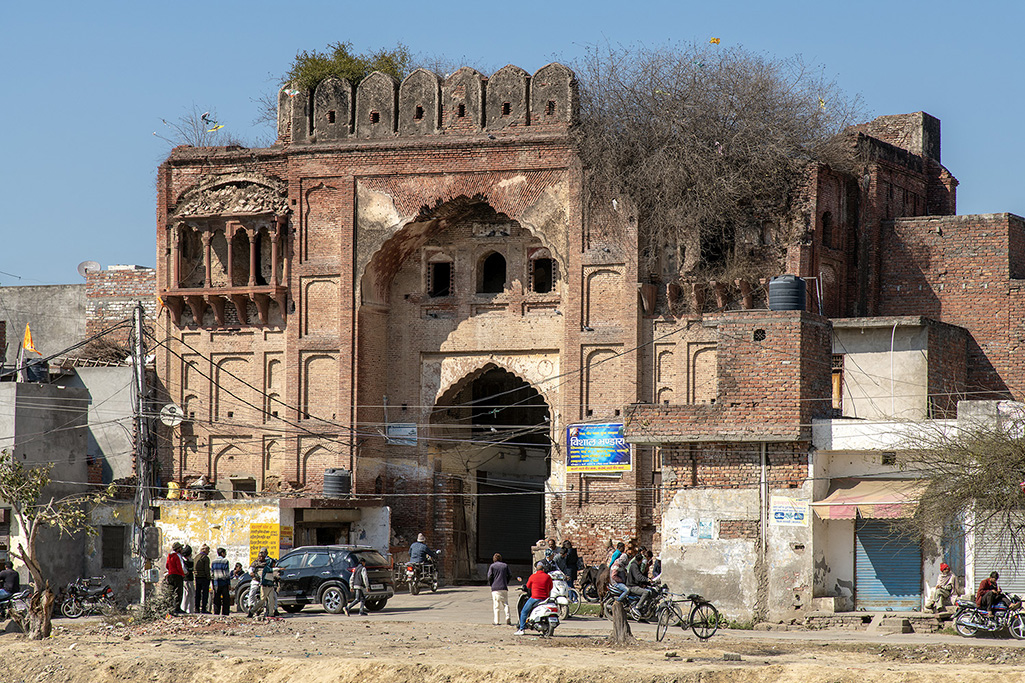
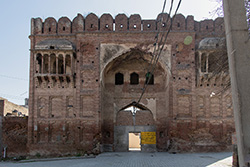
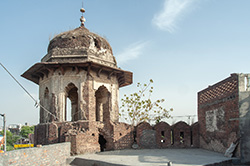
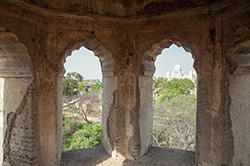
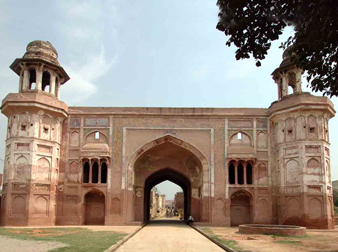
A Mughal-period caravansarai or rest house located
northwest of Taraori town in Karnal district, Haryana. Attributed to the reign
of Emperor Aurangzeb (r. 1658–1707 CE), the square enclosure is constructed of
lakhori bricks, red sandstone, and lime mortar, with corner bastions and
three-storeyed gateways on the north and south. The complex includes a mosque
within the southwest corner, now repurposed as a Gurudwara and a tank situated
outside the southern wall, both dating to the same period. Currently unprotected,
the sarai has suffered structural damage, including vegetation overgrowth, loss
of original materials, blocked archways, and alterations using modern bricks.
Despite this, the enclosure remains inhabited, largely by families of
Partition-era refugees from Multan region in present day Pakistan, and parts of
the gateways and cells continue to be used as residences.
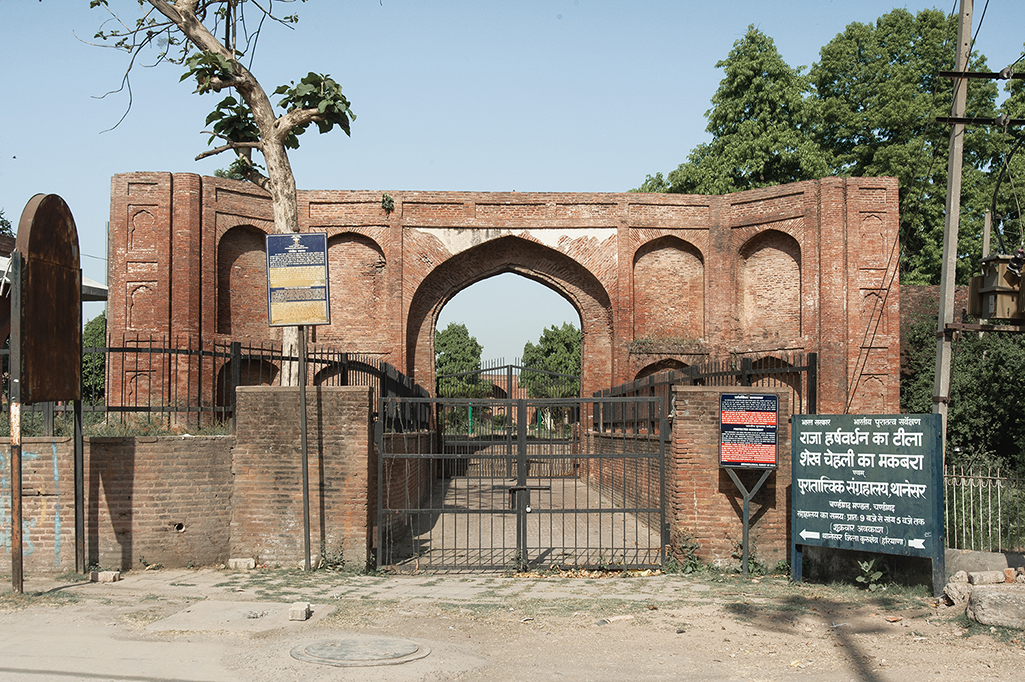
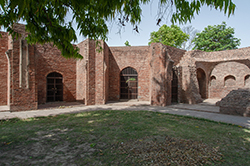
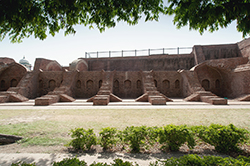
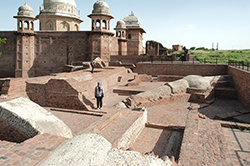
Sarai Thanesar is a mid-17th-century Mughal
sarai or rest house located in Kalyan Nagar, Thanesar in Kurukshetra district
of Haryana, adjoining the tomb of Sheikh Chilli. Built as part of the larger
tomb–madrasa complex, the structure is constructed of lakhori bricks, rubble
masonry, and lime mortar. The sarai has an asymmetrical layout, with rooms
along the east, west, and north sides—those on the east and west covered by
pointed barrel vaults, and those on the north by domical vaults—and a single
gateway on the east. The monument is protected and well maintained by the
Archaeological Survey of India (Chandigarh Circle) and is presently used as a
public garden.
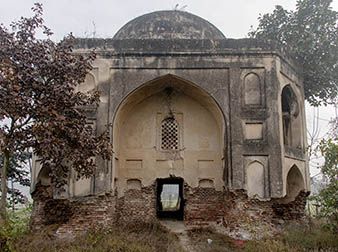
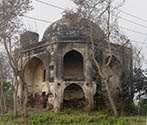
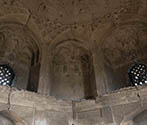
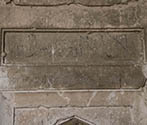
This Mughal-period tomb is located on the
western outskirts of Nurdi village, south of the Chabal–Attari Road in Tarn
Taran district of Punjab, with the associated sarai (rest house) situated to
its east. Constructed between 1608-1650 CE, the tomb follows a Baghdadi
octagonal plan and is built of lakhori bricks with red sandstone and lime
plaster. The monument is under the Central Waqf Council and survives in a
deteriorated condition, with extensive loss of plaster, surface blackening,
vegetation growth, and structural cracking visible.