

 CENTER FOR ART AND ARCHAEOLOGY
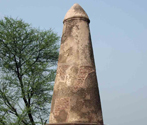
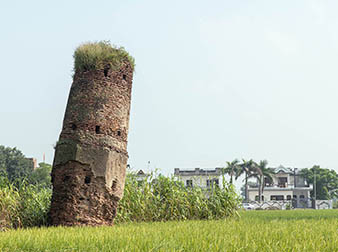
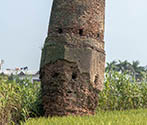
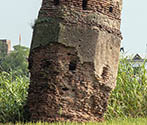
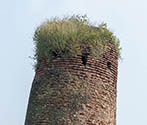
This Kos Minar is a Mughal-period octagonal
distance marker located in open ground to the west of the Old Grand Trunk Road
in Hansali in Fatehgarh Sahib district of Punjab. The monument is unprotected
and survives in a severely damaged condition, with the upper portion collapsed
and the structure leaning, placing it at risk of further failure.
The Kos Minar at Jagdishpur, Sonipat district,
Haryana, is a Mughal-period distance marker constructed between 1600 and 1699
CE. Built of lakhori bricks set in lime mortar, the octagonal tower follows the
standard Kos Minar design. The monument is protected by the Archaeological
Survey of India (Chandigarh Circle).
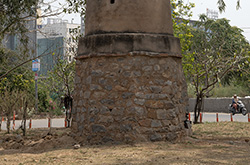
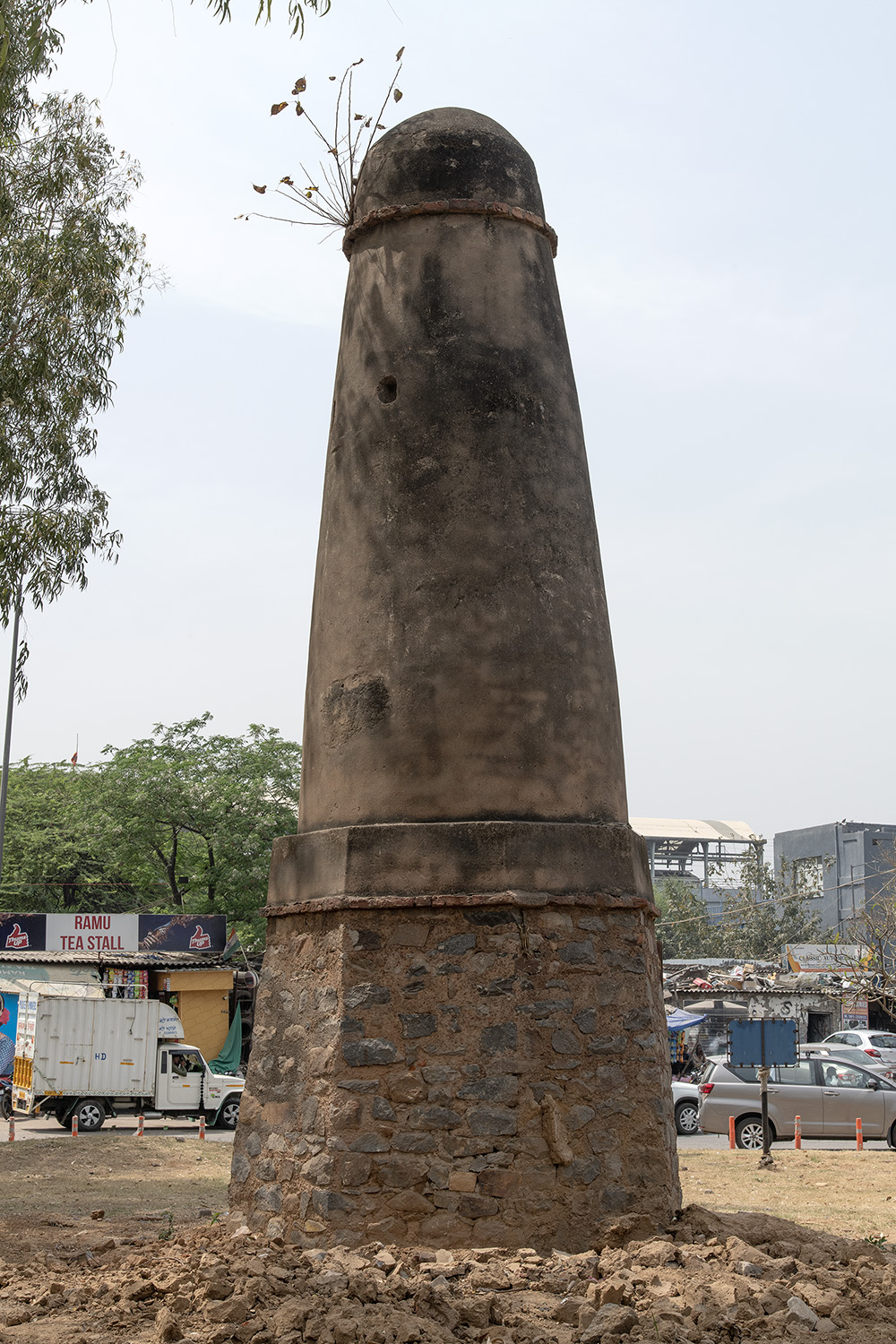
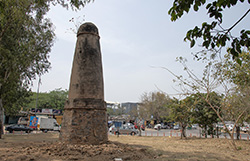
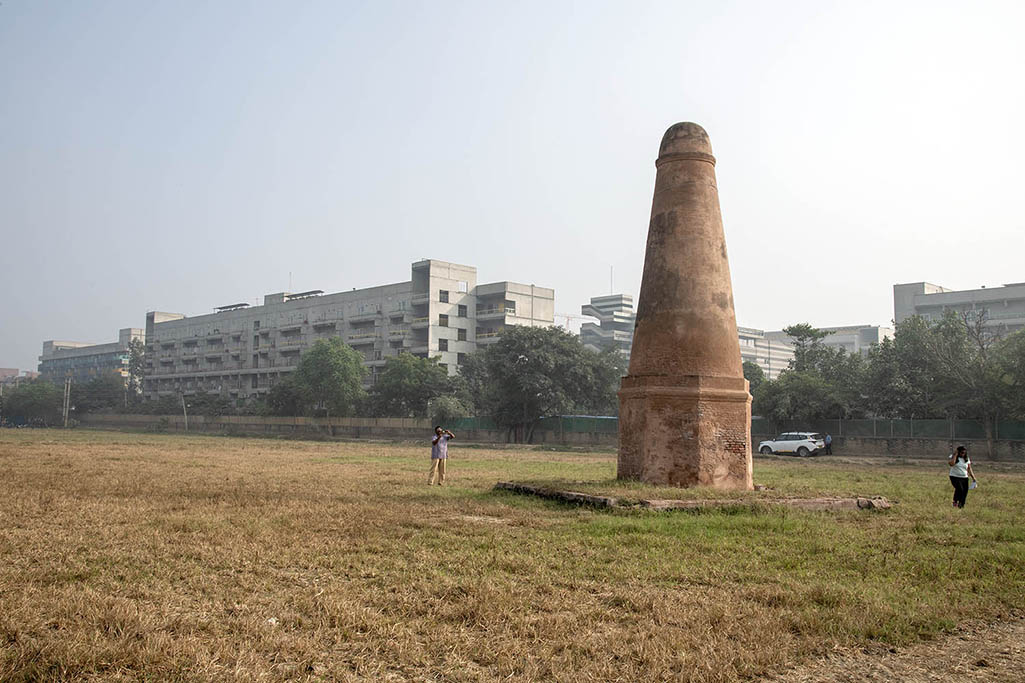
The Kos Minar at Jasola Vihar (near Apollo
Hospital), South-East Delhi, is a Mughal-period structure dating to 1600–1699
CE. Constructed of lakhori brick, rubble, and lime mortar, the monument is
maintained by the Department of Archaeology, Government of N.C.T. of Delhi.
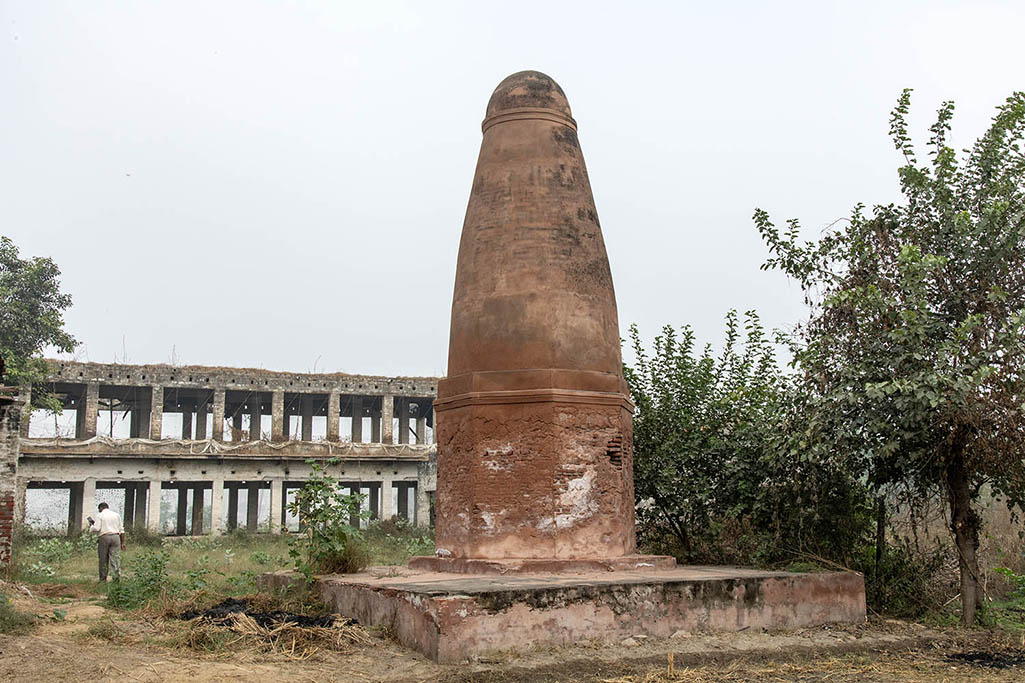
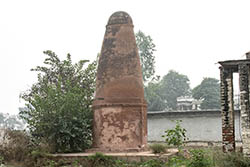
The Kos Minar at Jawahri, Sonipat district,
Haryana, is a Mughal-period distance marker constructed between 1600 and 1699
CE. Built of lakhori bricks bonded with lime mortar, the octagonal tower
represents the standard Kos Minar type. The monument is protected by the
Archaeological Survey of India (Chandigarh Circle).
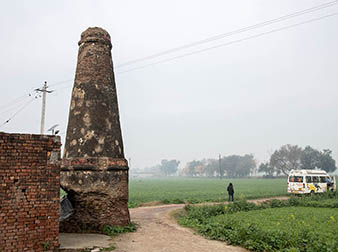
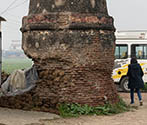
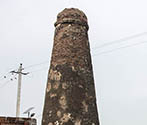
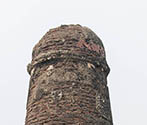
This Kos Minar is a Mughal-period octagonal
distance marker located amid agricultural fields in Jhabal Kalan in Tarn
Tran district of Punjab. Constructed in the seventeenth century, it is built of
lakhori bricks set in lime mortar. The monument is unprotected.
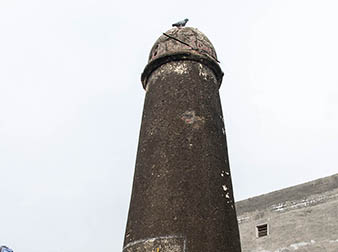
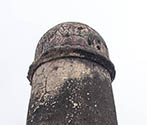
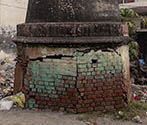
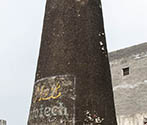
This Kos Minar is a Mughal-period octagonal
distance marker located in Jhabal Manan in Tarn Taran district of Punjab,
approximately 50 metres north-west of the Grand Trunk Road. Constructed in the
seventeenth century, it is built of lakhori bricks set in lime mortar and is
distinguished by a surviving red band on its shaft. The monument is unprotected
and survives in poor condition, with modern brick repairs at the base, surface
blackening, painted advertisements, and later paint applied by locals.