

 CENTER FOR ART AND ARCHAEOLOGY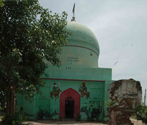
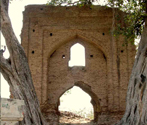
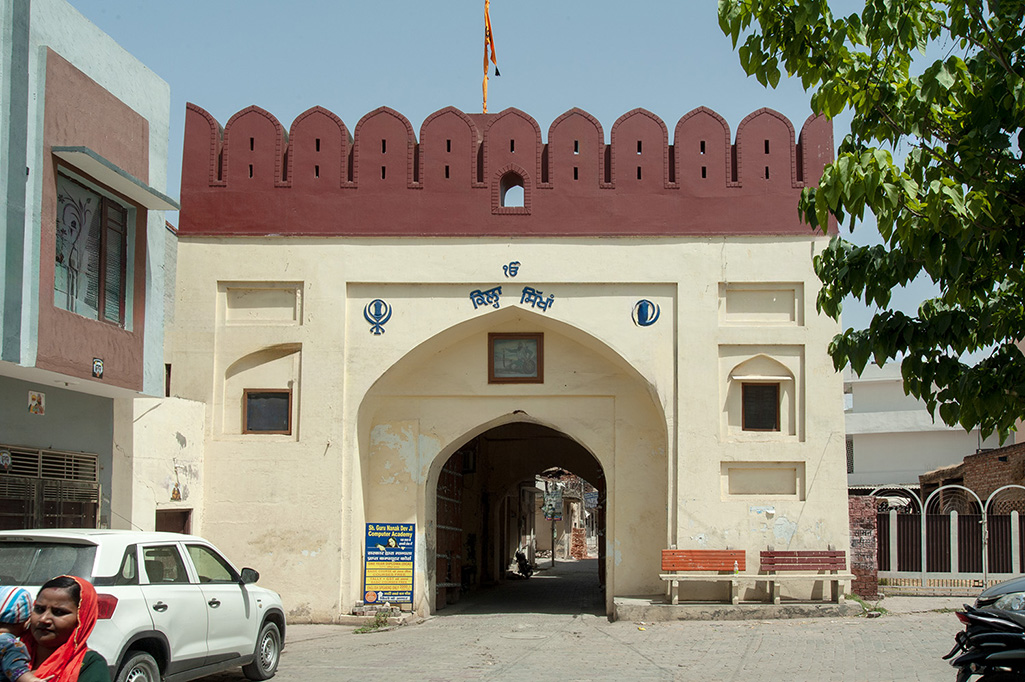
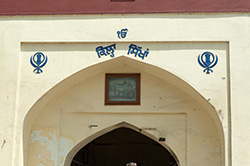
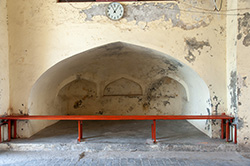
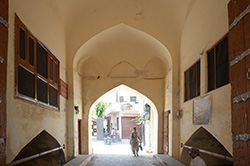
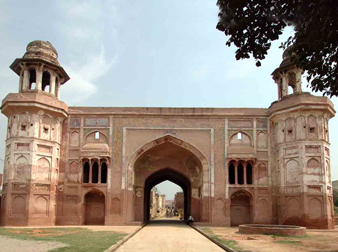
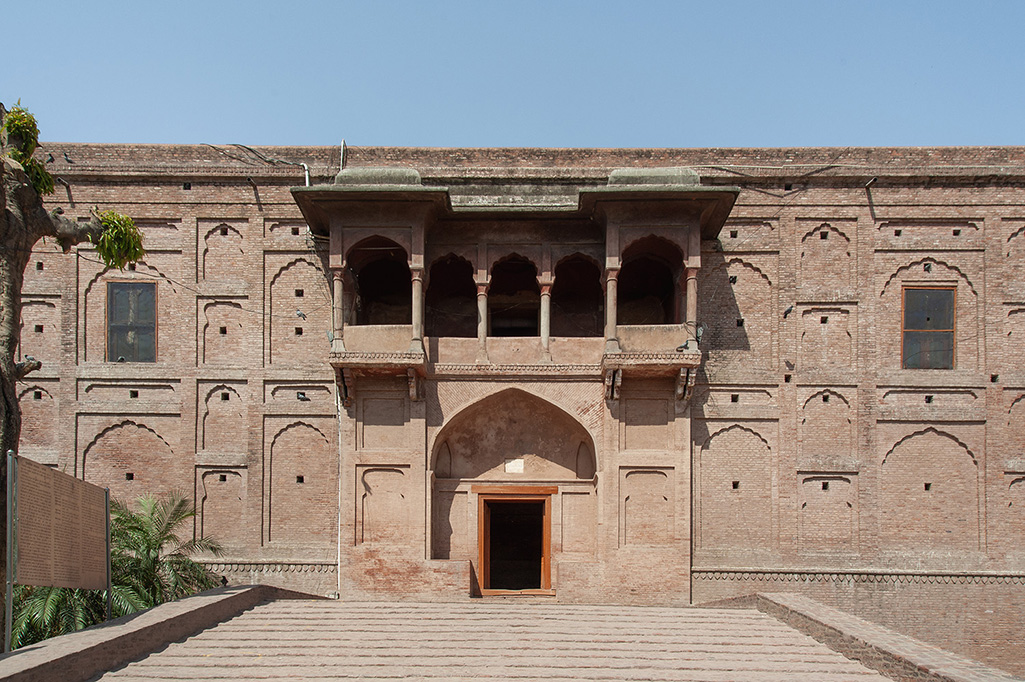
The Sarai, Shahabad is a Mughal-period
caravansarai or rest house located east of the Old Grand Trunk Road in
Shahabad, Kurukshetra district, Haryana, near the banks of the Markanda River.
Although the exact date of construction is uncertain, the sarai predates 1626
CE and is associated with historical accounts involving Mahabat Khan and later
Sikh occupation under Banda Bahadur in the early eighteenth century. Built of
lakhori bricks, rubble masonry, and lime mortar, the structure originally had
north and south gateways and an internal well, but much of its original fabric
has been lost or altered. Today, the sarai has been transformed into a densely
inhabited residential settlement known as ‘Kila Sikkhan,’ with parts of the
gateways adapted for domestic use and a Gurudwara established within the
complex. The monument is currently managed by members of the local Gurudwara
committee.
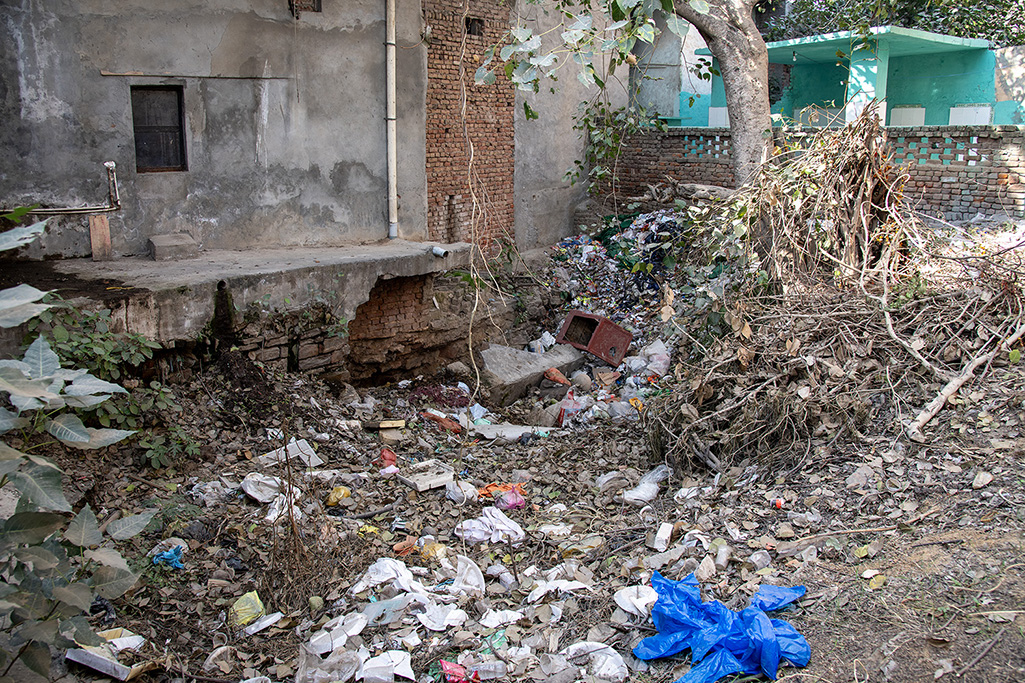
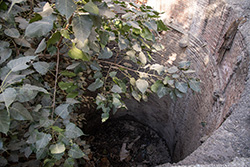
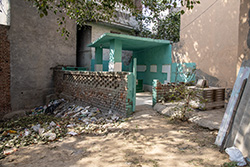
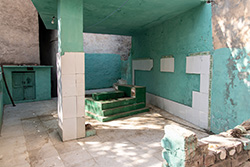
The Shahi Baoli at Hodal, Palwal district,
Haryana, is a Mughal-period stepwell built before 1611 CE. Constructed of
rubble masonry and lime mortar, it was designed to provide access to
groundwater through a stepped passage. Today, the stairway leading down to the
stepwell is partly buried under garbage.
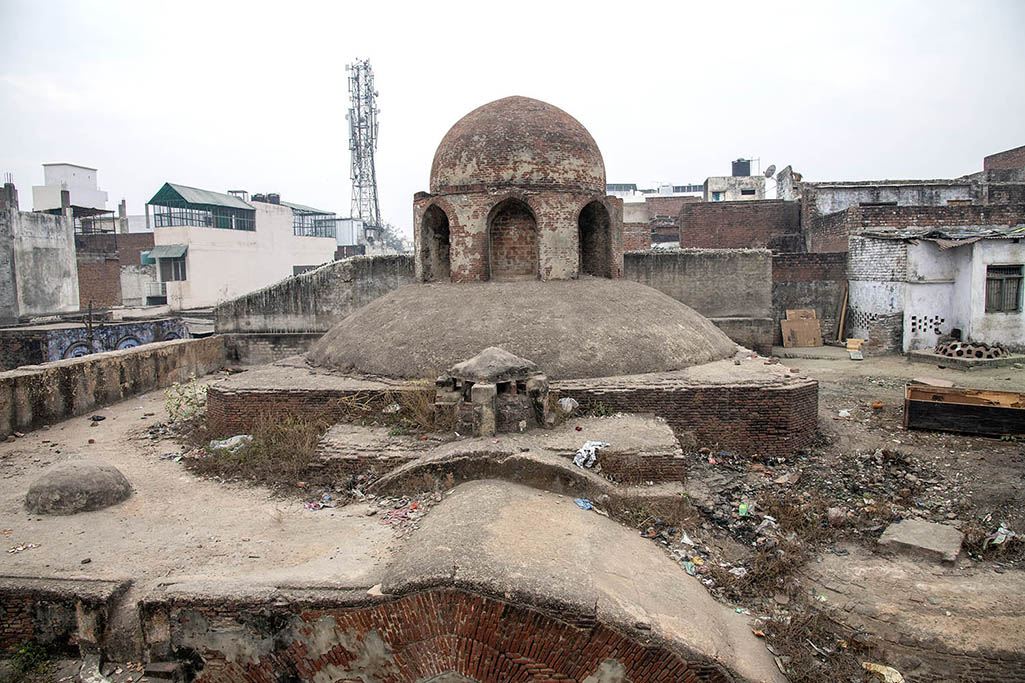
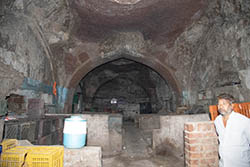
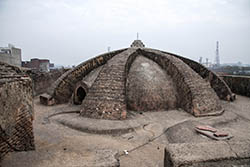
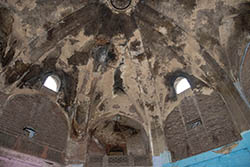
A Mughal-period public bathhouse located in the Chipitola area in Agra district of Uttar Pradesh. Constructed around 1620 CE during the reign of Emperor Jahangir, the hammam is attributed to Allah Verdi Khan. The term shahi, meaning royal, suggests an association with elite use. Built of lakhori bricks, sandstone, and lime mortar, the structure is oriented towards the northeast and is accessed through a central arched entrance in a double-storeyed eastern gateway. It was unprotected at the time of photography in 2025 and partly reused for storage and habitation, placing it under threat from ongoing urban pressure.
Sheikh Chilli’s Tomb is an important
17th-century Mughal funerary and educational complex located in Kalyan Nagar,
Thanesar district of Haryana. The monument houses the remains of the Sufi saint
Abd-ur-Rahim Abdul-Karim Abd-ur-Razak, spiritual guide of Prince Dara Shikoh.
Built of buff sandstone and crowned with a white marble pear-shaped dome set on
a high drum, the octagonal tomb stands on an elevated terrace overlooking a
madrasa arranged around a central courtyard with a masonry tank. The complex
also includes Mughal gardens and later additions. Repaired in 1854 CE under the
supervision of John Dawkins, the monument is now protected by the
Archaeological Survey of India (Chandigarh Circle) and remains well preserved.
The madrasa building also houses
small site museums displaying antiquities recovered from nearby excavations.
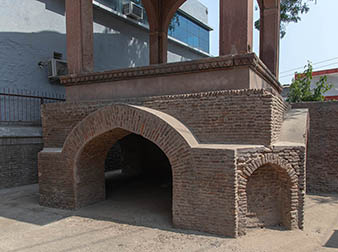
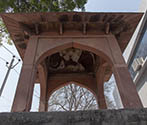
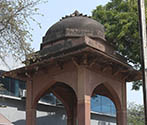
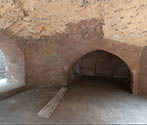
The Choti Chhatri, Agra is a small
Mughal-period chhatri located at Sonth ki Mandi, Billochpura, near the
Institute of Mental Health & Hospital in Agra city and district of Uttar
Pradesh. Of uncertain date and patronage, the structure is built of lakhori
bricks with lime mortar and plaster and consists of a square base with arched
openings, four pillars, a domed roof, and a projecting chajja (eave) supported
on brackets. The monument is protected by the Archaeological Survey of India
(Agra Circle).
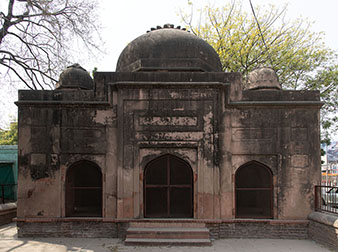
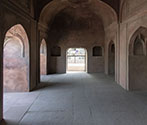
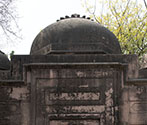
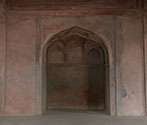
A small historic mosque located on the south
side of the Agra–Mathura, before Mariam’s Tomb, within the Church Missionary
Society compound at Sikandra, Agra district of Uttar Pradesh. Of uncertain date
and patronage, the mosque is locally known as Bhure Khan-ki-Masjid and is
traditionally attributed to an otherwise unidentified figure named Bhure Khan.
Built of lakhori bricks, red sandstone, rubble masonry, and lime mortar, the
rectangular structure stands on an elevated platform and is topped by a low,
squat dome. The monument is protected by the Archaeological Survey of India
(Agra Circle).