

 CENTER FOR ART AND ARCHAEOLOGY
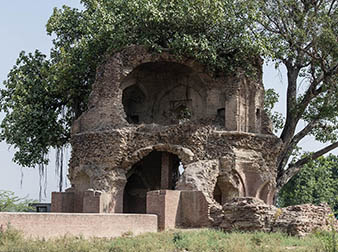
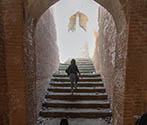
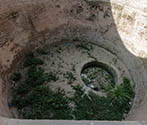
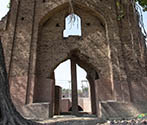
The stepwell is located near Sarai Amanat
Khan’s Western gateway on the Tarn Taran–Attari Road in Tarn Taran district of Punjab.
The stepwell has a well at the southern end and a double-storied entrance
gateway at the northern end, initially with three rooms. The well was restored before
the documentation but remained dry and unused. Its architectural style and
proximity to the Sarai suggest a connection to Amanat Khan.
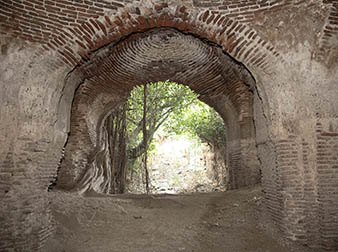
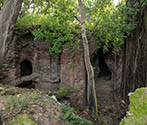
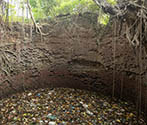
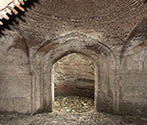
The stepwell at Doraha is a Mughal-period stepwell located to the south of the rest house Sarai Doraha in Ludhiana district of Punjab, and probably constructed between 1611-1620 CE contemporaneously with the sarai. It is built of brick and lime mortar and extends over 46 metres in length, incorporating a large circular well and an adjoining chamber with arched openings facing the well shaft. The structure is unprotected and survives in a deplorable condition, with substantial portions submerged due to a rise in the water level.
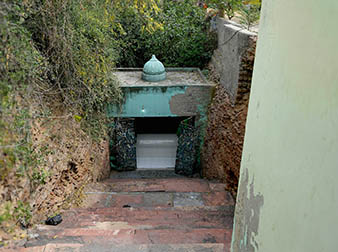
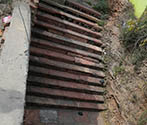
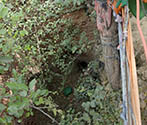
A historic stepwell located to the east of the Grand Trunk Road in the northern part of Mathura town & district of Uttar Pradesh. Of uncertain date and patronage, the stepwell is constructed of lakhori bricks, red sandstone, and lime mortar, with steps on the west side and arched niches along the eastern walls. The structure is unprotected and heavily damaged; it is now completely dry, filled with debris, and partly submerged, and is currently used as a dumping area by local residents, with additional modern construction within the well and surrounding tomb structures nearby.
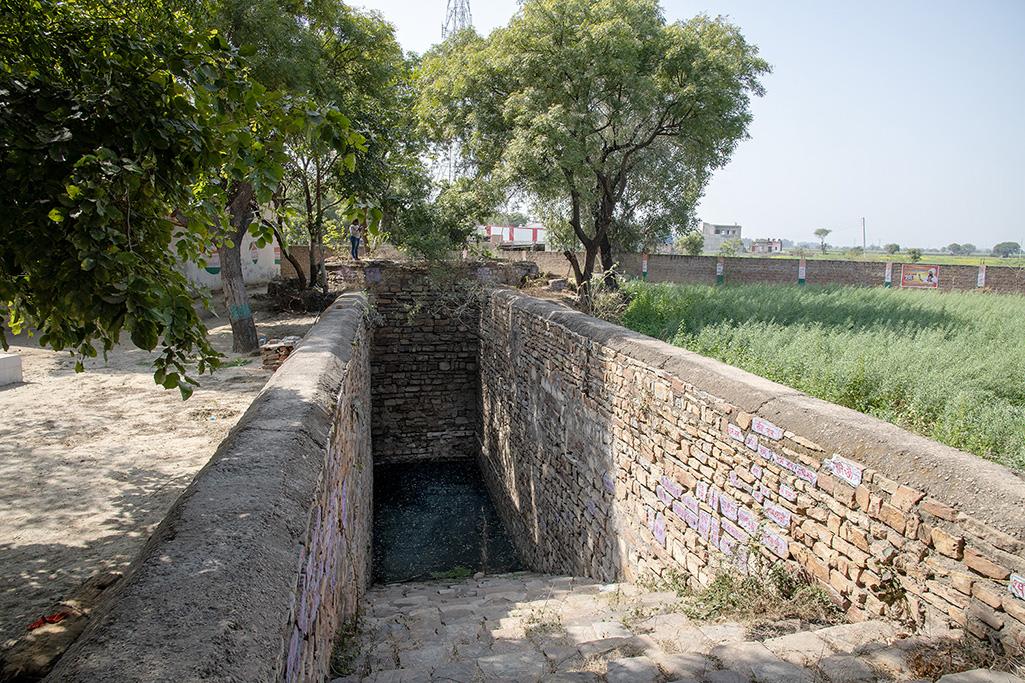
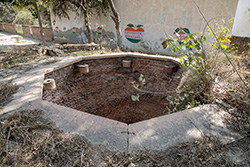
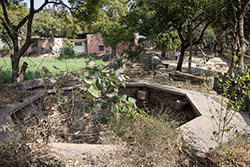
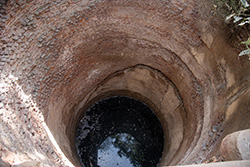
The Stepwell at Babri Mod, Hodal, Palwal
district, Haryana, is a stepwell tentatively dated to 1775–1800 CE and
attributed to Kashi Ram Choudhary. Built of rubble masonry, sandstone, and lime
mortar, the stepwell represents the continued tradition of Mughal-period
hydraulic architecture in the region.
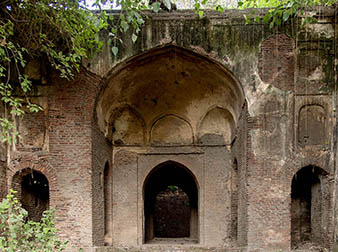
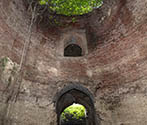
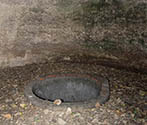
The Kanech stepwell is located in agricultural
fields outside the village, near the road connecting NH-1 to Kanech in Ludhiana
district of Punjab. Built of brick and lime mortar, the structure comprises a
stepped descent leading to a square chamber opening into a large circular well,
with an octagonal platform and a small ancillary tank on the exterior. Although
sometimes attributed to the Sikh period, its architectural form closely
parallels the stepwells at Doraha, suggesting a Mughal-period date. The stepwell
is unprotected and survives in fair condition, with extensive wild vegetation
covering parts of the structure.
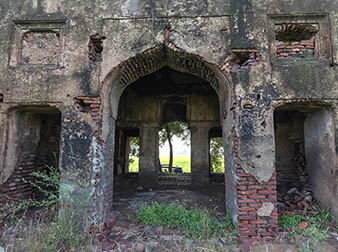
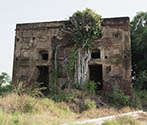
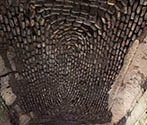
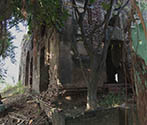
The tank and associated baradari are located
to the north of Sarai Banjara (Link Road) in Patiala district of Punjab, with
the baradari positioned on the western bank of the tank. Although no
inscription records their patronage, architectural features suggest a
seventeenth-century date. Both structures are unprotected and survive in a
ruinous state: the tank has been repurposed for cultivation with only faint
traces of its southern steps visible, while the baradari consists of five
arched chambers with stairways in the east and west walls leading to an
inaccessible roof.