

 CENTER FOR ART AND ARCHAEOLOGY
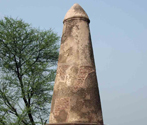
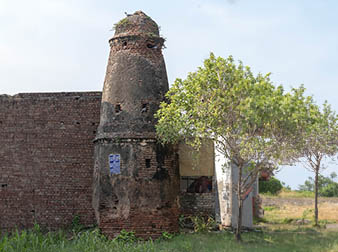
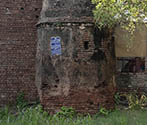
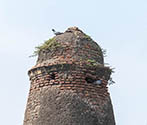
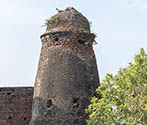
This Kos Minar is a Mughal-period distance
marker located within the backyard of a residence in Patarsi Kalan village in
Fatehgarh Sahib district of Punjab. The minar dates to the seventeenth century
and has been recorded historically by Lieutenant William Barr (1839 CE). The
monument is protected by the Archaeological Survey of India (Chandigarh Circle)
and survives in a well-maintained condition, with access facilitated by local
residents.
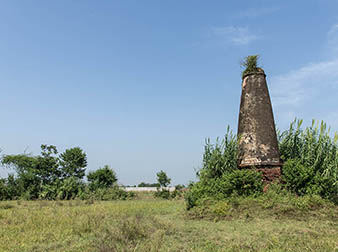
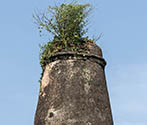
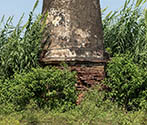
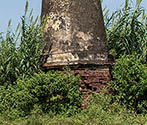
The Kos Minar at Rajgarh in Patiala district
of Punjab is a Mughal-period distance marker. Built of brick and lime mortar,
the minar follows the standard octagonal–cylindrical form with a cylindrical
finial at the top. The structure dates to the seventeenth century and is
protected by the Archaeological Survey of India (Chandigarh Circle).
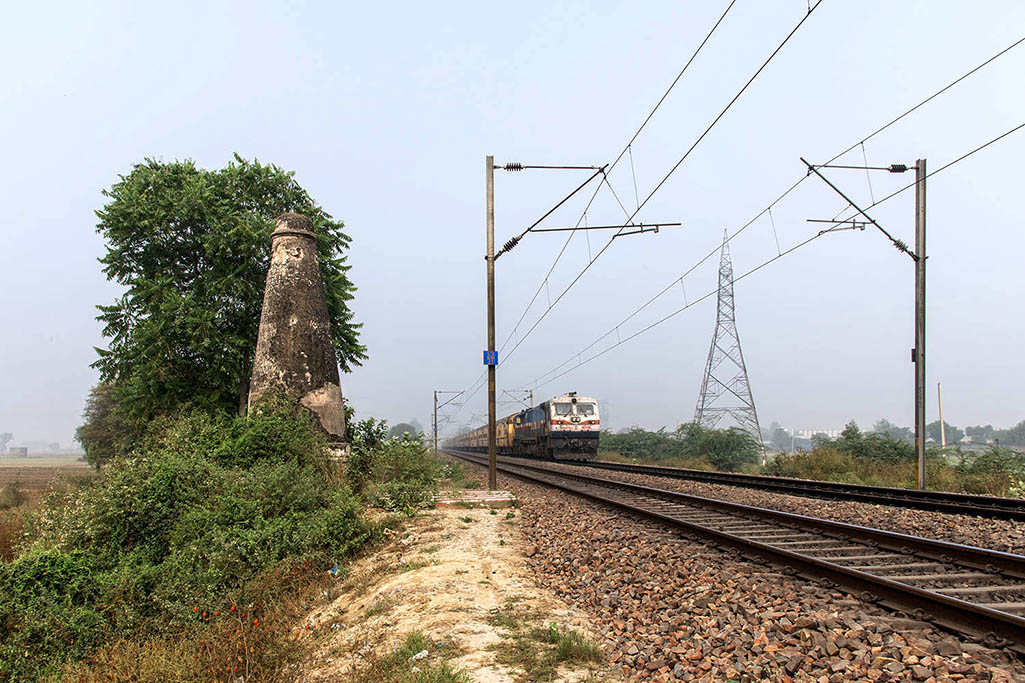
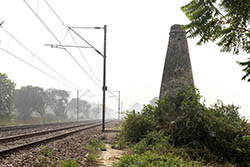
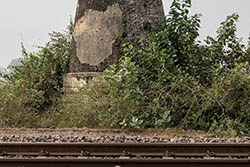
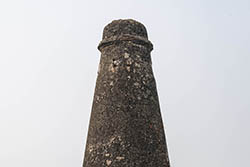
The Kos Minar at Rajpur, Sonipat district,
Haryana, is a Mughal-period structure dating to 1600–1699 CE. Constructed of
lakhori bricks with lime mortar, the monument is protected and maintained by
the Archaeological Survey of India (Chandigarh Circle).
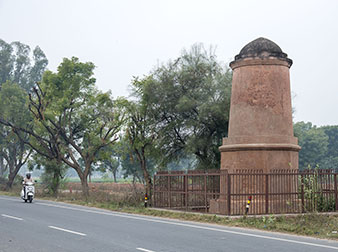
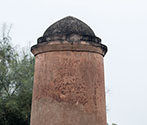
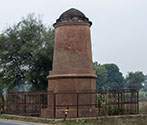
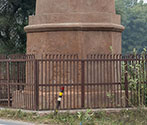
A Mughal-period distance marker located at
Sahara in Agra district of Uttar Pradesh. Probably constructed between 1600 and
1699 CE, the octagonal tower is built of lakhori bricks set in lime mortar. The
monument is protected by the Archaeological Survey of India (Agra Circle).
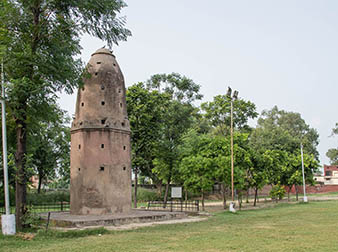
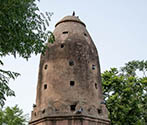
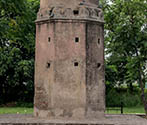
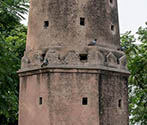
The Kos Minar at Sahnewal Khurd in Ludhiana district of Punjab is a Mughal-period octagonal distance marker constructed in the seventeenth century. Built of lakhori bricks set in lime mortar, the monument is unprotected and survives in good condition.
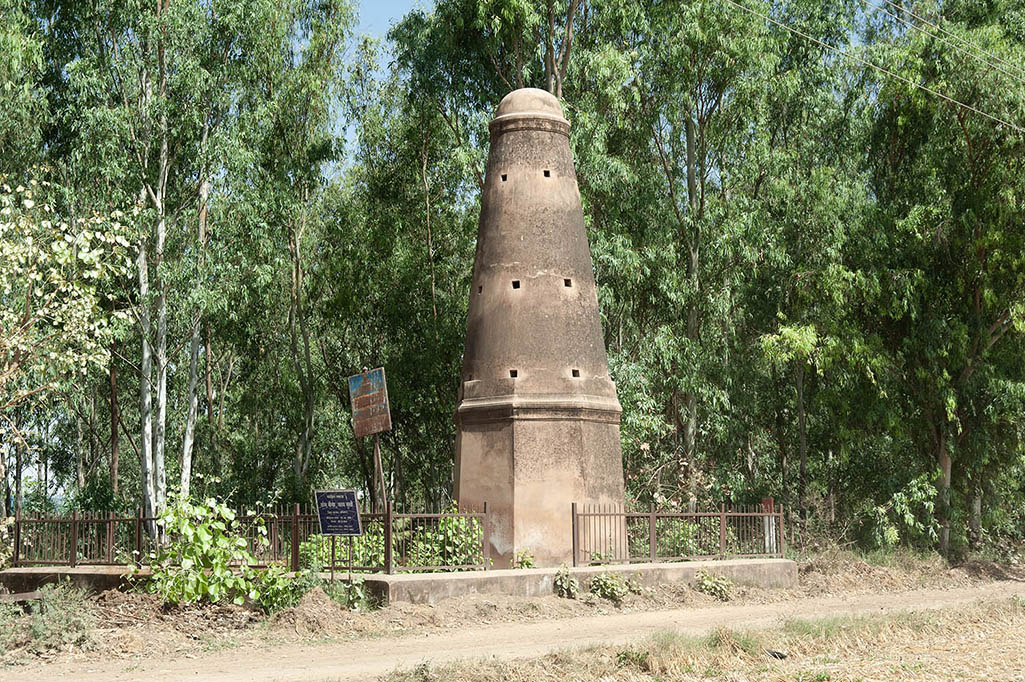
A Mughal-period distance marker located about
3 kilometres west of National Highway 44 (Old Grand Trunk Road), behind Dhirpur
Railway Station at Sarai Sukhi, Kurukshetra district of Haryana. Probably
constructed between 1600 and 1699 CE, the octagonal tower is built of lakhori
bricks bonded with lime mortar and features a ring moulding between the octagonal
base and cylindrical shaft. The monument is protected by the Archaeological
Survey of India (Chandigarh Circle) and remains well maintained, despite minor
surface blackening.