

 CENTER FOR ART AND ARCHAEOLOGY
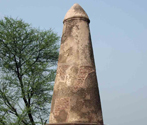
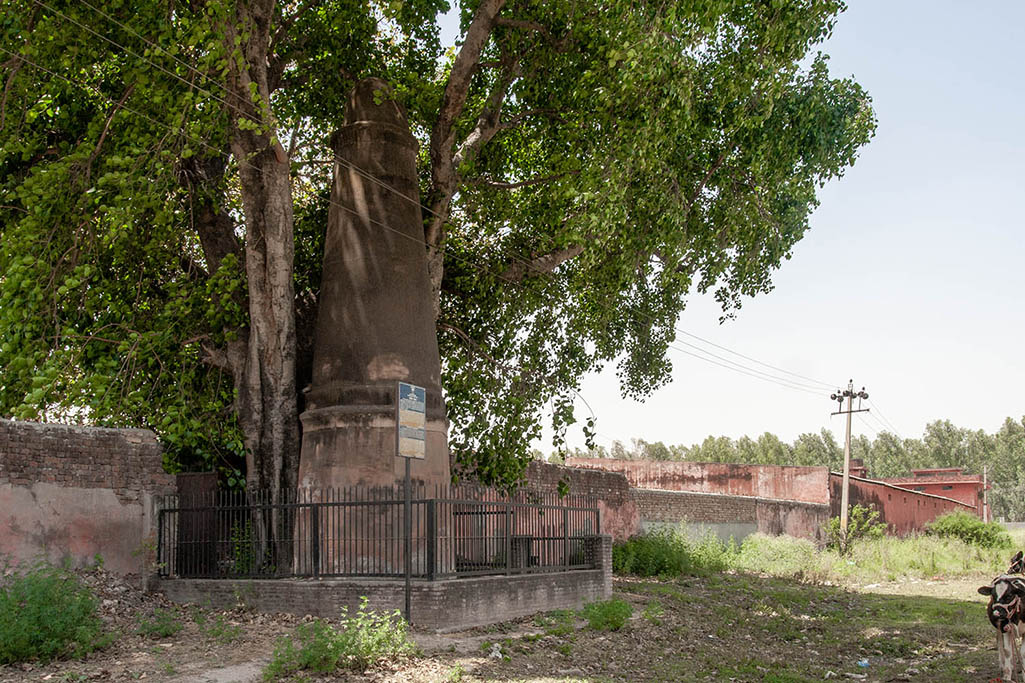
A Mughal-period distance marker located about
5 kilometres west of the Delhi–Multan Road (Old Grand Trunk Road), behind the
Pathak Petrol Pump on Salarpur Road at Thanesar, Kurukshetra, Haryana. Probably
constructed between 1600 and 1699 CE, the octagonal tower is built of lakhori
bricks bonded with lime mortar and has a ring moulding and band between the
octagonal base and cylindrical shaft. The monument is protected by the
Archaeological Survey of India (Chandigarh Circle) and was repaired in 1993–94;
it remains well maintained, though surface blackening and the adjacent peepal
tree pose structural concerns.
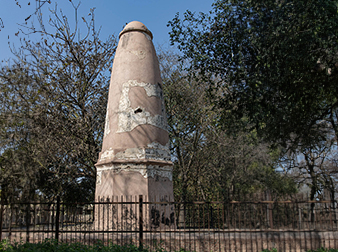
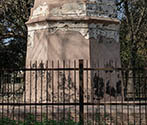
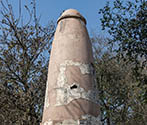
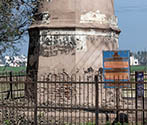
The Kos Minar in Tut Kalan village in
Jalandhar district of Punjab is a Mughal-period octagonal distance marker
located just beside the road. Constructed in the seventeenth century, it is
built of lakhori bricks set in lime mortar. The monument is protected by the
Archaeological Survey of India (Chandigarh Circle) and survives in good
condition, with fencing provided around the structure.
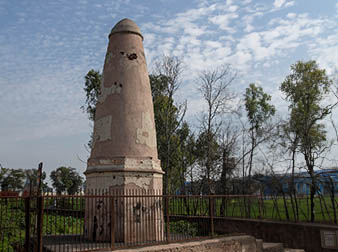
This Kos Minar at Uppal Khalsa in Jalandhar district of Punjab is a Mughal-period octagonal distance marker located approximately 200 metres south of the Nakodar–Nurmahal stretch of the Grand Trunk Road. It was constructed in the seventeenth century of lakhori bricks set in lime mortar. The monument is protected by the Archaeological Survey of India (Chandigarh Circle) and survives in a well-maintained condition, with fencing provided around the structure.Kos Minar, Uppal Khalsa, Punjab
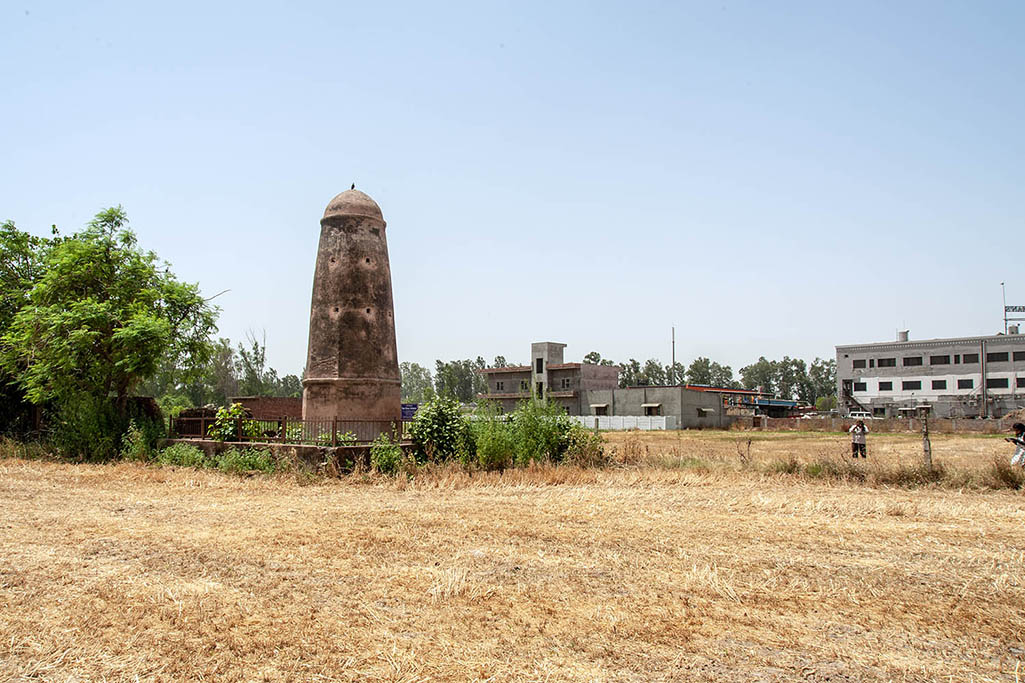
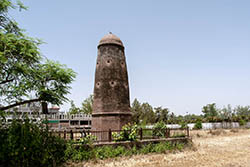
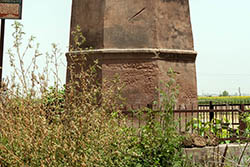
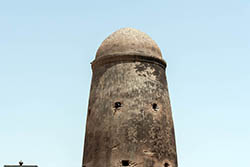
The Kos Minar at Zainpur, Kurukshetra
district, Haryana, is a Mughal-period structure dating to 1600–1699 CE.
Constructed of lakhori bricks with lime mortar, the monument is protected and
maintained by the Archaeological Survey of India (Chandigarh Circle).
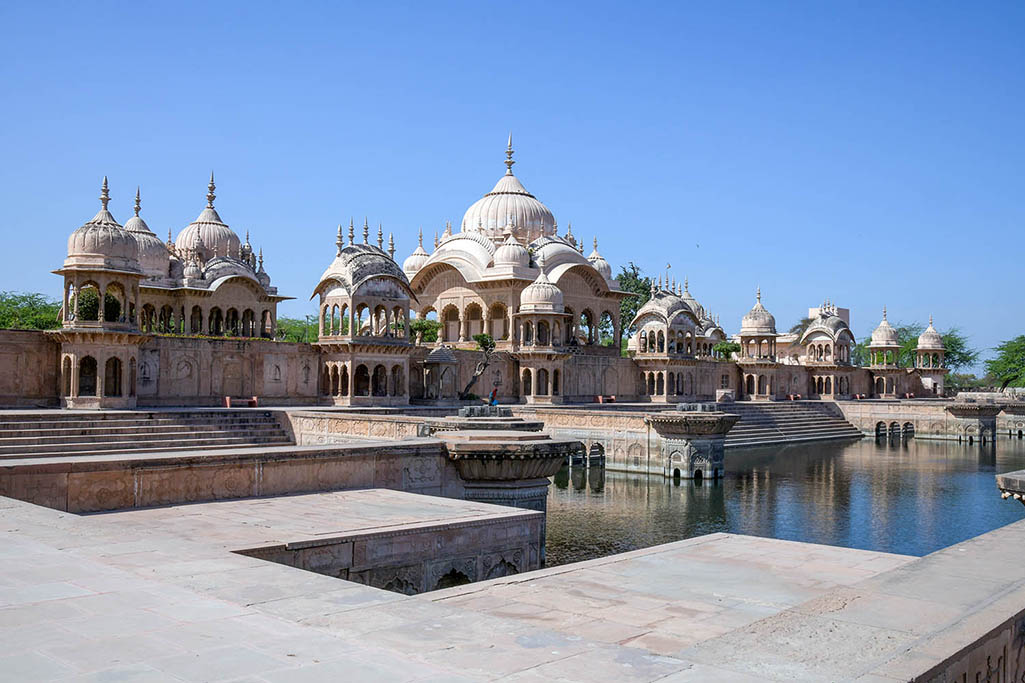
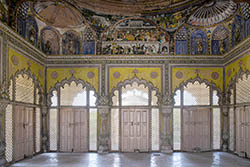
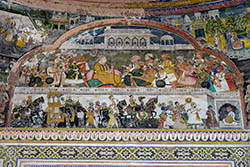
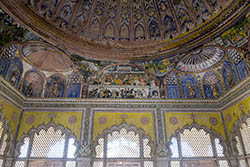
The Kusum Sarovar is a water reservoir located on Govardhan Hill, between Manasi Ganga and Radha Kund, northeast of Govardhan town in Mathura district of Uttar Pradesh. The tank was developed in 1675 CE by Bir Singh Deo of Orchha, while the surrounding garden was laid out in the 18th century under Suraj Mal during the period of Late Mughal-Jat rule. In 1768 CE, Jawahar Singh rebuilt the complex and added memorial cenotaphs dedicated to Suraj Mal and his queens. Constructed of sandstone and lime mortar, Kusum Sarovar is distinguished by its terraced gardens, chhatri cenotaphs, and ritual steps around the kund. The monument is protected by the Uttar Pradesh State Archaeology Department.